

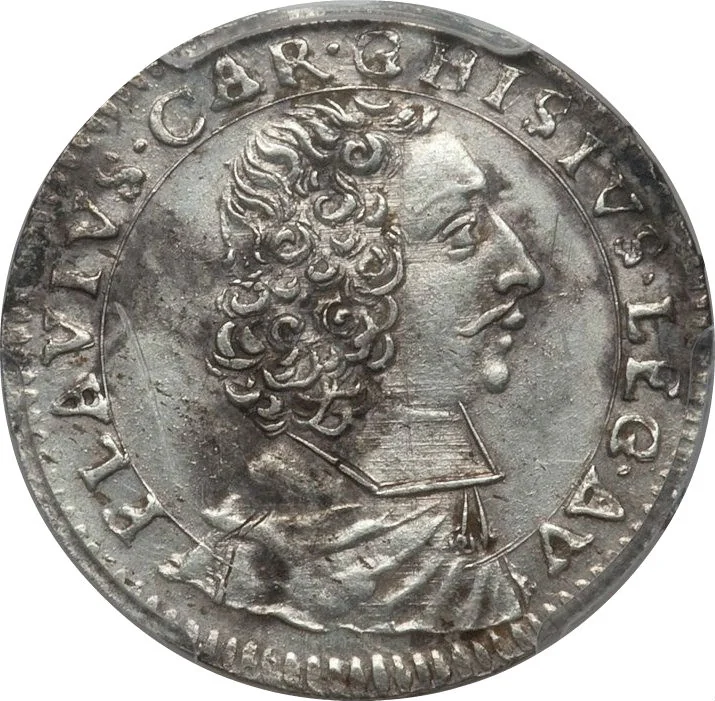
1⁄12 Ecu – Comtat Venaissin
Vatican City
Context
Years: 1660–1666
Country: Vatican City 
Issuer: Comtat Venaissin
Ruler: Alexander VII
Currency:
Subdivision: 1⁄12 Ecu = 5 Sols
Demonetized: Yes
Material
References
KM: #Click to copy to clipboard92
Numista: #89444
Value
Bullion value: $5.50
Obverse
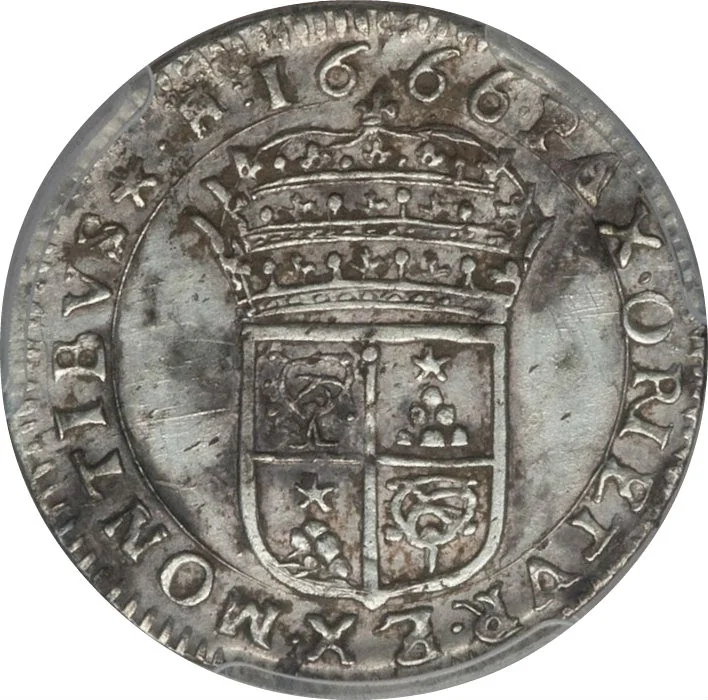
Reverse
Description:
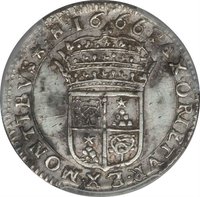
Legate's crowned shield, date above.
Inscription:
PAX • ORIETVR • EX • MONTIBVS ★ • 1666
Script: Latin
Edge
Categories
| Person> Politician |
| Person> Religious figure |
| Mustache/Beard |
| Symbol> Crown |
| Symbols> Coat of Arms |
Mints
| Name | Mark |
|---|---|
| Avignon | — |
Mintings
| Year | Mint Mark | Mintage | Quality | Collection |
|---|---|---|---|---|
| 1660 | — | — | ||
| 1661 | — | — | ||
| 1662 | — | — | ||
| 1663 | — | — | ||
| 1664 | — | — | ||
| 1665 | — | — | ||
| 1666 | — | — |
Historical background
In 1660, the currency situation in the Comtat Venaissin, a Papal territory enclaved within the Kingdom of France, was characterized by a complex and often chaotic monetary duality. Officially, the region operated under the papal monetary system, with the Roman scudo and giulio as standard coins. However, due to its geographic and economic entanglement with France, French gold louis d'or and silver écus circulated widely and were often preferred for larger transactions. This created a constant challenge of exchange rates and valuation, as the relative worth of these coinages fluctuated based on political relations and the intrinsic metal content of often-clipped or worn coins.
The local economy was further burdened by a chronic shortage of small-denomination coinage necessary for everyday market exchanges. This scarcity led to the widespread use of billon coins—debased silver-copper mixtures—struck by the papal mint in Avignon, as well as the persistent circulation of obsolete and foreign small coins from neighboring regions like Dauphiné. The resulting monetary confusion facilitated fraud and provoked frequent public complaints, as both merchants and peasants struggled with unstable prices and the difficulty of obtaining reliable "black money" (monnaie noire) for daily needs.
Papal authorities, aware of the disorder, made periodic but largely ineffective attempts at regulation. Edicts sought to fix exchange rates between French and papal currencies and to control the influx of foreign coin, but enforcement was weak. The fundamental issue was the enclave's economic dependency on France, which made the suppression of French currency impractical. Consequently, the monetary landscape of 1660 Comtat Venaissin remained a volatile hybrid system, where official papal authority over coinage was consistently undermined by the gravitational pull of the larger French economy, to the detriment of local financial stability.
The local economy was further burdened by a chronic shortage of small-denomination coinage necessary for everyday market exchanges. This scarcity led to the widespread use of billon coins—debased silver-copper mixtures—struck by the papal mint in Avignon, as well as the persistent circulation of obsolete and foreign small coins from neighboring regions like Dauphiné. The resulting monetary confusion facilitated fraud and provoked frequent public complaints, as both merchants and peasants struggled with unstable prices and the difficulty of obtaining reliable "black money" (monnaie noire) for daily needs.
Papal authorities, aware of the disorder, made periodic but largely ineffective attempts at regulation. Edicts sought to fix exchange rates between French and papal currencies and to control the influx of foreign coin, but enforcement was weak. The fundamental issue was the enclave's economic dependency on France, which made the suppression of French currency impractical. Consequently, the monetary landscape of 1660 Comtat Venaissin remained a volatile hybrid system, where official papal authority over coinage was consistently undermined by the gravitational pull of the larger French economy, to the detriment of local financial stability.
✨ Legendary