

2 Cash – Danish India
India
Context
Year: 1667
Country: India 
Issuer: Danish India
Ruler: Frederick III
Currency:
(1730—1818)
Demonetized: Yes
Material
References
KM: #Click to copy to clipboard111
Numista: #119672
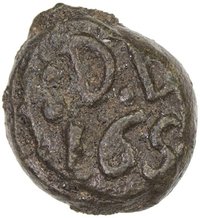
Obverse
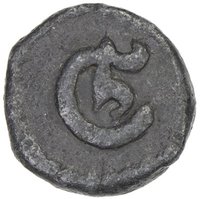
Reverse
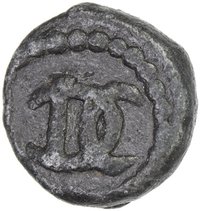
Description:
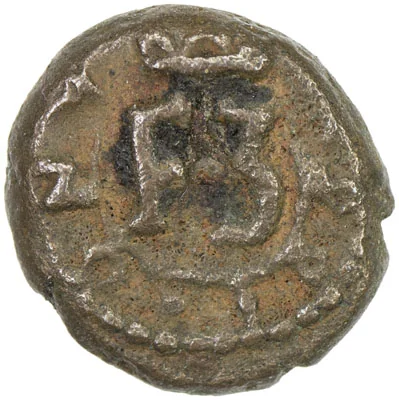
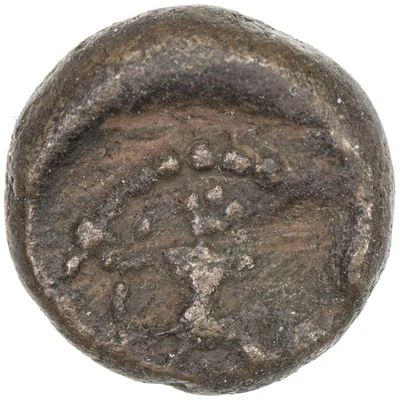
Norse lion left on axe in beaded circle.
Edge
Mintings
| Year | Mint Mark | Mintage | Quality | Collection |
|---|---|---|---|---|
| 1667 | — | — |
Historical background
In 1667, the currency situation in Danish India was characterized by a complex and often chaotic multiplicity of circulating media, reflecting the colony's position within vibrant regional trade networks. The primary Danish settlements of Tranquebar (on the Coromandel Coast) and the later acquisition of Serampore (in Bengal) did not operate with a unified, sovereign currency. Instead, the Danish East India Company relied heavily on a plethora of foreign coins that were already dominant in Indian Ocean commerce. The most important of these was the Dutch silver rijksdaalder, often stamped with a "D" or "D.O.C." to signify its use by the Danish Company, alongside a flood of other European silver coins like Spanish reales and ducats, and various Indian and Mughal silver rupees.
This reliance on foreign coinage created significant challenges for the Company's administration and local trade. The value of these coins was not fixed by the Danes but fluctuated based on their intrinsic silver content and prevailing market rates, leading to constant accounting difficulties and exchange losses. To facilitate smaller, everyday transactions, a base metal coinage was essential. Here, the Danes minted their own low-value coins, such as kask and fano in copper, primarily at the Tranquebar mint. However, these often suffered from poor quality control and were vulnerable to counterfeiting, undermining public trust.
Ultimately, the monetary landscape of Danish India in 1667 was one of pragmatic adaptation rather than control. The Danish Company lacked the economic power to impose its own currency system and was compelled to participate in the existing multi-currency environment. This situation underscored the colony's commercial dependency and the limited reach of Danish sovereign authority, as its economic lifeblood flowed through channels defined by more powerful European rivals and the established financial systems of the Indian subcontinent.
This reliance on foreign coinage created significant challenges for the Company's administration and local trade. The value of these coins was not fixed by the Danes but fluctuated based on their intrinsic silver content and prevailing market rates, leading to constant accounting difficulties and exchange losses. To facilitate smaller, everyday transactions, a base metal coinage was essential. Here, the Danes minted their own low-value coins, such as kask and fano in copper, primarily at the Tranquebar mint. However, these often suffered from poor quality control and were vulnerable to counterfeiting, undermining public trust.
Ultimately, the monetary landscape of Danish India in 1667 was one of pragmatic adaptation rather than control. The Danish Company lacked the economic power to impose its own currency system and was compelled to participate in the existing multi-currency environment. This situation underscored the colony's commercial dependency and the limited reach of Danish sovereign authority, as its economic lifeblood flowed through channels defined by more powerful European rivals and the established financial systems of the Indian subcontinent.
✨ Legendary