

¼ riksdaler – Sweden
Add to wishlist
Sweden
Context
Years: 1752–1765
Issuer: Sweden
Ruler: Adolphus Frederick
Currency:
(1719—1798)
Demonetized: Yes
Total mintage: 144,913
Material
References
KM: #
Numista: #88045
Value
Bullion value: $15.96
Obverse
Description:
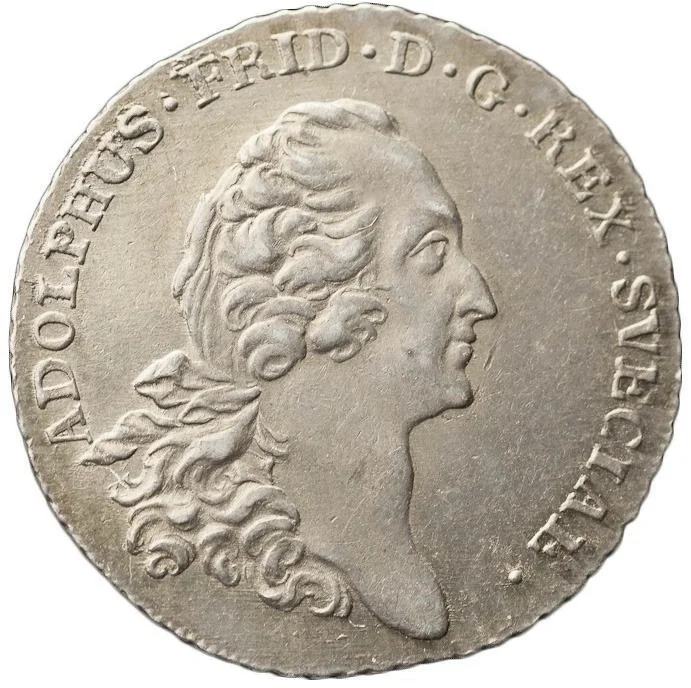
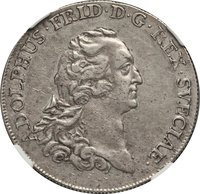
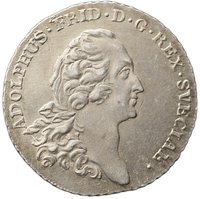
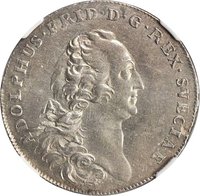
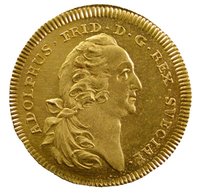
King Adolf Fredrick facing right, long hair, legend around rim.
Inscription:
ADOLPHUS • FRID • D • G • REX • SVECIAE •
Script: Latin
Engraver: Carl Gustaf Fehrman
Reverse
Description:
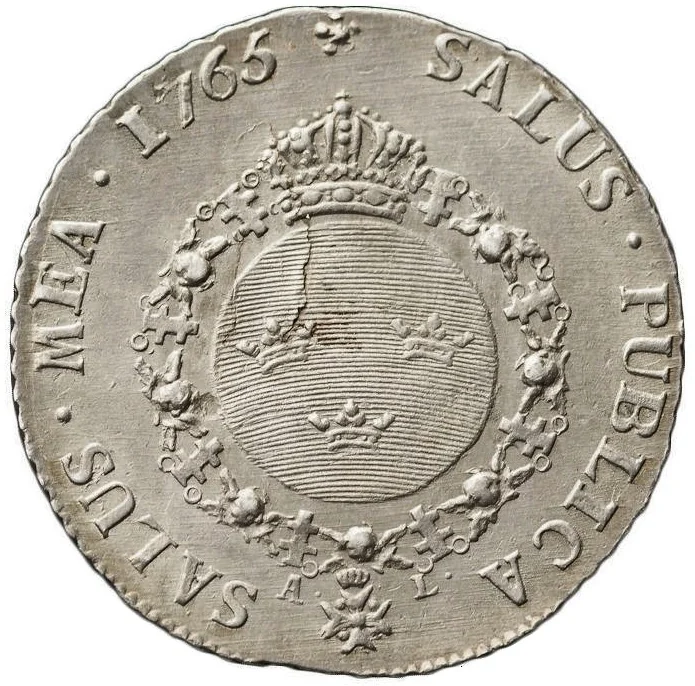
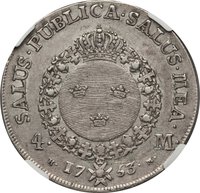
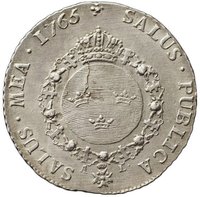
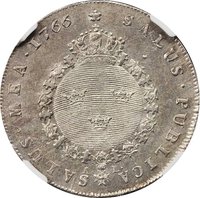
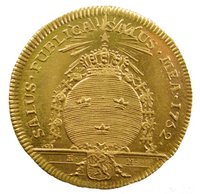
Crowned orb with Sweden’s Three Crowns within the Seraphim Order chain. The chain’s pendant divides the mintmark. The king’s motto and date encircle the orb near the rim.
Inscription:
SALUS • PUBLICA • SALUS • MEA • 1765
A. L.
A. L.
Script: Latin
Edge
Categories
| Symbols> Coat of Arms |
Mintings
| Year | Mint Mark | Mintage | Quality | Collection |
|---|---|---|---|---|
| 1752 | HM | 14,217 | ||
| 1753 | HM | 18,336 | ||
| 1755 | HM | 77,588 | ||
| 1760 | HM | 6,504 | ||
| 1765 | AL | 28,268 |
Historical background
In 1752, Sweden was navigating a complex and precarious monetary situation, largely a legacy of the Great Northern War (1700–1721). To finance that prolonged conflict, the state had resorted to heavy debasement of the copper-based currency, leading to severe inflation and a confusing dual system of copper daler and silver daler with fluctuating values. The period known as the "Age of Liberty" saw repeated attempts at stabilization, but the economy remained burdened by a cumbersome copper plate money (plåtmynt) that was physically heavy and impractical for larger transactions.
The immediate background to 1752 was the failed monetary reform of 1745. To fund a war against Russia, the Riksdag authorized the issuance of a new paper currency called transportsedlar. These were initially intended to be fully backed by silver, but were soon over-issued, causing them to depreciate rapidly against silver. By 1752, Sweden effectively had three circulating media: depreciating paper notes, undervalued silver coins (which were hoarded or exported), and the old bulky copper money, all trading at different and unstable market rates.
Consequently, 1752 fell within a decade of monetary disorder and price instability. Public confidence in the paper currency was low, and the disparity between the nominal and real values of the different currencies hampered trade and economic planning. This turbulent backdrop set the stage for the more comprehensive reforms that would follow later in the 1750s under the Hats party, aiming to restore the silver standard and stabilize the nation's finances, though with mixed success.
The immediate background to 1752 was the failed monetary reform of 1745. To fund a war against Russia, the Riksdag authorized the issuance of a new paper currency called transportsedlar. These were initially intended to be fully backed by silver, but were soon over-issued, causing them to depreciate rapidly against silver. By 1752, Sweden effectively had three circulating media: depreciating paper notes, undervalued silver coins (which were hoarded or exported), and the old bulky copper money, all trading at different and unstable market rates.
Consequently, 1752 fell within a decade of monetary disorder and price instability. Public confidence in the paper currency was low, and the disparity between the nominal and real values of the different currencies hampered trade and economic planning. This turbulent backdrop set the stage for the more comprehensive reforms that would follow later in the 1750s under the Hats party, aiming to restore the silver standard and stabilize the nation's finances, though with mixed success.
Series: 1752 Sweden circulation coins
✨ Legendary