

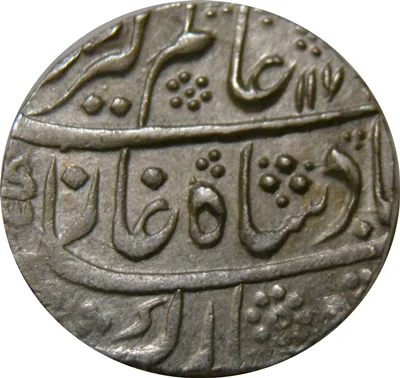
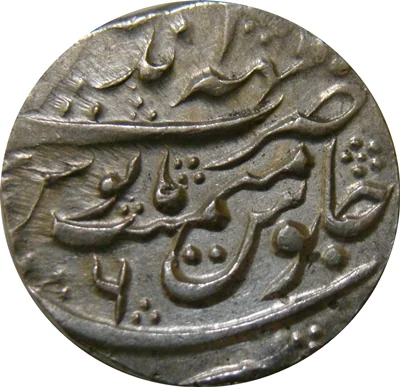
1 rupee – Mughal Empire
Add to wishlist
India
Context
Years: 1757–1761
Country: India
Issuer: Mughal Empire
Ruler: Alamgir II
Currency:
(1540—1842)
Demonetized: Yes
Material
References
KM: #
Numista: #88006
Value
Bullion value: $27.74
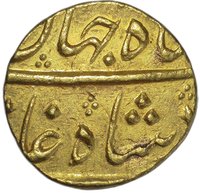
Obverse
Description:
Aziz-ud-din Alamgir II
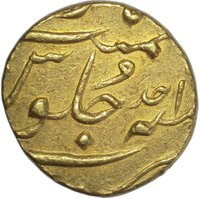
Reverse
Description:
Carved words.
Edge
Mintings
| Year | Mint Mark | Mintage | Quality | Collection |
|---|---|---|---|---|
| 1757 | — | — | ||
| 1758 | — | — | ||
| 1759 | — | — | ||
| — | — | — |
Historical background
By 1757, the Mughal Empire's currency system, once a hallmark of its administrative strength, was in a state of severe strain and fragmentation. The imperial minting of silver rupees, the standard currency, continued in major cities like Delhi, but its authority was rapidly eroding. The Battle of Plassey in that very year symbolized a deeper shift: regional powers like the Marathas, Awadh, and Bengal were increasingly issuing their own coins, while European East India Companies also circulated their minted and foreign currencies, creating a complex monetary landscape.
The core problem was political decentralization. As provincial nawabs and governors acted with autonomy, they diverted revenue to their own treasuries and mints, weakening the central treasury in Delhi. This led to a decline in the uniform weight and purity (approximately 97% fine silver) that had characterized the Mughal rupee under strong emperors. While the rupee remained a recognizable unit, variations in standard across regions began to hinder large-scale trade and revenue collection for the empire.
Furthermore, the economy was experiencing a drain of precious metals. Much of India's silver, which fueled the coinage, was imported through trade. Political instability disrupted commerce, while massive tributes and plunder from invasions (notably by Nadir Shah in 1739) had physically stripped the empire of bullion reserves. By 1757, the Mughal monetary system was thus caught between a collapsing central authority, competing regional coinages, and a shrinking bullion base, setting the stage for the British East India Company to eventually impose a standardized currency system of its own.
The core problem was political decentralization. As provincial nawabs and governors acted with autonomy, they diverted revenue to their own treasuries and mints, weakening the central treasury in Delhi. This led to a decline in the uniform weight and purity (approximately 97% fine silver) that had characterized the Mughal rupee under strong emperors. While the rupee remained a recognizable unit, variations in standard across regions began to hinder large-scale trade and revenue collection for the empire.
Furthermore, the economy was experiencing a drain of precious metals. Much of India's silver, which fueled the coinage, was imported through trade. Political instability disrupted commerce, while massive tributes and plunder from invasions (notably by Nadir Shah in 1739) had physically stripped the empire of bullion reserves. By 1757, the Mughal monetary system was thus caught between a collapsing central authority, competing regional coinages, and a shrinking bullion base, setting the stage for the British East India Company to eventually impose a standardized currency system of its own.
✨ Legendary