

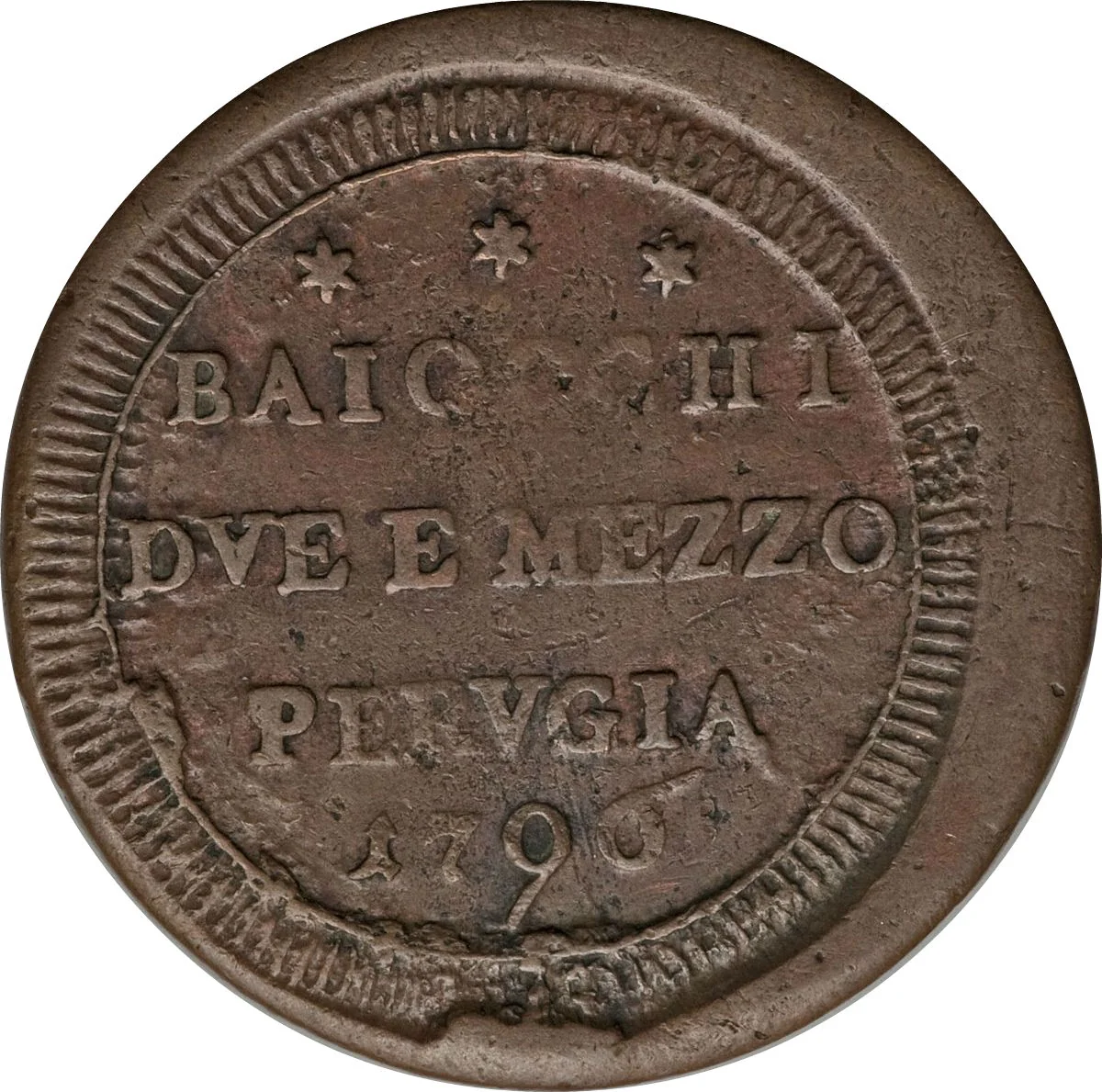
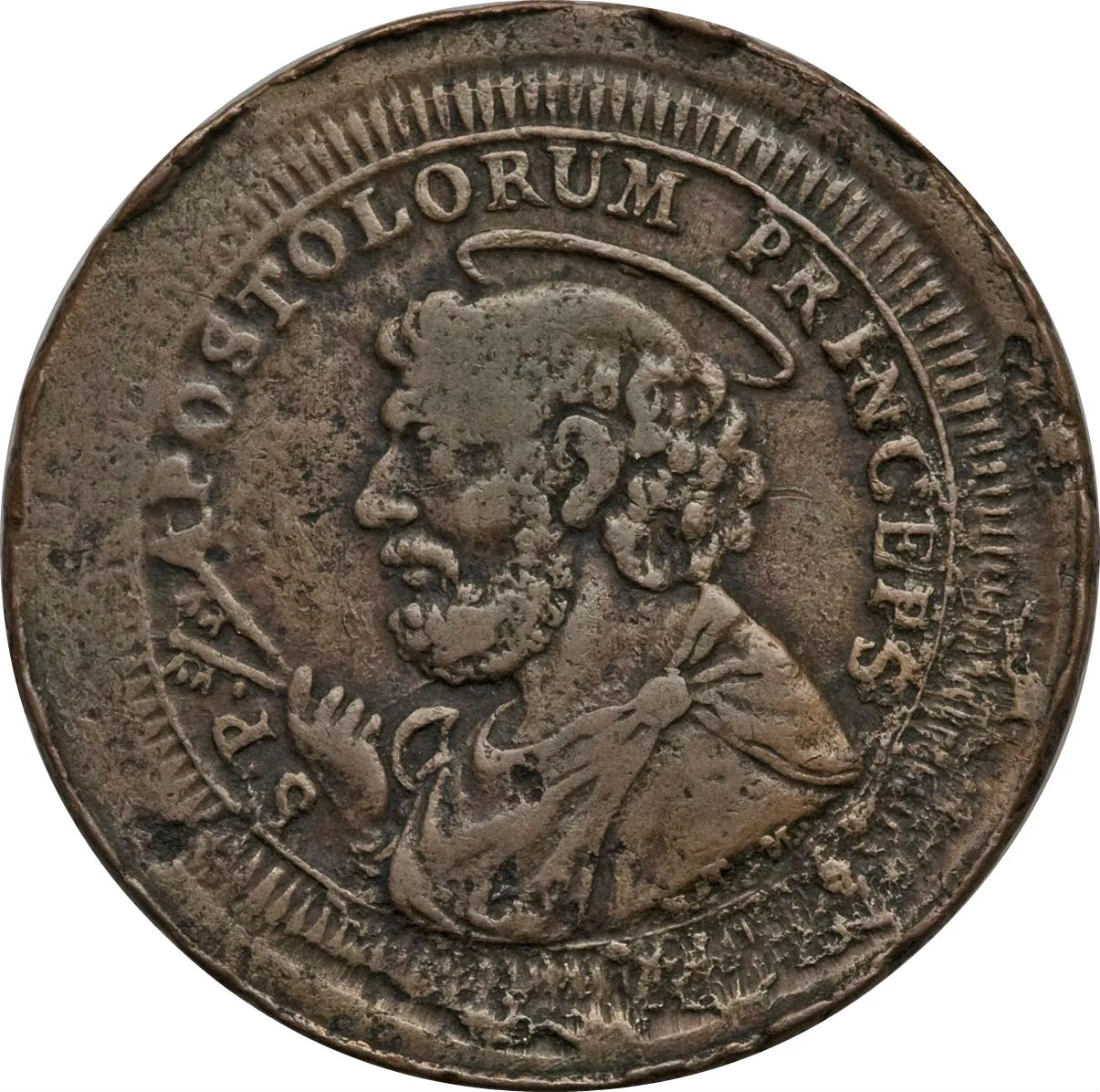
2½ Baiocchi – Perugia
Italy
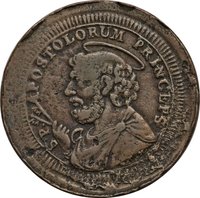
Obverse
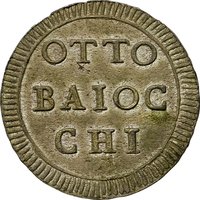
Description:
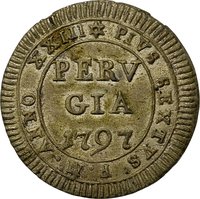
City, date, and value encircled with stars.
Inscription:
BAIOCCHI
DVE E MEZZO
PERVGIA
1796
DVE E MEZZO
PERVGIA
1796
Script: Latin
Reverse
Edge
Reticulated
Mints
| Name | Mark |
|---|---|
| Perugia | — |
Mintings
| Year | Mint Mark | Mintage | Quality | Collection |
|---|---|---|---|---|
| 1796 | — | — | ||
| 1797 | — | — |
Historical background
In 1796, Perugia, a city within the Papal States, was experiencing significant monetary instability, a direct consequence of the broader European upheavals triggered by the French Revolutionary Wars. The French invasion of northern Italy under General Napoleon Bonaparte that year destabilised the entire peninsula, causing economic shockwaves. While Perugia was not immediately occupied, the threat was palpable, leading to market anxiety, hoarding of specie, and disruptions in regional trade. The Papal government in Rome, facing its own fiscal crisis and the looming French threat, struggled to maintain monetary order, leading to a scarcity of reliable coinage in circulation.
The local currency system was a complex mix. The official currency was the Papal scudo, divided into baiochi and quattrini. However, the scarcity of official coinage meant that a multitude of older regional coins, foreign currencies (particularly Tuscan and Neapolitan issues), and even debased or counterfeit coins circulated simultaneously. This created a chaotic exchange environment where the value of money was highly uncertain. Merchants and citizens were forced to constantly negotiate exchange rates, and prices for essential goods became volatile, eroding public trust in the monetary system.
This pre-existing fragility was pushed toward crisis by the political events of the year. Following Napoleon's rapid victories, the Papal States were forced to sign the armistice of Bologna in June 1796, agreeing to pay a massive indemnity and cede valuable artworks and manuscripts. To meet these crushing demands, the Papal authorities resorted to seizing church silver and issuing emergency paper money, further devaluing the currency. Thus, by the end of 1796, Perugia's monetary situation was characterised by severe inflation, a confusing multiplicity of devalued coins, and the looming spectre of French-imposed financial exactions, setting the stage for the city's occupation and the establishment of a revolutionary republic the following year.
The local currency system was a complex mix. The official currency was the Papal scudo, divided into baiochi and quattrini. However, the scarcity of official coinage meant that a multitude of older regional coins, foreign currencies (particularly Tuscan and Neapolitan issues), and even debased or counterfeit coins circulated simultaneously. This created a chaotic exchange environment where the value of money was highly uncertain. Merchants and citizens were forced to constantly negotiate exchange rates, and prices for essential goods became volatile, eroding public trust in the monetary system.
This pre-existing fragility was pushed toward crisis by the political events of the year. Following Napoleon's rapid victories, the Papal States were forced to sign the armistice of Bologna in June 1796, agreeing to pay a massive indemnity and cede valuable artworks and manuscripts. To meet these crushing demands, the Papal authorities resorted to seizing church silver and issuing emergency paper money, further devaluing the currency. Thus, by the end of 1796, Perugia's monetary situation was characterised by severe inflation, a confusing multiplicity of devalued coins, and the looming spectre of French-imposed financial exactions, setting the stage for the city's occupation and the establishment of a revolutionary republic the following year.
💎 Extremely Rare