

2 baiocchi – Perugia
Add to wishlist
Italy
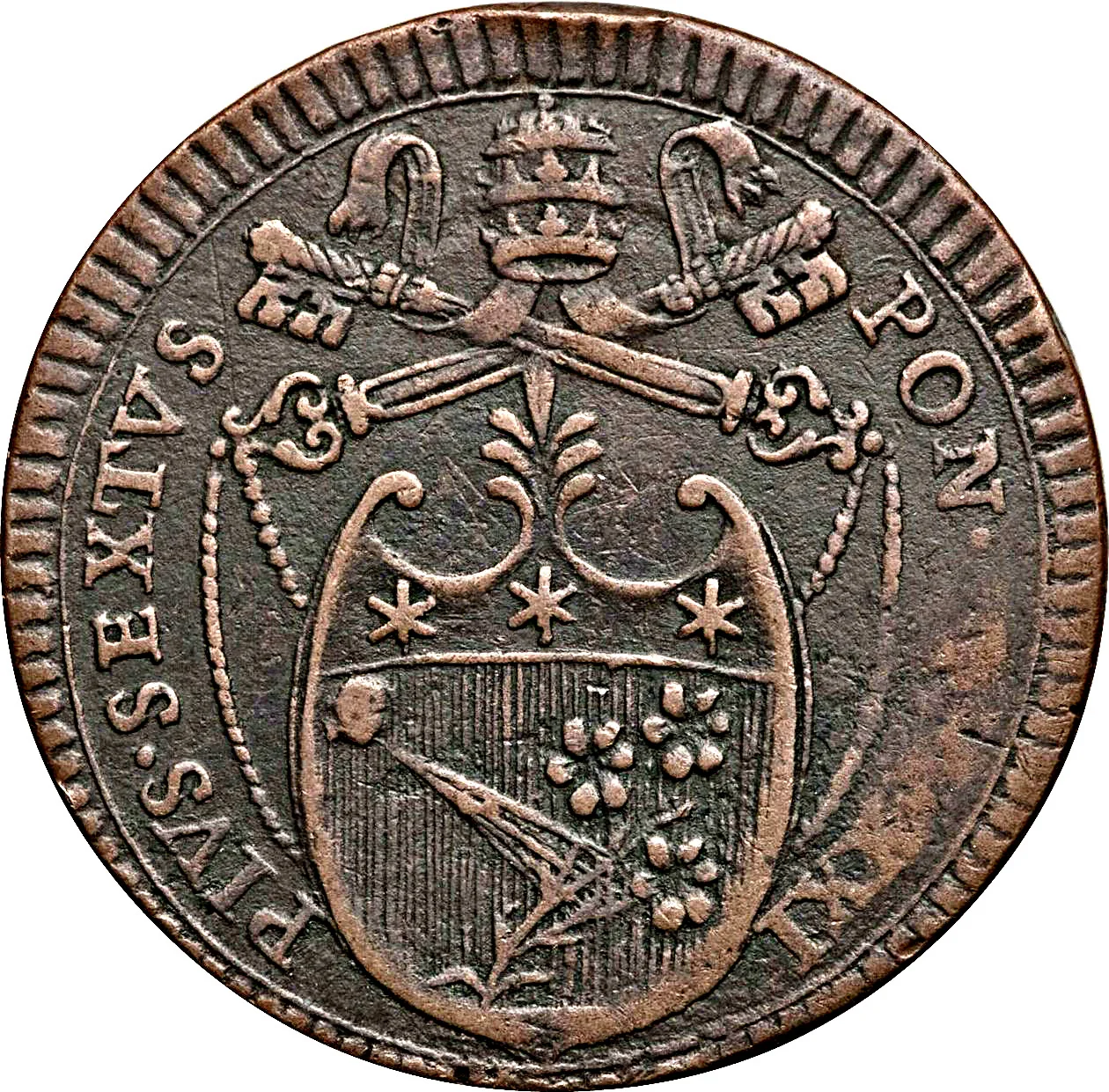
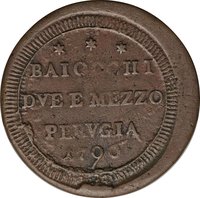
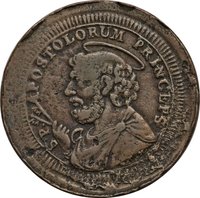
Obverse
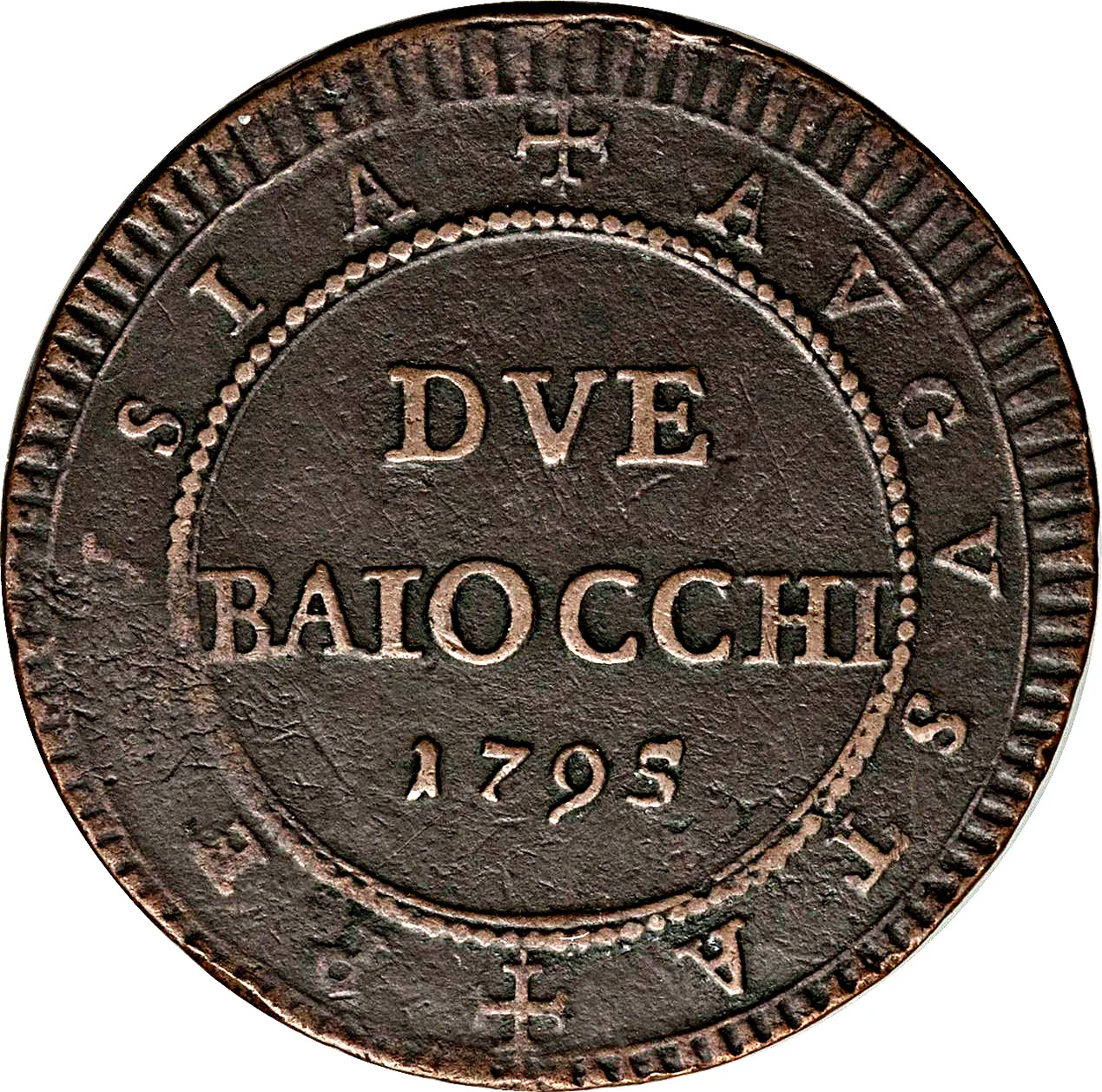
Reverse
Description:
Value in center, date in circle, legend around.
Inscription:
PERVSIA AVGVSTA
DVE
BAIOCCHI
1795
DVE
BAIOCCHI
1795
Script: Latin
Edge
Mints
| Name | Mark |
|---|---|
| Perugia | — |
Mintings
| Year | Mint Mark | Mintage | Quality | Collection |
|---|---|---|---|---|
| 1795 | — | — | ||
| 1799 | — | — |
Historical background
In 1795, Perugia, a city within the Papal States, was experiencing significant monetary instability, a direct consequence of the broader European turmoil sparked by the French Revolutionary Wars. The French invasion of Italy in 1794 and the subsequent political upheaval disrupted traditional trade routes and created widespread economic uncertainty. This environment led to a severe scarcity of sound coinage, particularly scudi and paoli, as people hoarded precious metal coins, distrusting the paper money and debased coinage that began to circulate.
The currency landscape became a confused mix of old Papal issues, emergency tokens minted by local authorities, and an influx of foreign coins from French, Austrian, and Neapolitan forces operating in the region. The Perugian mint struggled to maintain consistent output, and the value of money became highly volatile. This situation was exacerbated by inflationary pressures from war requisitions and the need for local leaders to raise funds for defense, leading to a de facto devaluation of circulating medium.
Ultimately, the monetary chaos of 1795 in Perugia was less a unique crisis and more a local manifestation of the collapsing old order. The unstable currency reflected the city's precarious position, caught between the retreating authority of the Pope and the advancing, revolutionary influence of France. This financial distress would soon culminate in the city's brief experience as the "Perugian Republic" in 1798, a French-sponsored revolutionary state that attempted, with limited success, to impose a new monetary system alongside its political reforms.
The currency landscape became a confused mix of old Papal issues, emergency tokens minted by local authorities, and an influx of foreign coins from French, Austrian, and Neapolitan forces operating in the region. The Perugian mint struggled to maintain consistent output, and the value of money became highly volatile. This situation was exacerbated by inflationary pressures from war requisitions and the need for local leaders to raise funds for defense, leading to a de facto devaluation of circulating medium.
Ultimately, the monetary chaos of 1795 in Perugia was less a unique crisis and more a local manifestation of the collapsing old order. The unstable currency reflected the city's precarious position, caught between the retreating authority of the Pope and the advancing, revolutionary influence of France. This financial distress would soon culminate in the city's brief experience as the "Perugian Republic" in 1798, a French-sponsored revolutionary state that attempted, with limited success, to impose a new monetary system alongside its political reforms.
✨ Legendary