

4 Zecchini – Malta
Malta
Context
Material
References
KM: #Click to copy to clipboard176
Numista: #87197
Value
Bullion value: $2301.55
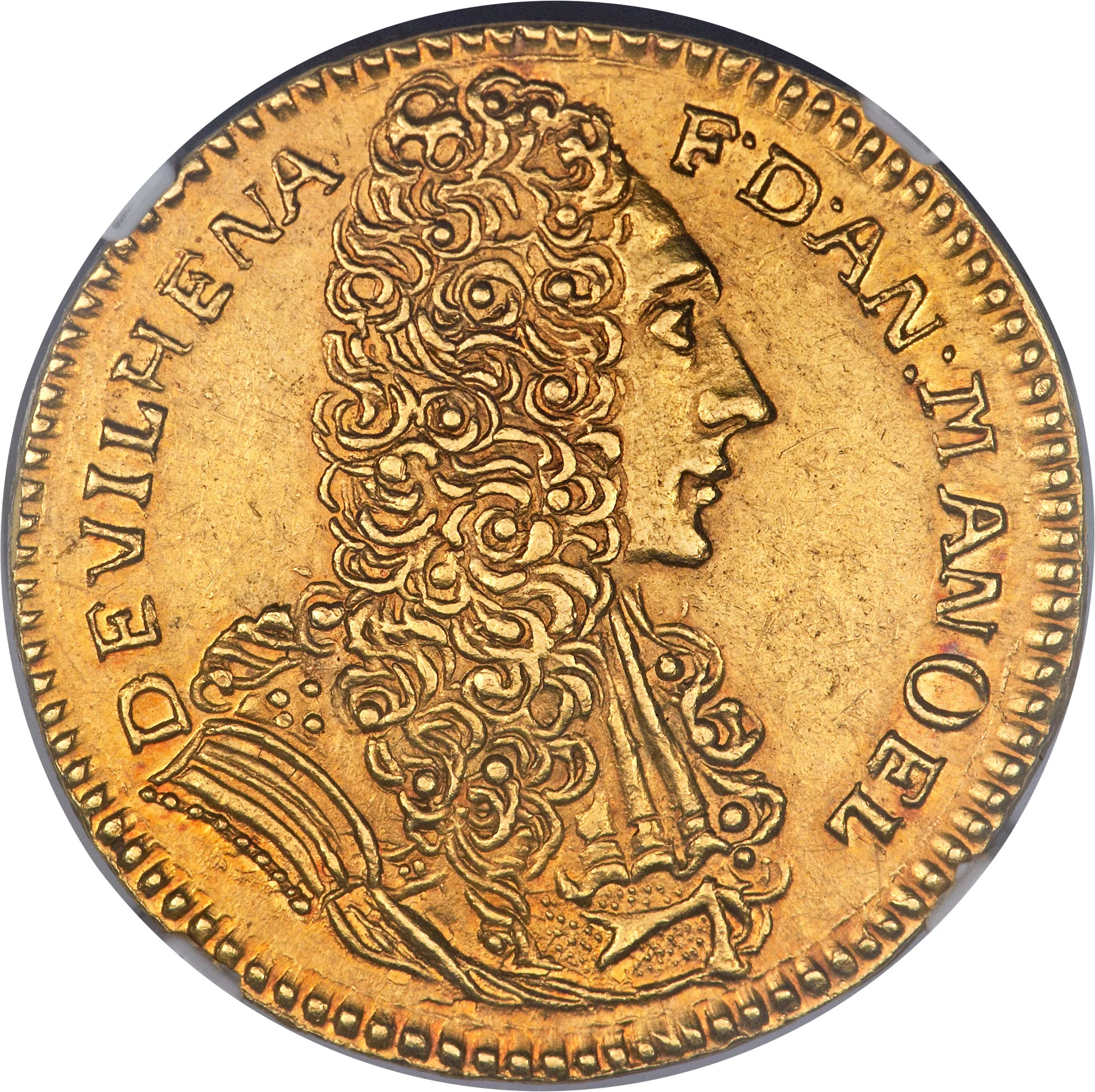
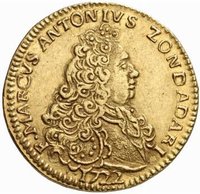
Obverse
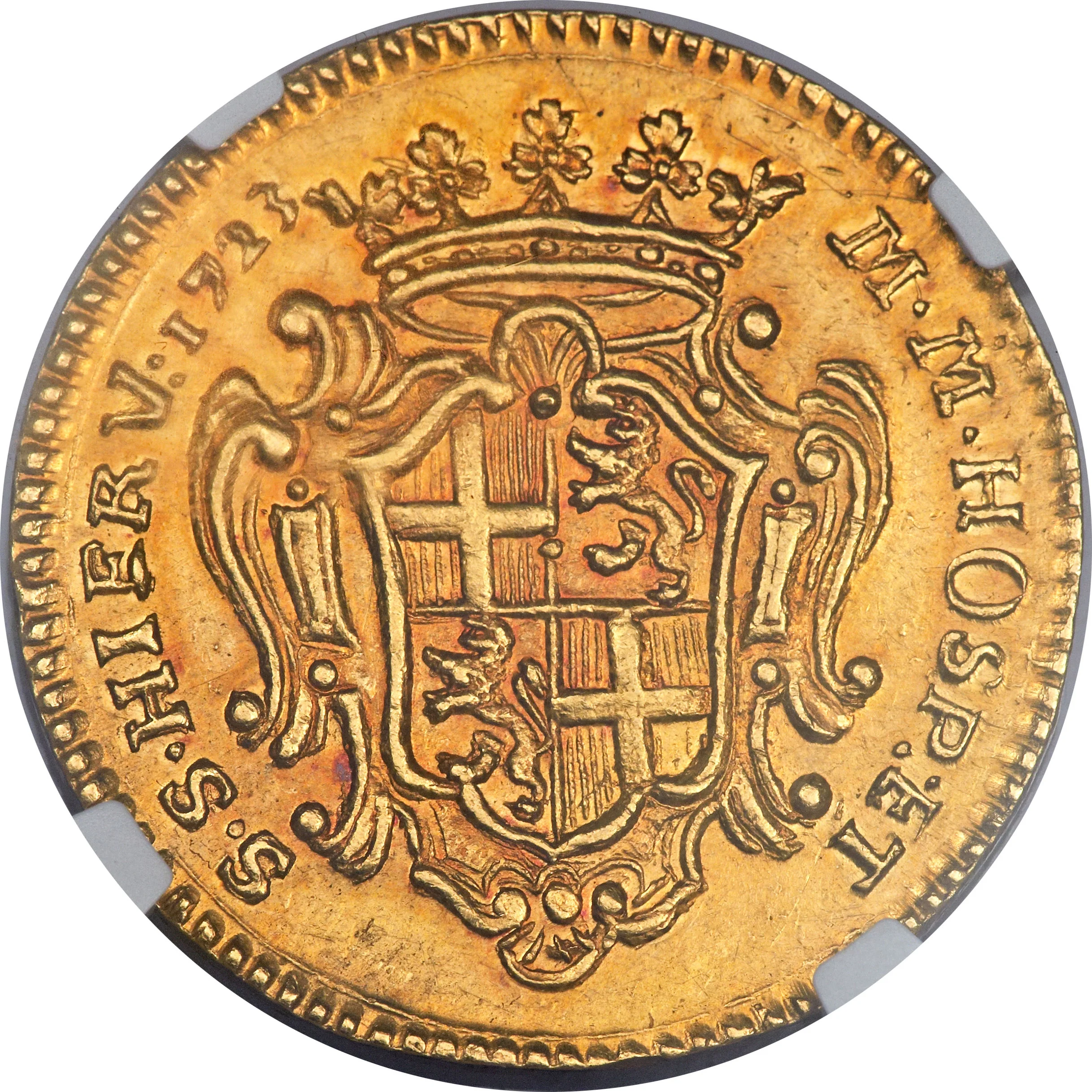
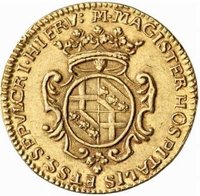
Reverse
Description:
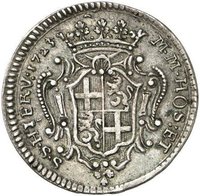
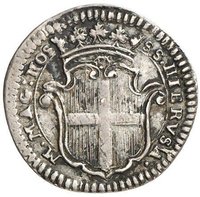
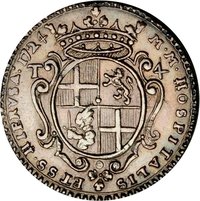
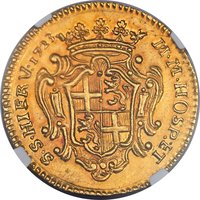
Ornate crowned shield
Inscription:
M · M · HOSP : ET S · S · HIER V: 1723
Script: Latin
Edge
Mintings
| Year | Mint Mark | Mintage | Quality | Collection |
|---|---|---|---|---|
| 1722 | — | — | ||
| 1723 | — | — | ||
| 1724 | — | — |
Historical background
In 1722, the currency situation in the Maltese Islands, then ruled by the Order of Saint John, was one of profound complexity and chronic shortage. The local economy operated on a fractured monetary system where a multitude of foreign coins circulated simultaneously. These included Spanish pieces of eight, Venetian sequins, French écus, and Turkish piastres, each valued by weight and fineness rather than a fixed face value. This created a chaotic environment for trade, as merchants and officials constantly had to refer to lengthy official bandi (proclamations) that attempted to set exchange rates for this bewildering array of specie.
The root of the problem was the absence of a dedicated Maltese mint. While the Order occasionally struck limited commemorative coins, it did not produce a sustained, comprehensive currency to serve the domestic economy. Consequently, the islands suffered from a persistent drain of good-quality full-weight coinage, which was exported to settle international debts, leaving behind a degraded circulation of clipped and worn pieces. This "bad money drives out good" dynamic, akin to Gresham's Law, exacerbated transaction difficulties and hindered economic growth.
Attempts at regulation were frequent but largely ineffective. The Order's Gran Corte della Castellania (Commercial Court) issued proclamations to adjust the tariffed values of foreign coins in an effort to stabilize the medium of exchange. However, these were reactive measures that could not address the systemic issue. The situation in 1722 was therefore one of entrenched monetary instability, a defining challenge that would persist until the Order finally established a permanent public mint in the late 18th century.
The root of the problem was the absence of a dedicated Maltese mint. While the Order occasionally struck limited commemorative coins, it did not produce a sustained, comprehensive currency to serve the domestic economy. Consequently, the islands suffered from a persistent drain of good-quality full-weight coinage, which was exported to settle international debts, leaving behind a degraded circulation of clipped and worn pieces. This "bad money drives out good" dynamic, akin to Gresham's Law, exacerbated transaction difficulties and hindered economic growth.
Attempts at regulation were frequent but largely ineffective. The Order's Gran Corte della Castellania (Commercial Court) issued proclamations to adjust the tariffed values of foreign coins in an effort to stabilize the medium of exchange. However, these were reactive measures that could not address the systemic issue. The situation in 1722 was therefore one of entrenched monetary instability, a defining challenge that would persist until the Order finally established a permanent public mint in the late 18th century.
Series: 1722 Malta circulation coins
✨ Legendary