

3 Silver Reals – Spanish Netherlands
Netherlands
Context
Years: 1605–1610
Country: Netherlands 
Issuer: Spanish Netherlands
Currency:
(1506—1713)
Demonetized: Yes
Material
Diameter: 31 mm
Weight: 9.19 g
Silver weight: 8.23 g
Shape: Irregular round
Composition: 89.6% Silver
Magnetic: No
Technique: Hammered
Alignment: Coin alignment
flip
References
KM: #Click to copy to clipboard27
Numista: #87018
Value
Bullion value: $23.74
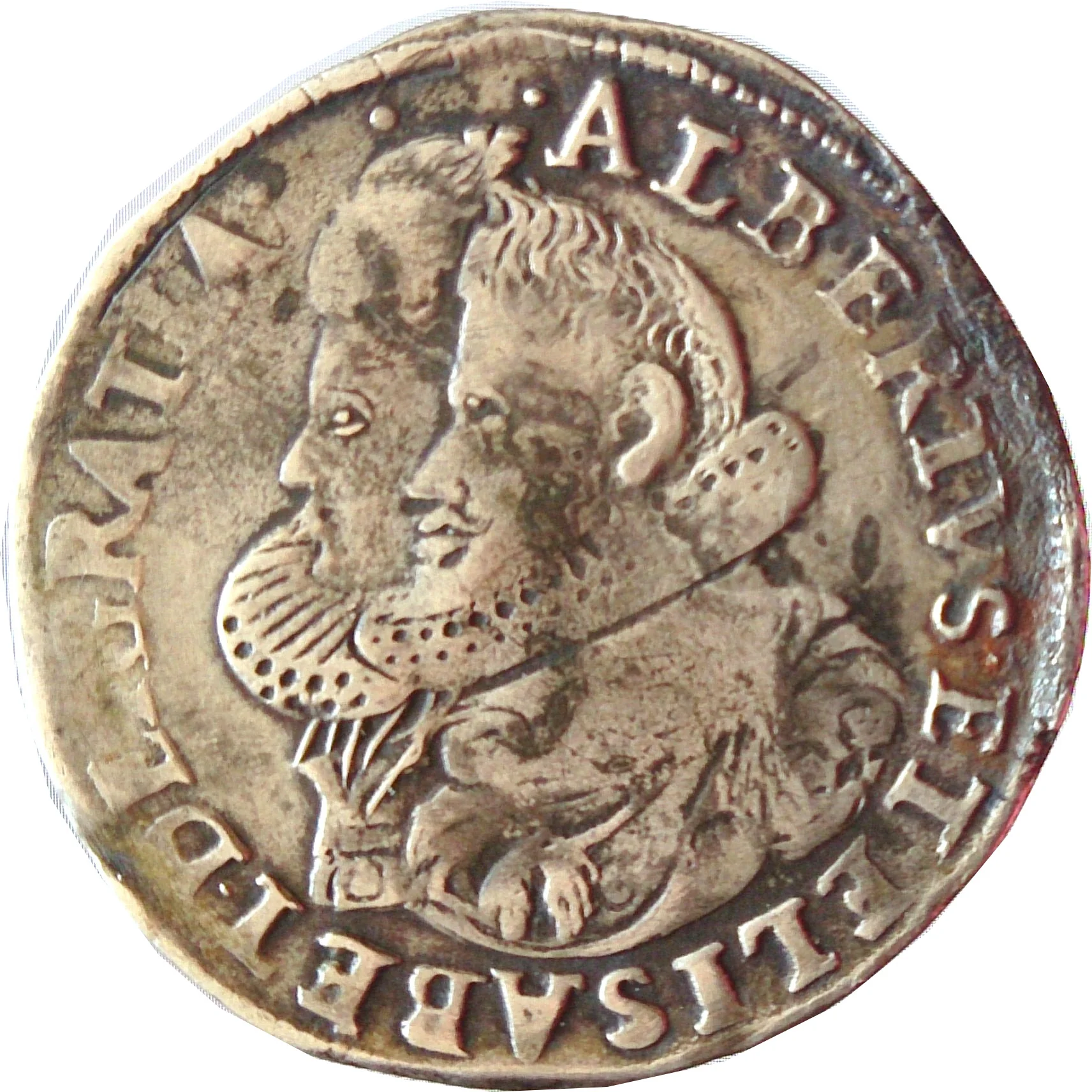
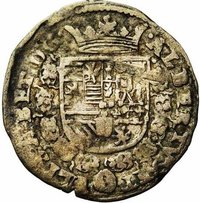
Obverse
Description:
Ruffed collar portraits overlapping, facing left.
Inscription:
ALBERTVS ET ELISABET DEI GRATIA
Script: Latin
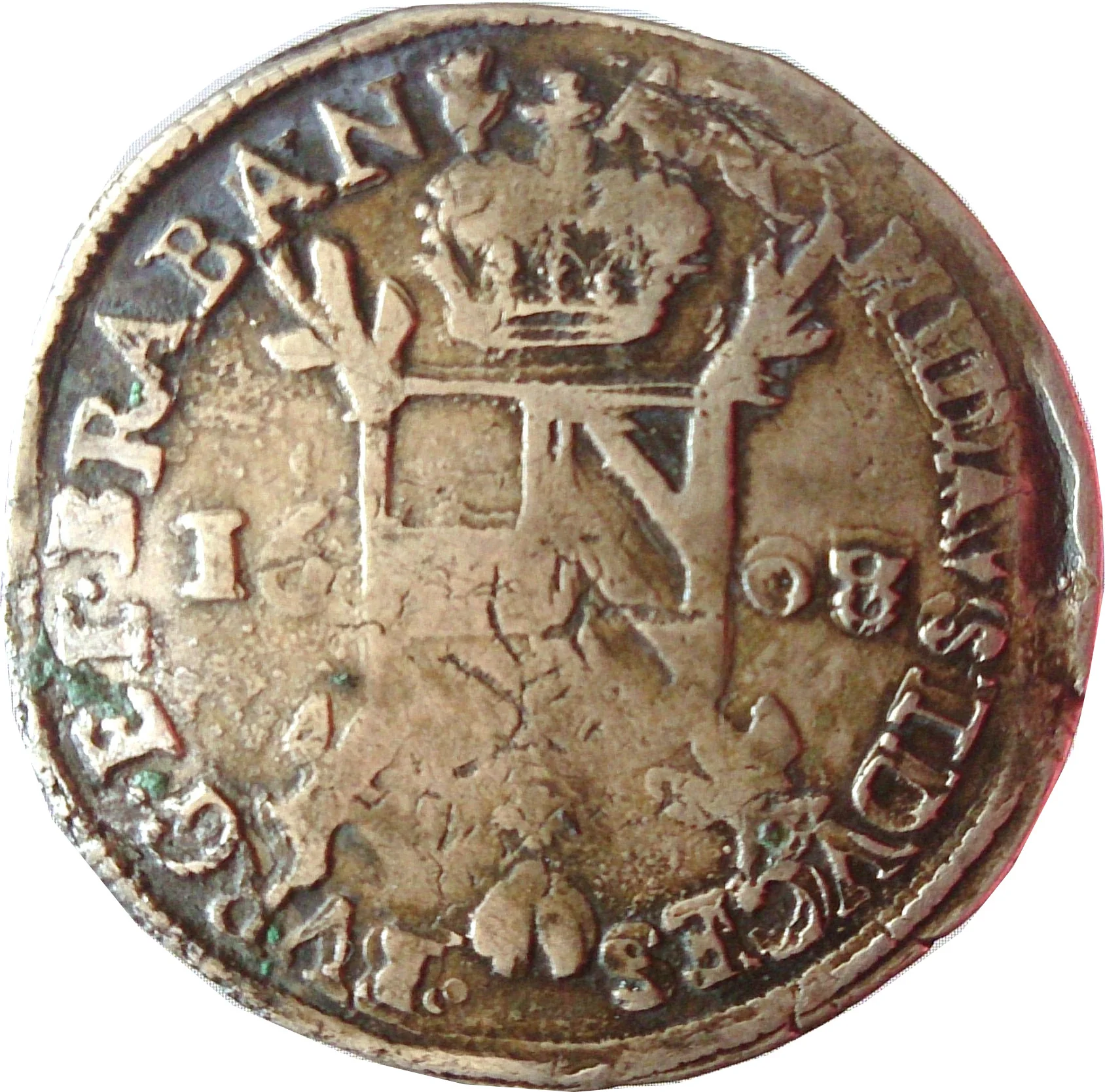
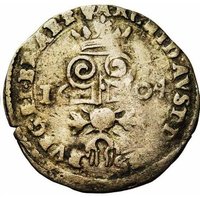
Reverse
Description:
Crowned arms flank the date. Legend ends with mint mark.
Inscription:
ARCHID AVST DVCES BVRG ET BRABAN
Script: Latin
Edge
Mints
| Name | Mark |
|---|---|
| Antwerp | — |
Mintings
| Year | Mint Mark | Mintage | Quality | Collection |
|---|---|---|---|---|
| 1605 | — | — | ||
| 1606 | — | — | ||
| 1607 | — | — | ||
| 1608 | — | — | ||
| 1609 | — | — | ||
| 1610 | — | — |
Historical background
In 1605, the Spanish Netherlands (roughly modern-day Belgium and Luxembourg) was in the midst of the Eighty Years' War, a protracted conflict for independence fought against the Spanish Habsburg crown. This continuous state of war placed an immense financial strain on the region, leading to severe monetary instability. The government, desperate to fund its military campaigns, repeatedly engaged in the debasement of coinage—reducing the precious metal content in coins while maintaining their face value. This practice, alongside the circulation of vast quantities of often inferior foreign coins, led to a chaotic monetary environment where the intrinsic value of coins diverged sharply from their nominal worth, causing inflation and eroding public trust.
The situation was further complicated by the "crying up" or official revaluation of coins. Authorities would arbitrarily increase the legal exchange rate of certain coins, particularly the heavily debased patards and stuivers, in a short-sighted attempt to increase the nominal money supply for state expenses. This policy, however, was economically destructive. It encouraged the flight of full-weight coins (Gresham's Law, where "bad money drives out good money") and disrupted all commercial contracts and wage agreements, as the real purchasing power of currency became unpredictable from one proclamation to the next.
Consequently, by 1605, the economy of the Spanish Netherlands was characterized by a bewildering multiplicity of coins of uncertain value, rampant price inflation, and stunted trade. The lack of a reliable and uniform currency hindered daily transactions and created widespread economic hardship. This monetary crisis underscored the deep fiscal problems of the Spanish crown and became a significant point of contention, fueling discontent among both the merchant classes and the general population in the already war-torn provinces.
The situation was further complicated by the "crying up" or official revaluation of coins. Authorities would arbitrarily increase the legal exchange rate of certain coins, particularly the heavily debased patards and stuivers, in a short-sighted attempt to increase the nominal money supply for state expenses. This policy, however, was economically destructive. It encouraged the flight of full-weight coins (Gresham's Law, where "bad money drives out good money") and disrupted all commercial contracts and wage agreements, as the real purchasing power of currency became unpredictable from one proclamation to the next.
Consequently, by 1605, the economy of the Spanish Netherlands was characterized by a bewildering multiplicity of coins of uncertain value, rampant price inflation, and stunted trade. The lack of a reliable and uniform currency hindered daily transactions and created widespread economic hardship. This monetary crisis underscored the deep fiscal problems of the Spanish crown and became a significant point of contention, fueling discontent among both the merchant classes and the general population in the already war-torn provinces.
✨ Legendary