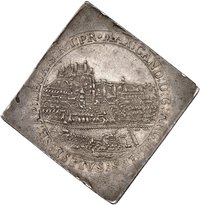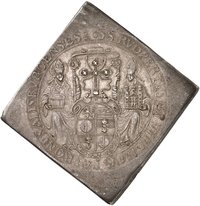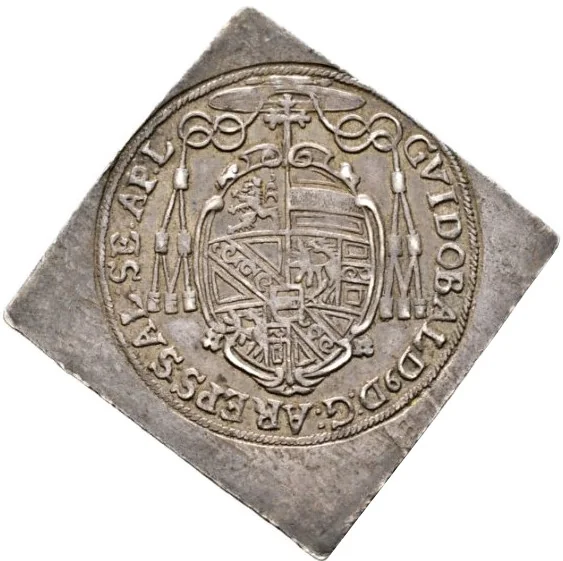
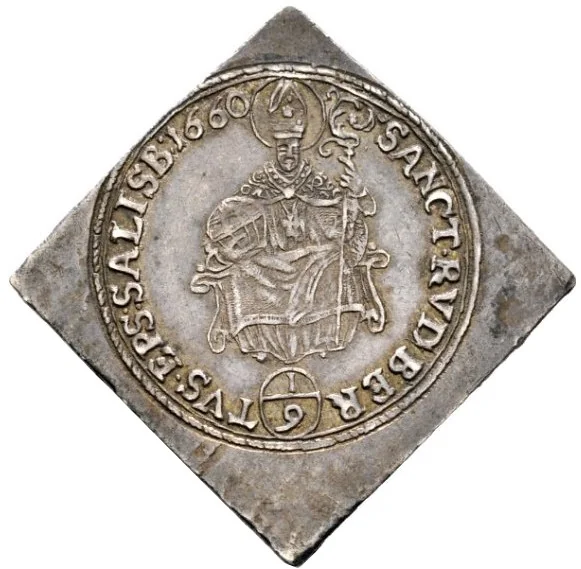
In 1656, the Bishopric of Salzburg, a wealthy and independent ecclesiastical principality within the Holy Roman Empire, faced significant monetary challenges typical of the 17th-century German lands. The primary currency in circulation was the Salzburg
Gulden (florin), which was subdivided into 60
Kreuzer. However, the monetary system was not uniform; the region saw a chaotic coexistence of domestic coinage alongside a flood of foreign coins from neighboring states like Bavaria and Tyrol, as well as high-value Thalers. This proliferation of currencies of varying weight and purity created confusion in commerce and facilitated widespread currency debasement, as states engaged in competitive devaluations to generate seigniorage revenue.
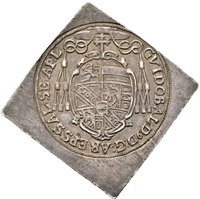
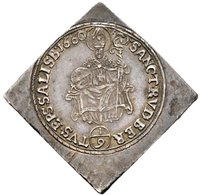
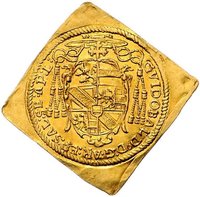
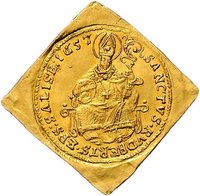
The situation was exacerbated by the ongoing financial strains of the Thirty Years' War (1618-1648), which had ended less than a decade earlier. The war had drained treasuries across Europe, and Salzburg, though less devastated than northern Germany, still faced economic recovery and heavy debt. Prince-Archbishop Guidobald von Thun (ruled 1654-1668) inherited these fiscal pressures. To meet obligations and fund his ambitious architectural projects, including the early stages of Salzburg Cathedral's Baroque renovation, his government likely resorted to manipulating the coinage, subtly reducing the precious metal content in new mintings to create profit, a practice that eroded public trust in the currency.
Consequently, the year 1656 fell within a period of monetary instability and transition. The local economy struggled with the practical problems of daily exchange—merchants and citizens had to constantly assess and haggle over the real value of mixed coins. This environment pressured the episcopal mint to attempt reforms, often through temporary ordinances regulating exchange rates. However, a lasting solution would only begin to emerge later in Guidobald's reign with more systematic monetary regulations, aiming to standardize coinage and stabilize the bishopric's finances, a slow process against the backdrop of a fragmented imperial monetary system.