

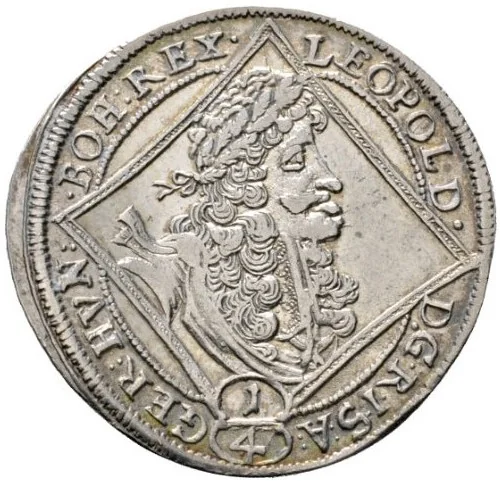
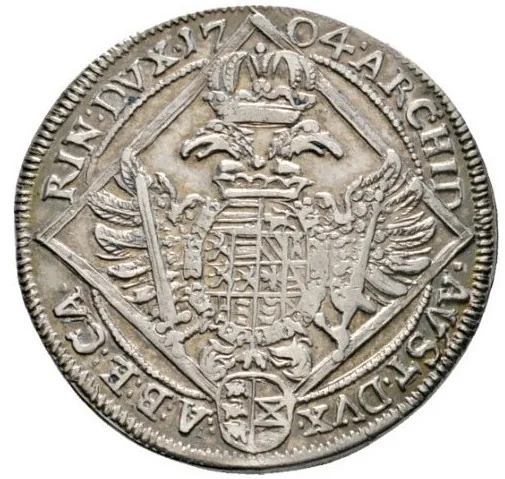
¼ Thaler – Austrian Empire
Austria
Context
Year: 1704
Country: Austria 
Issuer: Austrian Empire
Ruler: Leopold I
Currency:
(1520—1754)
Demonetized: Yes
Material
References
KM: #Click to copy to clipboard1416
Numista: #86632
Value
Bullion value: $21.17
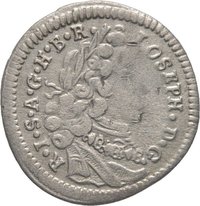
Obverse
Description:
Right-facing portrait in rhombus with beaded circle, value below. Divided legend starts "1h".
Inscription:
LEOPOLD // D G R I S A (¼) GER HUN // BOH REX
Script: Latin
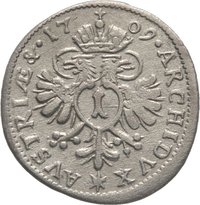
Reverse
Description:
Imperial double-headed eagle with composite arms in a rhombus, inner beaded circle. Small Carinthia shield below, split date above. Legend: "Archidux Austriae Dux ab Burgundiae et Carinthiae Dux".
Inscription:
ARCHID // AVST DVX // A B E CA // RIN DVX 1704
Script: Latin
Edge
Mints
| Name | Mark |
|---|---|
| Sankt Veit | — |
Mintings
| Year | Mint Mark | Mintage | Quality | Collection |
|---|---|---|---|---|
| 1704 | — | — |
Historical background
In 1704, the Austrian Habsburg Monarchy was embroiled in the War of the Spanish Succession (1701-1714), a conflict that placed immense fiscal strain on the imperial treasury. The need to fund large armies fighting across multiple fronts, from the Rhine to Italy and Hungary, led to severe financial shortfalls. This pressure directly corrupted the coinage system, as the government resorted to debasement—reducing the precious metal content in coins—to mint more currency from existing silver stocks and generate seigniorage profit to pay for the war.
The primary currency in circulation was the silver Reichsthaler, but its actual value was unstable. The imperial authorities, operating the mint in Vienna, issued lower-quality Reichsthaler coins and smaller denominations like Groschen and Kreuzer with reduced silver content. This practice, while providing immediate cash, triggered inflation and a loss of public confidence. The situation was further complicated by the empire's fragmented economic structure, as various crown lands (like Bohemia and Hungary) also had varying degrees of minting rights and local monetary traditions, leading to a chaotic mix of coins of differing intrinsic values circulating simultaneously.
Consequently, the year 1704 fell within a period of significant monetary disorder. Prices for goods and services rose sharply as the real value of coins fell, causing hardship for the population and complicating military logistics. This debasement cycle was a typical early modern response to wartime finance, but it undermined long-term economic stability. The situation would eventually contribute to later 18th-century reforms, but in 1704, the currency was primarily a tool of war funding, with stability sacrificed for immediate fiscal survival.
The primary currency in circulation was the silver Reichsthaler, but its actual value was unstable. The imperial authorities, operating the mint in Vienna, issued lower-quality Reichsthaler coins and smaller denominations like Groschen and Kreuzer with reduced silver content. This practice, while providing immediate cash, triggered inflation and a loss of public confidence. The situation was further complicated by the empire's fragmented economic structure, as various crown lands (like Bohemia and Hungary) also had varying degrees of minting rights and local monetary traditions, leading to a chaotic mix of coins of differing intrinsic values circulating simultaneously.
Consequently, the year 1704 fell within a period of significant monetary disorder. Prices for goods and services rose sharply as the real value of coins fell, causing hardship for the population and complicating military logistics. This debasement cycle was a typical early modern response to wartime finance, but it undermined long-term economic stability. The situation would eventually contribute to later 18th-century reforms, but in 1704, the currency was primarily a tool of war funding, with stability sacrificed for immediate fiscal survival.
✨ Legendary