

1 perpero – Republic of Ragusa
Add to wishlist
Croatia
Context
Years: 1683–1750
Country: Croatia
Issuer: Republic of Ragusa
Period:
(1294—1803)
Currency:
(1294—1803)
Subdivision: 1 perpero = 12 Grosetti
Demonetized: Yes
Material
References
KM: #
Numista: #86556
Value
Bullion value: $14.57
Obverse
Description:
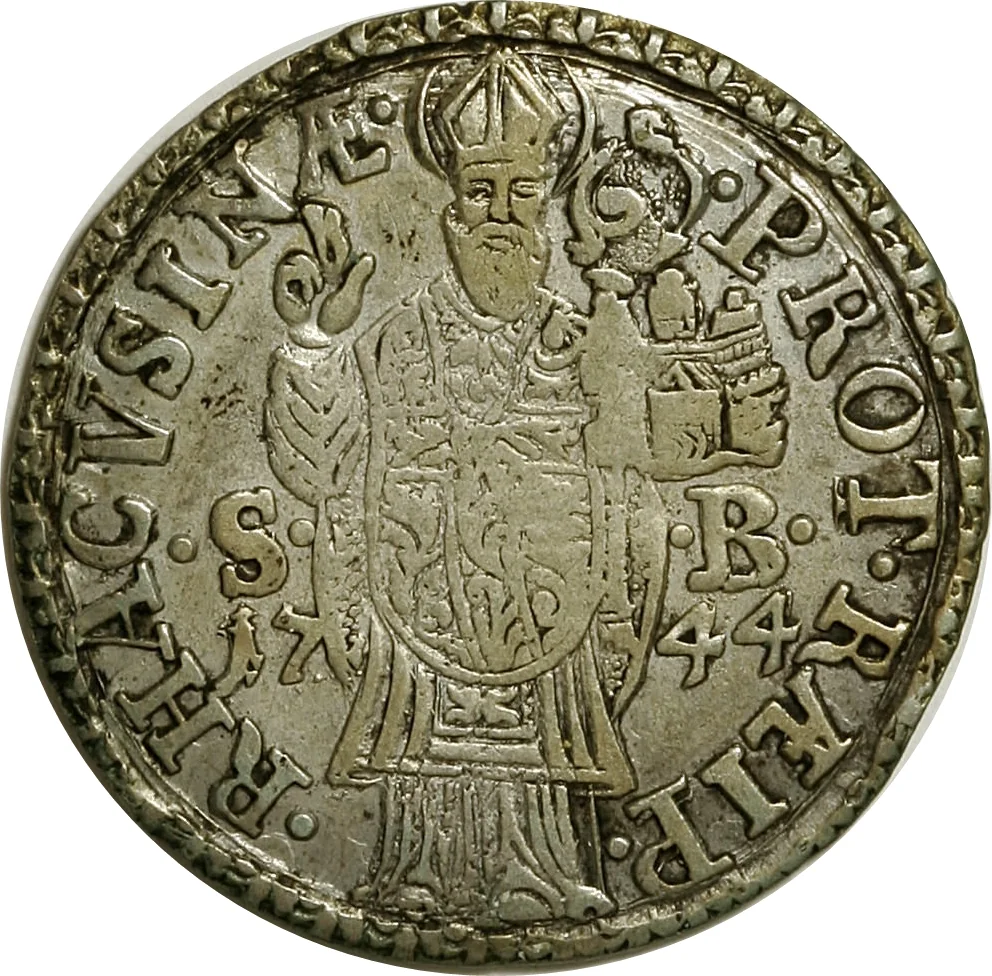
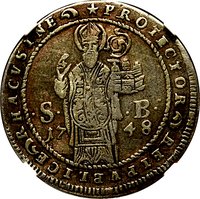
St. Blaze, date, and "S B" with surrounding lettering.
Inscription:
・PROT・RAEIP・RHAGVSINAE
S B
17 44
S B
17 44
Script: Latin
Reverse
Description:
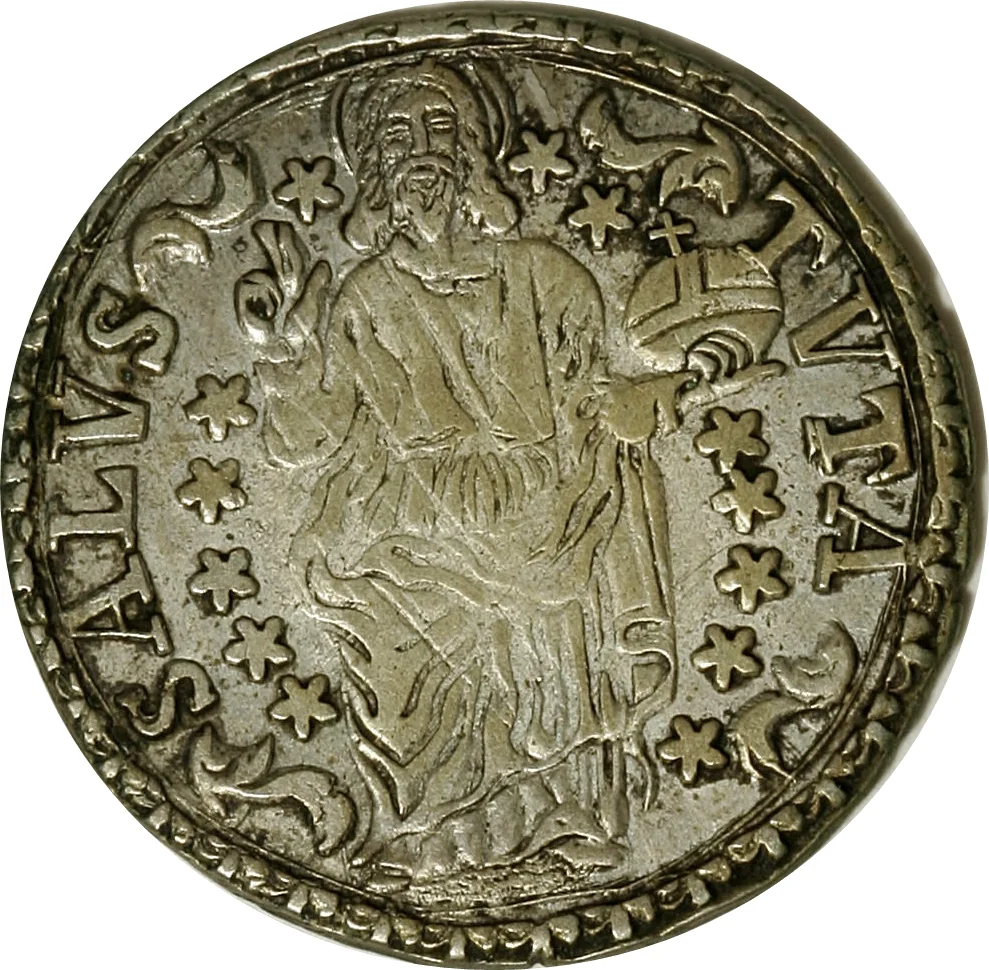
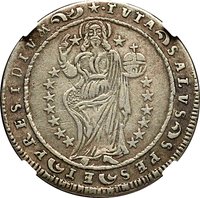
Christ within 13 stars, lettering encircled by two small end ornaments.
Inscription:
SALVS TVTA
Script: Latin
Edge
Mintings
| Year | Mint Mark | Mintage | Quality | Collection |
|---|---|---|---|---|
| 1683 | — | — | ||
| 1692 | — | — | ||
| 1702 | — | — | ||
| 1705 | — | — | ||
| 1706 | — | — | ||
| 1707 | — | — | ||
| 1708 | — | — | ||
| 1709 | — | — | ||
| 1723 | — | — | ||
| 1724 | — | — | ||
| 1725 | — | — | ||
| 1728 | — | — | ||
| 1729 | — | — | ||
| 1730 | — | — | ||
| 1732 | — | — | ||
| 1733 | — | — | ||
| 1734 | — | — | ||
| 1744 | — | — | ||
| 1750 | — | — |
Historical background
In 1683, the Republic of Ragusa (modern-day Dubrovnik) operated a sophisticated and multi-layered currency system, a necessity for a small maritime republic whose wealth was built entirely on long-distance trade and diplomacy. The state officially minted its own silver coin, the Ragusan perper (or perpero), but its circulation was limited. The perper's value was pegged to the most dominant trade currency of the Mediterranean: the Spanish piece of eight, or real de a ocho. This peg provided crucial stability, anchoring Ragusan finance to a globally recognized "hard" currency, much like a modern currency board.
However, the actual daily circulation within the city's walls and across its territories was a cosmopolitan mix of foreign coins. Alongside Spanish silver, traders and citizens commonly used Venetian ducats and lire, Ottoman akçes and kurus, and various other Italian and Levantine coins. This reflected Ragusa's unique geopolitical tightrope act: formally a vassal of the Ottoman Empire, which guaranteed its independence, while being culturally and economically oriented towards the Italian peninsula and the broader Christian Mediterranean.
The year 1683 fell during the Great Turkish War, a period of heightened tension that directly impacted Ragusa's monetary situation. While the republic maintained a fragile neutrality, the war disrupted Balkan trade routes and increased the flow of both Ottoman and Habsburg coins through the region. The Ragusan government, renowned for its conservative fiscal policy with no public debt, would have been intensely managing this influx to protect exchange rates and prevent inflation. The stability of its currency system was not just an economic concern but a vital shield for preserving the state's sovereignty between the clashing empires of Venice, the Ottomans, and the Habsburgs.
However, the actual daily circulation within the city's walls and across its territories was a cosmopolitan mix of foreign coins. Alongside Spanish silver, traders and citizens commonly used Venetian ducats and lire, Ottoman akçes and kurus, and various other Italian and Levantine coins. This reflected Ragusa's unique geopolitical tightrope act: formally a vassal of the Ottoman Empire, which guaranteed its independence, while being culturally and economically oriented towards the Italian peninsula and the broader Christian Mediterranean.
The year 1683 fell during the Great Turkish War, a period of heightened tension that directly impacted Ragusa's monetary situation. While the republic maintained a fragile neutrality, the war disrupted Balkan trade routes and increased the flow of both Ottoman and Habsburg coins through the region. The Ragusan government, renowned for its conservative fiscal policy with no public debt, would have been intensely managing this influx to protect exchange rates and prevent inflation. The stability of its currency system was not just an economic concern but a vital shield for preserving the state's sovereignty between the clashing empires of Venice, the Ottomans, and the Habsburgs.
💎 Very Rare