

2 ducats – Republic of Ragusa
Add to wishlist
Croatia
Context
Year: 1791
Country: Croatia
Issuer: Republic of Ragusa
Period:
(1294—1803)
Currency:
(1294—1803)
Demonetized: Yes
Material
References
KM: #
Numista: #86524
Value
Bullion value: $73.26
Obverse
Description:
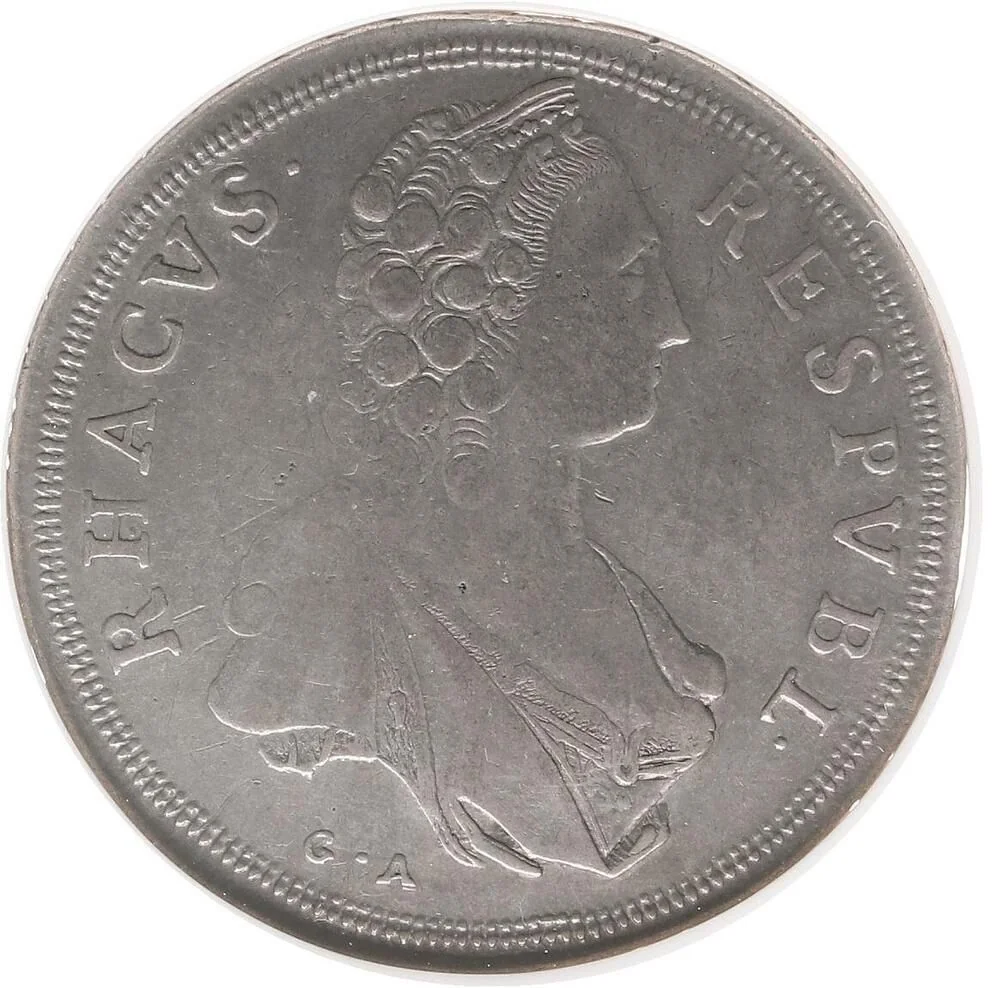
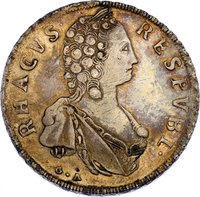
Bust of Maria Theresia right, mint letters below, lettering around.
Inscription:
RESPVBL・・RHACVS
G・A
G・A
Script: Latin
Reverse
Description:
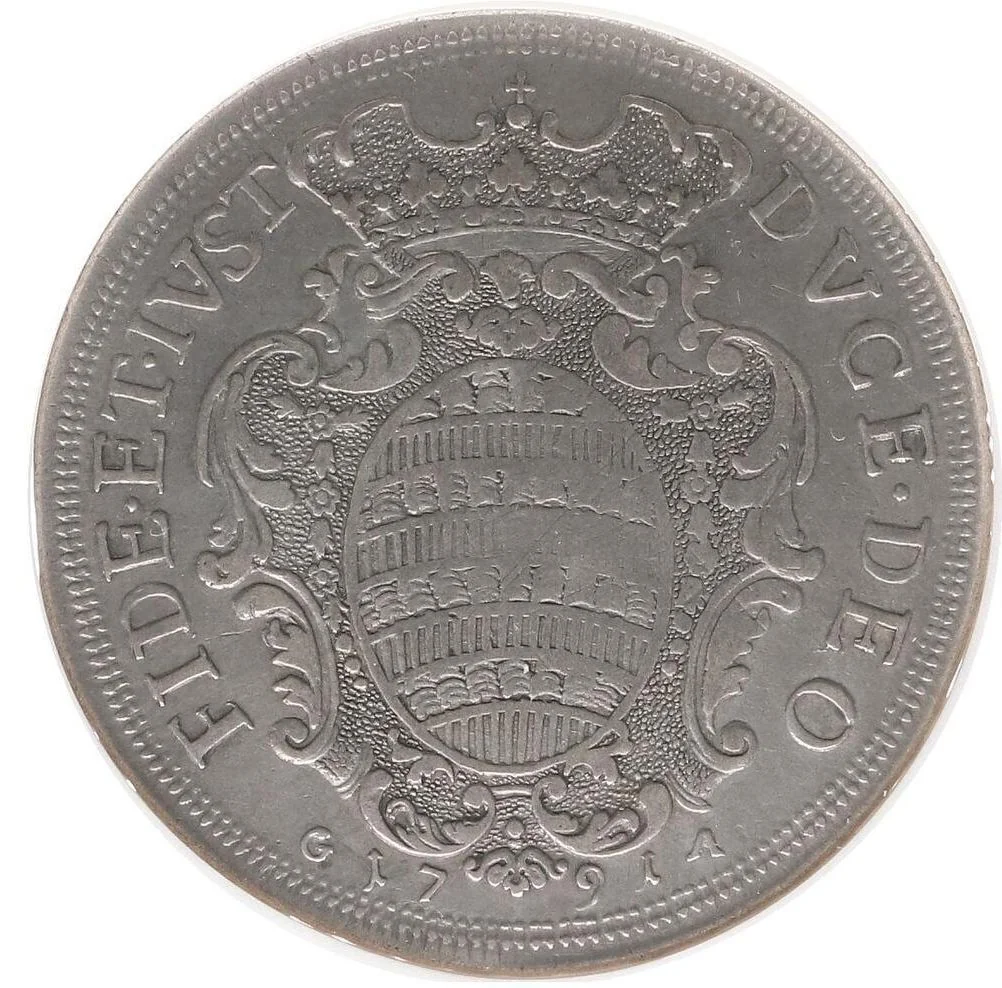
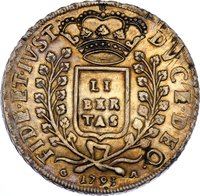
Crowned oval coat of arms with ornate lettering.
Inscription:
DUCE・DEO - FIDE・ET・IVST
G 17 91 A
G 17 91 A
Script: Latin
Edge
Mintings
| Year | Mint Mark | Mintage | Quality | Collection |
|---|---|---|---|---|
| 1791 | GA | — |
Historical background
In 1791, the Republic of Ragusa (present-day Dubrovnik, Croatia) operated a complex and delicate monetary system, a direct reflection of its historic position as a small but prosperous merchant republic sandwiched between great empires. The state did not mint its own significant coinage but functioned within a multi-currency environment dominated by foreign specie. The most important circulating coins were the Tallero (Thaler) of Maria Theresa, which had become a de facto trade currency across the Mediterranean and Balkans, and the Venetian Lira and Ducat, due to centuries of cultural and commercial ties with the Venetian Republic. This reliance on external minting was a long-standing practice, underscoring Ragusa’s economic pragmatism and its role as a neutral trading hub.
However, this system faced mounting pressures by the late 18th century. The republic's finances were strained by the heavy annual tribute paid to the Ottoman Empire, its nominal suzerain, and by the costs of maintaining strict neutrality amidst rising tensions between Napoleon’s France, the Habsburg Monarchy, and Russia. Furthermore, the fluctuating values and supplies of foreign coins created internal economic instability. To assert a degree of monetary sovereignty and simplify commerce, the Ragusan Senate periodically issued small change, known as piccole or soldi, minted from copper or billon (base silver). These tokens, valued in gazette, were essential for daily transactions but their value was pegged to and dependent on the stability of the dominant foreign silver coins.
Thus, the currency situation in 1791 was one of fragile equilibrium. The system was functional, allowing Ragusa's mercantile elite to conduct international business efficiently, but it was inherently vulnerable to the political and economic currents of a continent on the brink of revolutionary wars. The republic’s lack of a powerful, independent currency mirrored its broader geopolitical predicament—a proud but weakening state whose economic mechanisms were ultimately dependent on the goodwill and stability of much larger neighbors, a precarious position that would culminate in the republic’s forced dissolution by Napoleon in 1808.
However, this system faced mounting pressures by the late 18th century. The republic's finances were strained by the heavy annual tribute paid to the Ottoman Empire, its nominal suzerain, and by the costs of maintaining strict neutrality amidst rising tensions between Napoleon’s France, the Habsburg Monarchy, and Russia. Furthermore, the fluctuating values and supplies of foreign coins created internal economic instability. To assert a degree of monetary sovereignty and simplify commerce, the Ragusan Senate periodically issued small change, known as piccole or soldi, minted from copper or billon (base silver). These tokens, valued in gazette, were essential for daily transactions but their value was pegged to and dependent on the stability of the dominant foreign silver coins.
Thus, the currency situation in 1791 was one of fragile equilibrium. The system was functional, allowing Ragusa's mercantile elite to conduct international business efficiently, but it was inherently vulnerable to the political and economic currents of a continent on the brink of revolutionary wars. The republic’s lack of a powerful, independent currency mirrored its broader geopolitical predicament—a proud but weakening state whose economic mechanisms were ultimately dependent on the goodwill and stability of much larger neighbors, a precarious position that would culminate in the republic’s forced dissolution by Napoleon in 1808.
✨ Legendary