Logo Title
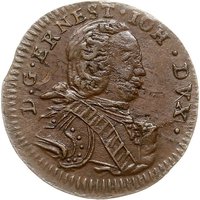
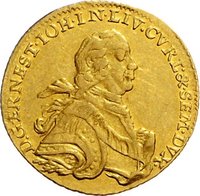
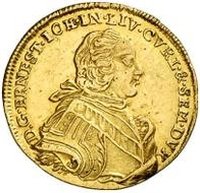
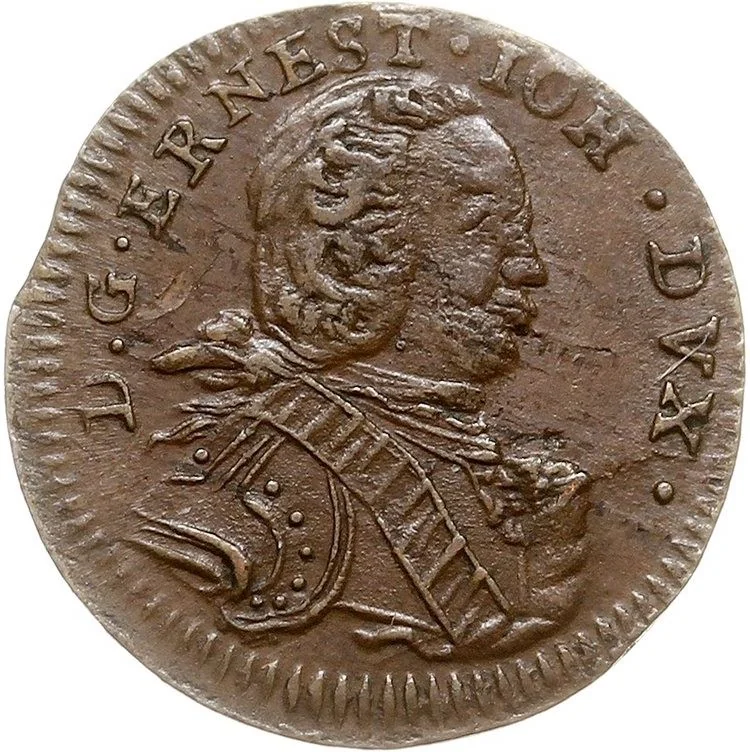
obverse
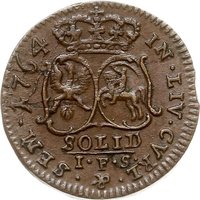
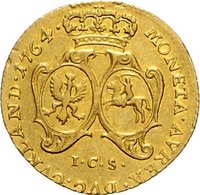
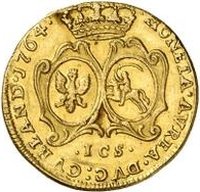
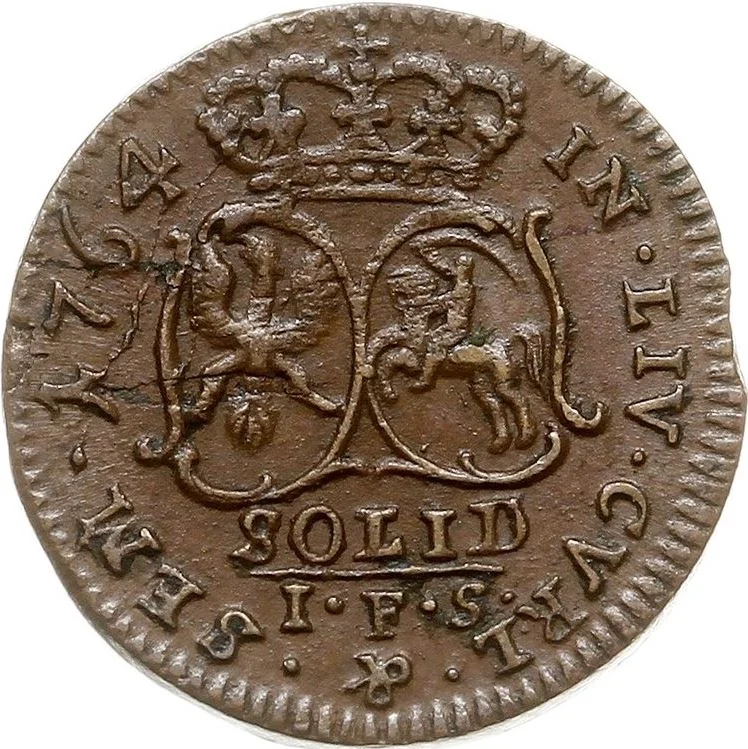
reverse
Warszawskie Centrum Numizmatyczne s.j.
Context
Year: 1764
Country: Livonia
Currency:
(1586—1795)
Subdivision: 1 Schilling = 1⁄108 Thaler
Demonetized: Yes
Material
Diameter: 16 mm
Weight: 1.31 g
Thickness: 0.9 mm
Shape: Round
Composition: Copper
Magnetic: No
References
KM: #Click to copy to clipboard28
Numista: #86474

Obverse

Description:
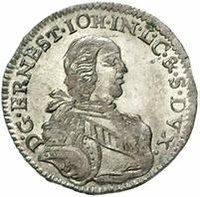
Right-facing bust with surrounding legend.
Inscription:
D · G · ERNEST · IOH · DVX ·
Script: Latin

Reverse

Description:
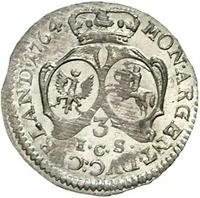
Shield and eagle flanking a crowned horseman above the denomination, encircled by legend.
Inscription:
IN · LIV · CVRL · & · SEM · 1764

SOLID

I · F · S ·
Script: Latin

Edge

Plain

Mints

NameMark
Mitau

Mintings

YearMint MarkMintageQualityCollection
1764
1764ICS
1764IFS

Historical background

In 1764, the Duchy of Courland and Semigallia, a Polish-Lithuanian vassal state on the Baltic coast, faced a complex monetary situation typical of its semi-autonomous status. The duchy did not possess the full right of coinage (jus monetae), meaning its monetary system was heavily influenced by and integrated with that of the Polish-Lithuanian Commonwealth. The primary circulating coins were Polish-Lithuanian issues, such as the złoty, grosz, and ducat, alongside a significant presence of foreign specie, particularly Dutch thalers and German coins, which were essential for the duchy's active participation in Baltic trade.

While limited Courlandic coinage existed, notably the distinctive "Courland ducats" minted from gold purportedly sourced from the duchy's short-lived colonial ventures, these were more commemorative or prestige items than a functional circulating currency. The practical economy relied on a bimetallic system of silver and copper coins from the Commonwealth's mints. This dependence meant that the duchy's monetary stability was directly tied to the broader, often turbulent, fiscal policies and inflationary pressures of the Commonwealth, which was itself struggling with monetary reform during this period.

Therefore, the currency situation in 1764 was one of constrained sovereignty and external dependency. Duke Ernst Johann von Biron, recently restored to the throne after two decades of exile, likely viewed monetary reform as a low priority amidst the more pressing tasks of consolidating political control and rehabilitating the duchy's economy. The monetary landscape remained fragmented, characterized by the concurrent circulation of Commonwealth and foreign coins, with no unified or independent Courlandic monetary policy to address the needs of its local economy.

Series: 1764 Duchy of Courland and Semigallia circulation coins

3 Grossus obverse
3 Grossus reverse
3 Grossus
1764-1765
1 Schilling obverse
1 Schilling reverse
1 Schilling
1764
18 Groshen obverse
18 Groshen reverse
18 Groshen
1764
1 Ducat obverse
1 Ducat reverse
1 Ducat
1764
1 Ducat obverse
1 Ducat reverse
1 Ducat
1764
2 Ducats obverse
2 Ducats reverse
2 Ducats
1764
💎 Extremely Rare