

1 ducat – Austrian Empire
Add to wishlist
Austria
Context
Years: 1781–1786
Country: Austria
Issuer: Austrian Empire
Ruler: Joseph II
Currency:
(1754—1857)
Demonetized: Yes
Total mintage: 11,008
Material
References
KM: #
Numista: #86452
Value
Bullion value: $531.24
Obverse
Description:
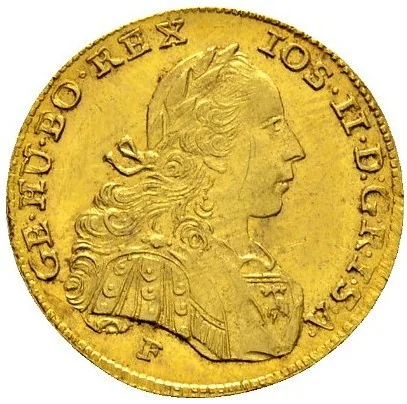
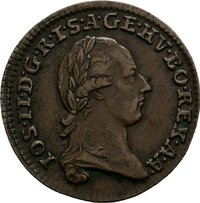
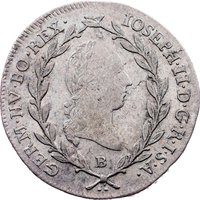
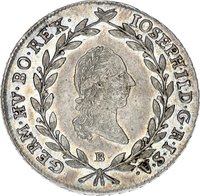
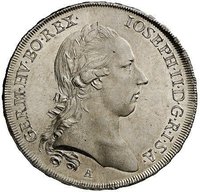
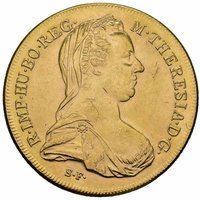
Armoured laureate bust right, mint mark below, legend around.
Inscription:
IOS·II·D·G·R·I·S·A· GE·HV·BO·REX·
F
F
Script: Latin
Reverse
Description:
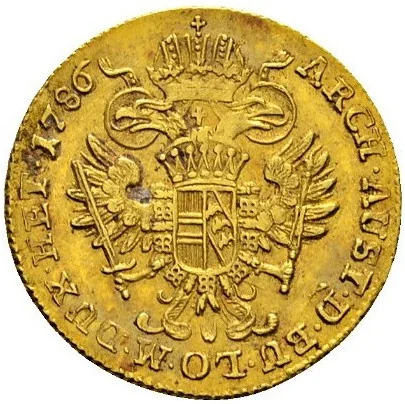
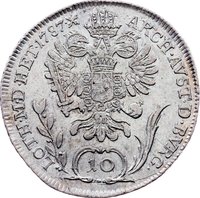
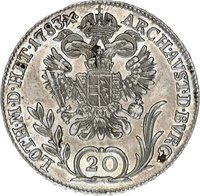
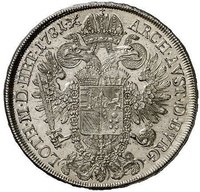
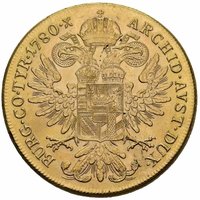
Imperial double-headed eagle crowned, bearing the Austria-Lorraine shield on its breast, encircled by the Order of the Golden Fleece chain, with a surrounding legend beginning at 1 o'clock and ending with the date.
Inscription:
ARCH·AUST·D·BU·LO·M·DUX·HET· 1786
Script: Latin
Edge
Plain
Categories
| Symbol> Crown |
| Symbols> Coat of Arms |
| Symbol> Double-headed eagle |
Mintings
Historical background
In 1781, the currency situation in the Austrian Empire under Emperor Joseph II was characterized by a fragile and complex system inherited from his mother, Empress Maria Theresa. The primary circulating coin was the Conventionsthaler (or Konventionsthaler), established by the monetary convention of 1753 between Austria and Bavaria. This silver standard aimed to bring order to the Holy Roman Empire's coinage, with one Conventionsthaler equal to 2 Gulden (florins), and each Gulden subdivided into 60 Kreuzer. However, the system was strained by the financial demands of the recent Seven Years' War (1756-1763), which had led to significant debt and inflationary pressures.
The empire faced a chronic shortage of specie, particularly small change for daily transactions, leading to widespread use of debased coins and tokens from various provincial mints. Furthermore, the government heavily relied on paper money, specifically Bancozettel issued by the Vienna City Bank. Initially introduced in 1762 as a wartime measure, these banknotes were not fully convertible to silver, and their value had already begun to fluctuate against the Conventionsthaler. This created a de facto bimetallic system where transactions often required careful negotiation between silver coin and paper note values, causing confusion and hindering commerce.
Joseph II's reign was marked by ambitious and costly reforms, as well as military engagements, which continued to pressure state finances. While major monetary reform was not enacted in 1781, the year fell within a period of persistent experimentation and strain. The over-issuance of Bancozettel to fund state projects was laying the groundwork for future inflation, a problem that would escalate dramatically during the Napoleonic Wars. Thus, the currency situation in 1781 was one of precarious stability, underpinned by a silver standard but increasingly dependent on a growing cloud of paper money that threatened its long-term integrity.
The empire faced a chronic shortage of specie, particularly small change for daily transactions, leading to widespread use of debased coins and tokens from various provincial mints. Furthermore, the government heavily relied on paper money, specifically Bancozettel issued by the Vienna City Bank. Initially introduced in 1762 as a wartime measure, these banknotes were not fully convertible to silver, and their value had already begun to fluctuate against the Conventionsthaler. This created a de facto bimetallic system where transactions often required careful negotiation between silver coin and paper note values, causing confusion and hindering commerce.
Joseph II's reign was marked by ambitious and costly reforms, as well as military engagements, which continued to pressure state finances. While major monetary reform was not enacted in 1781, the year fell within a period of persistent experimentation and strain. The over-issuance of Bancozettel to fund state projects was laying the groundwork for future inflation, a problem that would escalate dramatically during the Napoleonic Wars. Thus, the currency situation in 1781 was one of precarious stability, underpinned by a silver standard but increasingly dependent on a growing cloud of paper money that threatened its long-term integrity.
✨ Legendary