

1 lira – Italy
Add to wishlist
Italy
Context
Years: 1915–1917
Issuer: Italy
Ruler: Vittorio Emanuele III
Currency:
(1861—2001)
Demonetized: Yes
Total mintage: 16,808,120
Material
References
KM: #
Numista: #12012
Value
Exchange value: 1 ITL
Bullion value: $10.16
Obverse
Description:
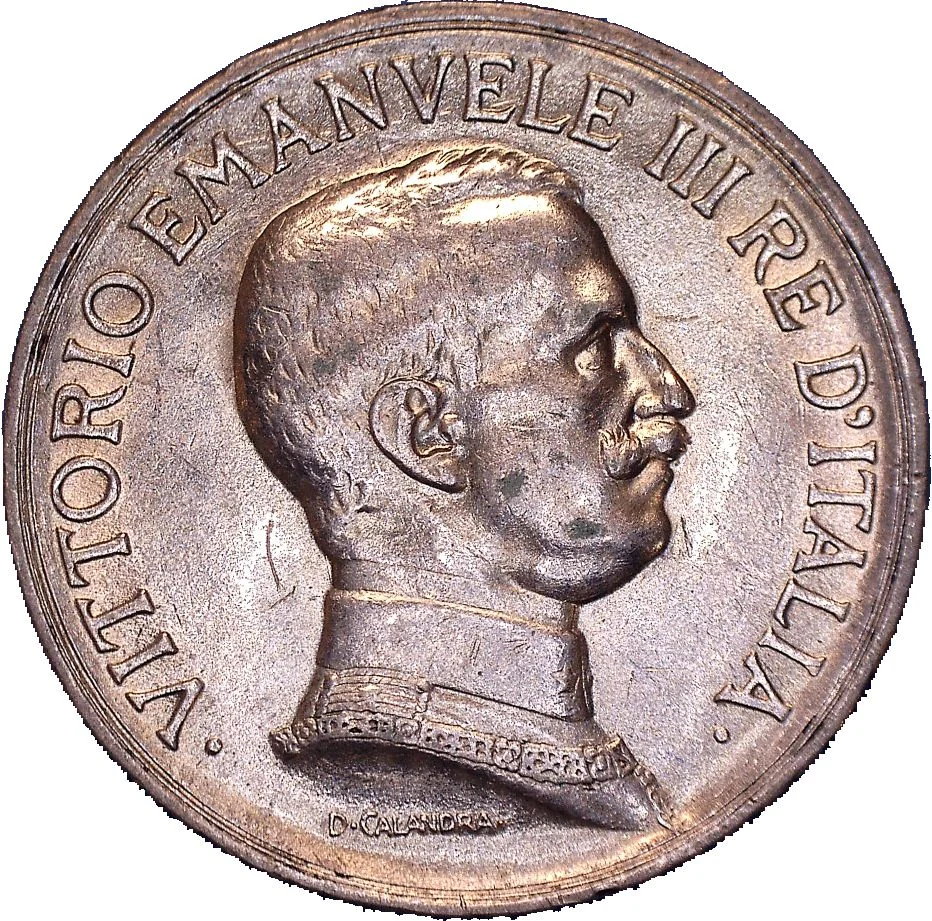
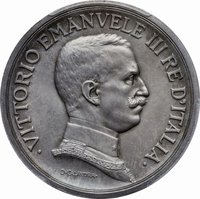
Bust of King Vittorio Emanuele III facing right, engraver's name below.
Inscription:
VITTORIO EMANUELE III RE D'ITALIA
D. CALANDRA
D. CALANDRA
Translation:
Victor Emmanuel III King of Italy
D. Calandra
D. Calandra
Script: Latin
Language: Italian
Engraver: Davide Calandra
Reverse
Description:
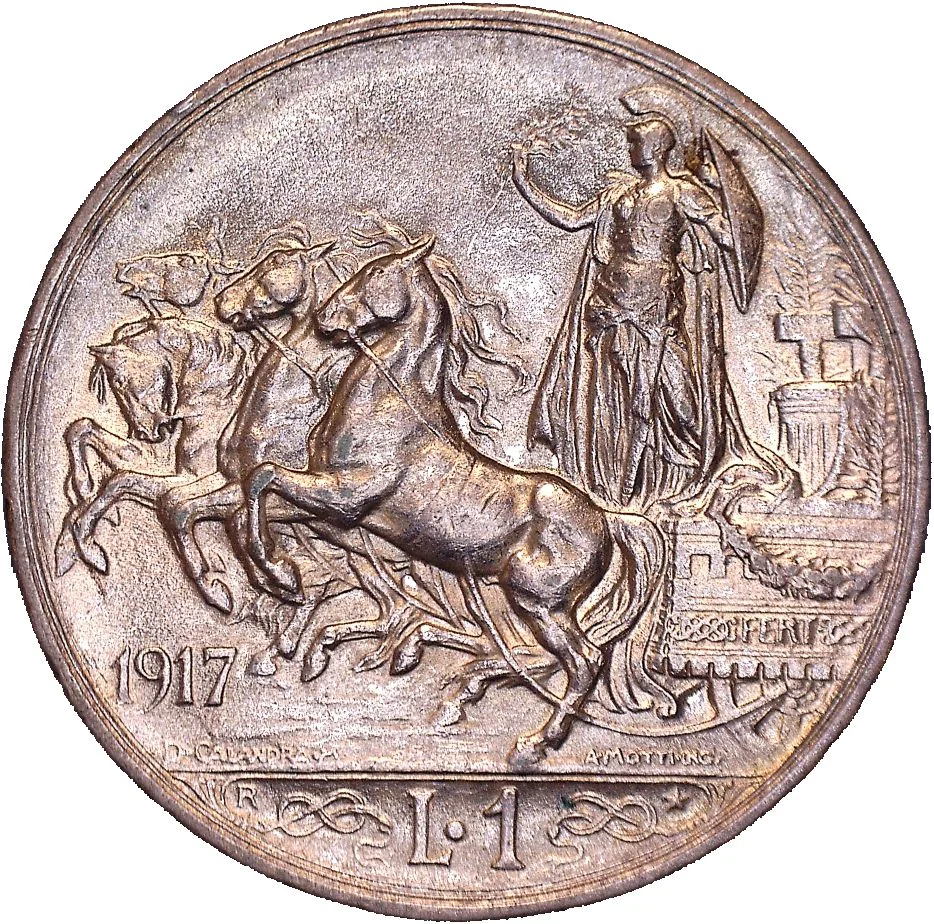
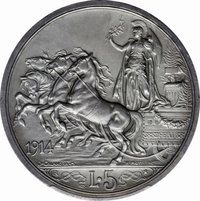
Italy stands on a quadriga, holding a shield and an olive branch. The date is below the horses' legs. The exergue line has the author's and engraver's names. The value in the exergue is flanked by knots with the mintmark and the Star of Italy.
Inscription:
1917
FERT
D·CALANDRA M· A· MOTTI INC·
R
L. 1
FERT
D·CALANDRA M· A· MOTTI INC·
R
L. 1
Script: Latin
Engraver: Attilio Silvio Motti
Edge
Smooth with inscription between knots and rosettes
Legend:
FERT FERT FERT
Translation:
FERT FERT FERT
Language: Latin
Mints
| Name | Mark |
|---|---|
| Rome | R |
Historical background
In 1915, Italy’s currency situation was defined by the strains of neutrality and the looming financial demands of war. The country operated on a gold standard, with the lira convertible into gold, but this system was under severe pressure. The government, led by Prime Minister Antonio Salandra, was engaged in secret negotiations with both the Triple Entente and the Central Powers, a process that created significant economic uncertainty. This political limbo disrupted international trade and capital flows, leading to inflationary pressures and a growing budget deficit as the state began covert military preparations.
The decision to enter World War I on the side of the Allies in May 1915 triggered an immediate and profound shift in monetary policy. To finance the enormous and unexpected costs of mobilization and warfare, the government quickly abandoned strict gold convertibility. The Banca d’Italia, the central bank, was authorized to engage in massive deficit financing, essentially printing money to buy government bonds. This marked the beginning of a decisive break from the pre-war monetary orthodoxy, placing the lira on a purely fiduciary (paper) basis for the duration of the conflict.
Consequently, the foundational elements for wartime inflation and post-war economic turmoil were firmly established in 1915. The suspension of the gold standard, coupled with heavy borrowing and money creation, unleashed inflationary forces that would erode the lira's value and public savings. While the immediate focus was on funding the military machine, these monetary choices set Italy on a path toward the severe economic distortions, public debt crises, and social unrest that would characterize the post-war years.
The decision to enter World War I on the side of the Allies in May 1915 triggered an immediate and profound shift in monetary policy. To finance the enormous and unexpected costs of mobilization and warfare, the government quickly abandoned strict gold convertibility. The Banca d’Italia, the central bank, was authorized to engage in massive deficit financing, essentially printing money to buy government bonds. This marked the beginning of a decisive break from the pre-war monetary orthodoxy, placing the lira on a purely fiduciary (paper) basis for the duration of the conflict.
Consequently, the foundational elements for wartime inflation and post-war economic turmoil were firmly established in 1915. The suspension of the gold standard, coupled with heavy borrowing and money creation, unleashed inflationary forces that would erode the lira's value and public savings. While the immediate focus was on funding the military machine, these monetary choices set Italy on a path toward the severe economic distortions, public debt crises, and social unrest that would characterize the post-war years.
🌱 Common