

2 Pfennigs – Austrian Empire
Austria
Context
Years: 1689–1701
Country: Austria 
Issuer: Austrian Empire
Ruler: Leopold I
Currency:
(1520—1754)
Demonetized: Yes
Material
References
KM: #Click to copy to clipboard1337
Numista: #85580
Obverse
Description:
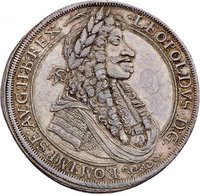
Three shields above the eagle, which splits the date on an arc; below left are Austria and Burgundy, below right is Vienna's cross.
Inscription:
1692
Script: Latin
Reverse
Description:
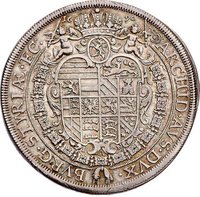
Uniface blank coin.
Edge
Plain
Mints
| Name | Mark |
|---|---|
| Münze Österreich | — |
Mintings
| Year | Mint Mark | Mintage | Quality | Collection |
|---|---|---|---|---|
| 1689 | — | — | ||
| 1690 | — | — | ||
| 1691 | — | — | ||
| 1692 | — | — | ||
| 1693 | — | — | ||
| 1694 | — | — | ||
| 1698 | — | — | ||
| 1699 | — | — | ||
| 1700 | — | — | ||
| 1701 | — | — |
Historical background
In 1689, the Habsburg Monarchy, often referred to as the Austrian Empire, was embroiled in the Great Turkish War (1683-1699), a conflict that placed immense strain on its finances. The costly military campaigns, requiring the payment and supply of large armies, led to chronic fiscal shortfalls. The state's primary response was to debase the coinage, a practice where the silver content of coins was reduced while their face value was maintained. This effectively created seigniorage profit for the imperial treasury in the short term but triggered severe inflation and a loss of public trust in the currency.
The monetary landscape was complex and fragmented. There was no single, unified currency for the entire empire. The official silver coin was the Reichsthaler, but the most commonly minted and circulated coin was its fractional unit, the Kreuzer. However, various hereditary lands, such as the Kingdom of Hungary and the Austrian Netherlands, also minted their own local coinage. Furthermore, the widespread circulation of debased Kipper und Wipper coins from earlier in the century, alongside older, full-weight Guldiner coins, created a chaotic system where "bad money drove out good" (Gresham's Law), as people hoarded the older, purer coins.
This monetary instability had dire economic consequences. The rapid devaluation harmed creditors, including state creditors and merchants, while benefiting debtors. It disrupted trade, as the fluctuating and uncertain value of coins made transactions difficult. The situation was so critical that it prompted serious, though initially unsuccessful, discussions about monetary reform. Ultimately, the currency crisis of 1689 was a direct symptom of the empire's wartime fiscal desperation, highlighting the fundamental weakness of its financial administration and setting the stage for more systematic reforms that would be attempted in the following decades under pressure from continuous military expenditure.
The monetary landscape was complex and fragmented. There was no single, unified currency for the entire empire. The official silver coin was the Reichsthaler, but the most commonly minted and circulated coin was its fractional unit, the Kreuzer. However, various hereditary lands, such as the Kingdom of Hungary and the Austrian Netherlands, also minted their own local coinage. Furthermore, the widespread circulation of debased Kipper und Wipper coins from earlier in the century, alongside older, full-weight Guldiner coins, created a chaotic system where "bad money drove out good" (Gresham's Law), as people hoarded the older, purer coins.
This monetary instability had dire economic consequences. The rapid devaluation harmed creditors, including state creditors and merchants, while benefiting debtors. It disrupted trade, as the fluctuating and uncertain value of coins made transactions difficult. The situation was so critical that it prompted serious, though initially unsuccessful, discussions about monetary reform. Ultimately, the currency crisis of 1689 was a direct symptom of the empire's wartime fiscal desperation, highlighting the fundamental weakness of its financial administration and setting the stage for more systematic reforms that would be attempted in the following decades under pressure from continuous military expenditure.

💎 Extremely Rare