

1 Denga – Russian Empire
Russia
Context

Material
References
KM: #Click to copy to clipboard115
Numista: #85143
Obverse
Description:
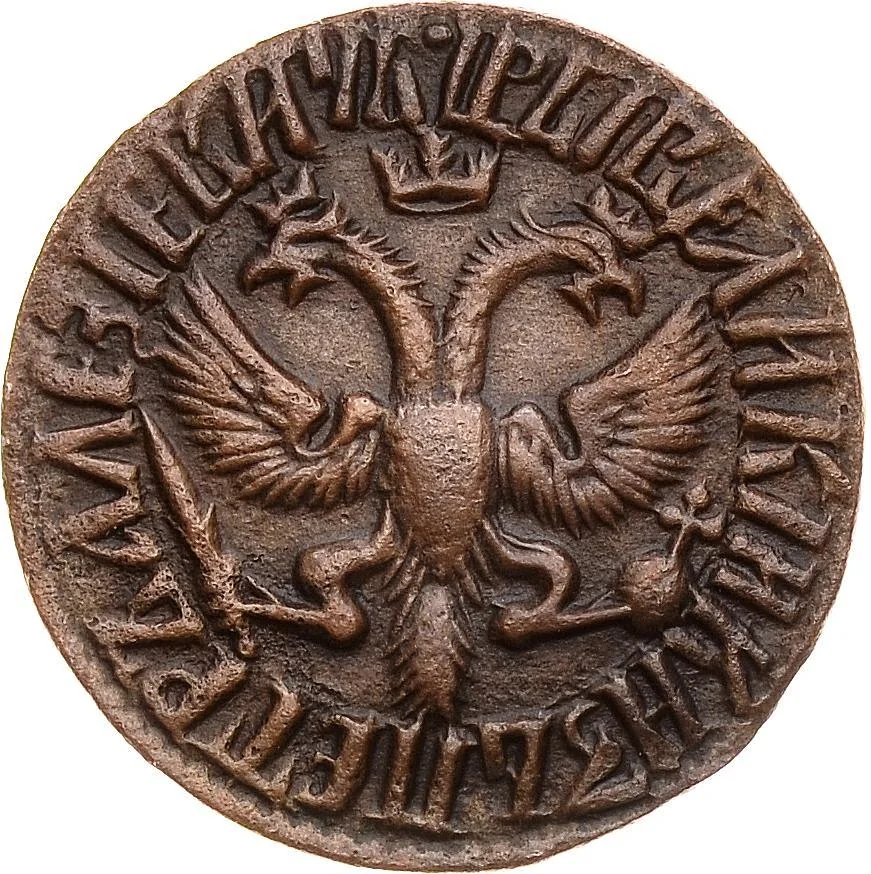
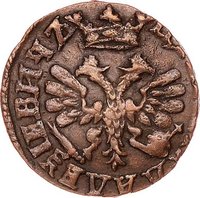
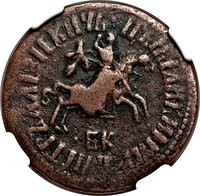
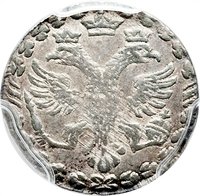
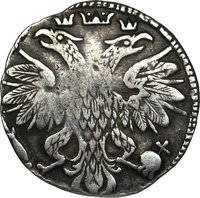
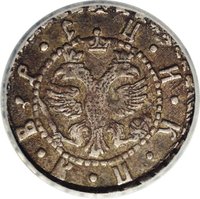
Double-headed crowned eagle in circle, surrounded by Peter I's name and title.
Inscription:
ЦРЬ И ВЕЛИКIИ КНЗЬ ПЕТРЪ АЛЕѮIЕВИЧЬ
Script: Cyrillic
Reverse
Description:
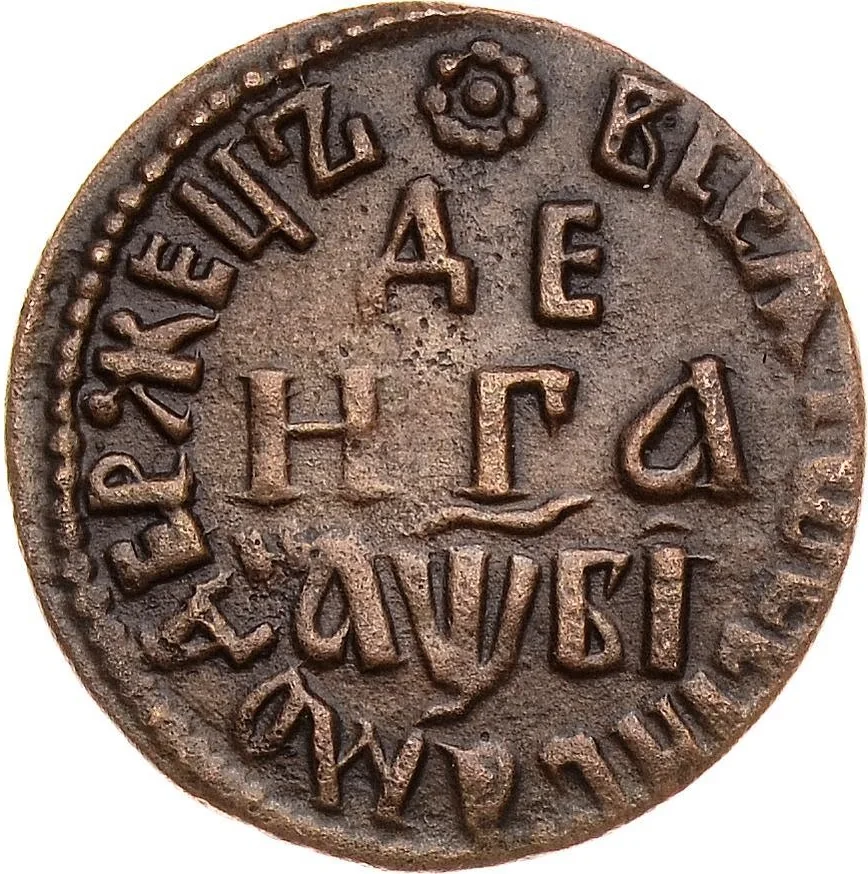
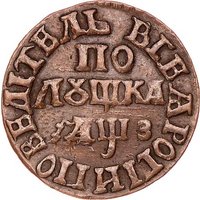
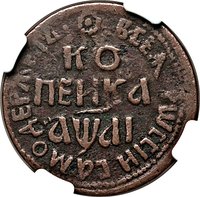
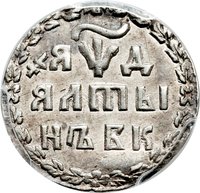
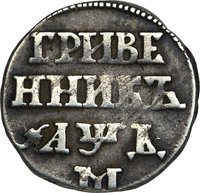
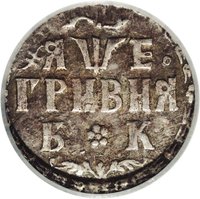
Value in circle, date inside, legend around.
Inscription:
ВСЕѦ РѠССIИ САМОДЕРЖЕЦЪ
ДЕ
НГА
҃АΨBІ
ДЕ
НГА
҃АΨBІ
Script: Cyrillic
Edge
Plain
Mints
| Name | Mark |
|---|---|
| Naberezhny Mint | — |
Mintings
| Year | Mint Mark | Mintage | Quality | Collection |
|---|---|---|---|---|
| 1704 | — | — | ||
| 1705 | — | — | ||
| 1706 | — | — | ||
| 1707 | — | — | ||
| 1708 | — | — | ||
| 1709 | — | — | ||
| 1710 | — | — | ||
| 1711 | — | — | ||
| 1712 | — | — |
Historical background
In 1704, the currency situation in the Russian Empire was defined by a sweeping and ambitious monetary reform enacted by Tsar Peter I (Peter the Great). This reform was a direct component of his broader modernization and Westernization campaign, driven by the immense financial demands of the Great Northern War against Sweden. The pre-reform system, reliant on small, irregular silver kopecks and dengas, was inadequate for financing a modern army and state apparatus, leading to chronic shortages and inefficiency in large-scale trade and state finance.
The core of Peter's reform was the introduction of a new, decimal-based coinage system, which established the ruble as a standard silver coin for the first time (previously a unit of account). The silver ruble was minted alongside new, smaller denominations like the poltina (50 kopecks) and polupoltina (25 kopecks), creating a coherent hierarchy. Crucially, the reform also introduced copper coins of substantial value, such as the kopeck and denga, marking a shift to a fiduciary system where the state guaranteed their value despite their intrinsic worth being lower than their face value. This allowed the treasury to significantly increase mint output and generate essential seigniorage revenue for the war.
While revolutionary in design, the reform's implementation in 1704 was still in its early stages and faced significant challenges. The populace, accustomed to the old silver wire kopecks, was initially distrustful of the new machine-struck coins and the heavy copper pieces. Furthermore, the state's urgent need for revenue led to periodic debasement of the silver content and over-issue of copper, planting the seeds for future inflation. Nevertheless, the 1704 reform laid the foundational structure of the Russian monetary system, aligning it with European practices and providing the fiscal machinery necessary for Peter's imperial ambitions.
The core of Peter's reform was the introduction of a new, decimal-based coinage system, which established the ruble as a standard silver coin for the first time (previously a unit of account). The silver ruble was minted alongside new, smaller denominations like the poltina (50 kopecks) and polupoltina (25 kopecks), creating a coherent hierarchy. Crucially, the reform also introduced copper coins of substantial value, such as the kopeck and denga, marking a shift to a fiduciary system where the state guaranteed their value despite their intrinsic worth being lower than their face value. This allowed the treasury to significantly increase mint output and generate essential seigniorage revenue for the war.
While revolutionary in design, the reform's implementation in 1704 was still in its early stages and faced significant challenges. The populace, accustomed to the old silver wire kopecks, was initially distrustful of the new machine-struck coins and the heavy copper pieces. Furthermore, the state's urgent need for revenue led to periodic debasement of the silver content and over-issue of copper, planting the seeds for future inflation. Nevertheless, the 1704 reform laid the foundational structure of the Russian monetary system, aligning it with European practices and providing the fiscal machinery necessary for Peter's imperial ambitions.
💎 Very Rare