

1 Guinea – United Kingdom
United Kingdom
Context

Material
References
KM: #Click to copy to clipboard563
Numista: #84953
Value
Bullion value: $1286.47
Obverse
Description:
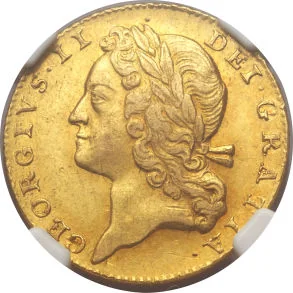
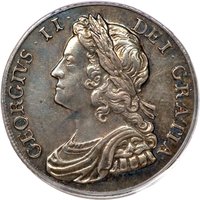
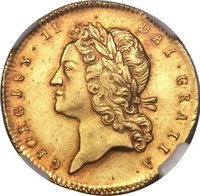
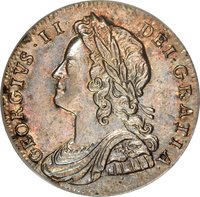
First laureate portrait of young George II, legend in large letters around.
Inscription:
GEORGIVS • II • DEI • GRATIA •
Script: Latin
Reverse
Description:
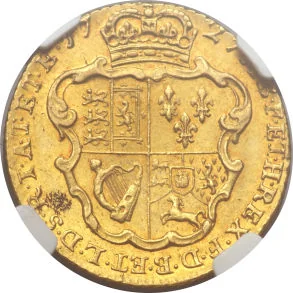
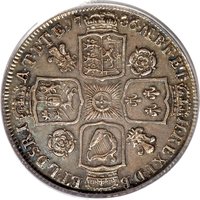
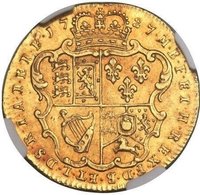
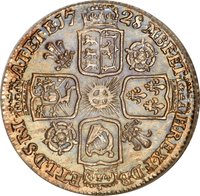
Quartered shield with crown above divided date, legend around. Large letters, smaller shield.
Inscription:
M • B • F • ET • H • REX • F • D • B • ET • L • D • S • R • I • A • T • ET • E • 1727 •
Script: Latin
Edge
Reeded
Categories
| Symbols> Coat of Arms |
Mintings
| Year | Mint Mark | Mintage | Quality | Collection |
|---|---|---|---|---|
| 1727 | — | — | ||
| 1728 | — | — |
Historical background
In 1727, the United Kingdom’s currency system was in a state of transition, grappling with the physical degradation of its silver coinage. The recoinage of 1696, which introduced milled-edge coins to prevent clipping, had not produced enough silver coins to meet demand. Consequently, much of the silver in circulation was old, worn, and underweight, leading to a significant disparity between its face value and its intrinsic bullion value. This encouraged hoarding and melting, as silver was worth more abroad, causing a chronic shortage of sound specie for daily commerce.
The situation created a heavy reliance on gold. Following Sir Isaac Newton’s work as Master of the Mint, the gold guinea had been effectively overvalued against silver in 1717, accidentally placing Britain on a de facto gold standard. In 1727, the guinea’s value was officially fixed at 21 shillings, further cementing gold's primacy. However, everyday transactions still depended on small-denomination silver and copper coins, which remained scarce and unreliable. To fill the gap, a proliferation of private tokens, trade credits, and promissory notes facilitated local exchange, but this created an uneven and often confusing monetary landscape across the country.
Ultimately, the currency issues of 1727 highlighted the growing pains of a commercial empire. The government, under Prime Minister Robert Walpole, prioritized fiscal stability and avoided the expense of a major silver recoinage. The systemic shift toward gold, though not yet formalized, was underway, setting the stage for the financial infrastructure needed to support Britain’s expanding trade and colonial ambitions. The year thus represents a quiet but pivotal moment in the long transition from a bimetallic system to one anchored on gold.
The situation created a heavy reliance on gold. Following Sir Isaac Newton’s work as Master of the Mint, the gold guinea had been effectively overvalued against silver in 1717, accidentally placing Britain on a de facto gold standard. In 1727, the guinea’s value was officially fixed at 21 shillings, further cementing gold's primacy. However, everyday transactions still depended on small-denomination silver and copper coins, which remained scarce and unreliable. To fill the gap, a proliferation of private tokens, trade credits, and promissory notes facilitated local exchange, but this created an uneven and often confusing monetary landscape across the country.
Ultimately, the currency issues of 1727 highlighted the growing pains of a commercial empire. The government, under Prime Minister Robert Walpole, prioritized fiscal stability and avoided the expense of a major silver recoinage. The systemic shift toward gold, though not yet formalized, was underway, setting the stage for the financial infrastructure needed to support Britain’s expanding trade and colonial ambitions. The year thus represents a quiet but pivotal moment in the long transition from a bimetallic system to one anchored on gold.
✨ Legendary