

1 shilling – United Kingdom
Add to wishlist
United Kingdom
Context
Material
References
KM: #
Numista: #83892
Value
Bullion value: $14.13
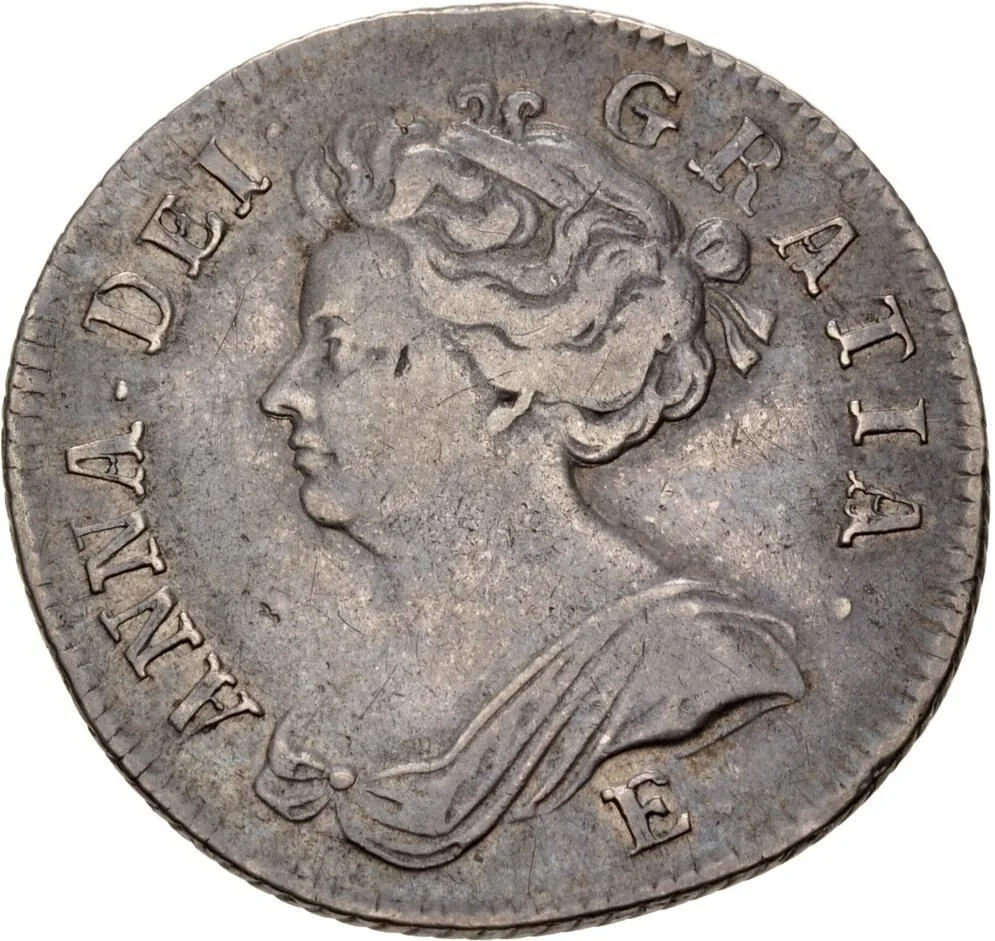
Obverse
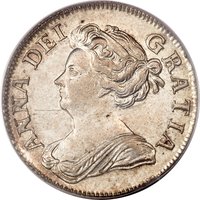
Description:
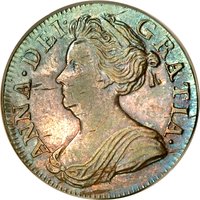
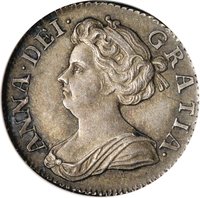
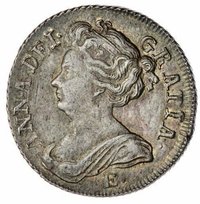
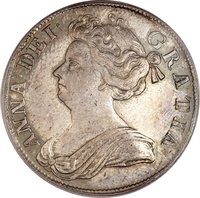
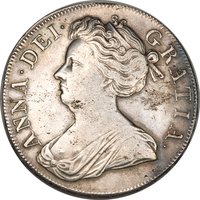
Queen Anne left, draped bust, with surrounding legend.
Inscription:
ANNA • DEI • GRATIA •
Script: Latin
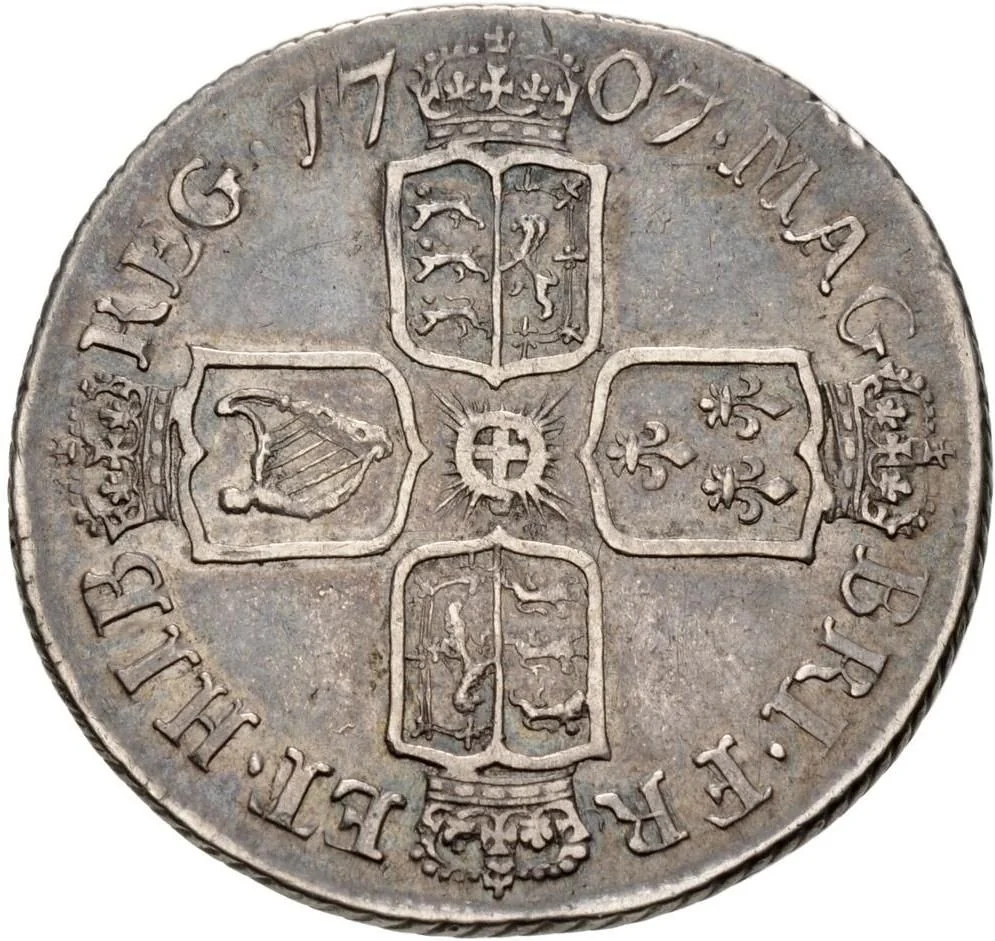
Reverse
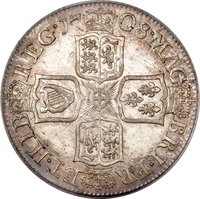
Description:
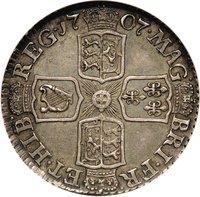
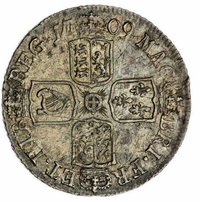
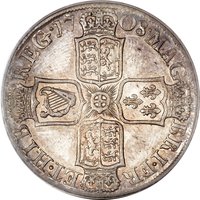
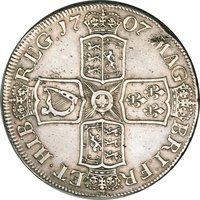
Crowned cruciform shields with central Garter star, date above, legend around. Post-Union halved shields.
Inscription:
MAG BR • FRA ET • HIB REG • 1707 •
Script: Latin
Edge
Reeded
Mints
| Name | Mark |
|---|---|
| Edinburgh | E |
Historical background
In 1707, the currency situation in the United Kingdom was defined by the recent political union of England and Scotland under the Acts of Union. While this created a single sovereign state, it did not immediately create a single, unified monetary system. England operated on a well-established silver-based coinage, the Pound Sterling, which was relatively stable and managed by the Royal Mint. Scotland, however, had its own distinct currency, the Pound Scots, which was not only a separate unit but also significantly debased and weaker, valued at just one-twelfth of its English counterpart. This economic disparity reflected Scotland's pre-union financial struggles and created immediate practical challenges for trade and integration within the new kingdom.
The Union treaty itself directly addressed this monetary divide. It mandated a full currency union, requiring that Scotland adopt the English coinage, standards, and denominations. From 1707, the Pound Sterling became the sole official currency of Great Britain, and the minting of Scottish coins ceased. The process of recoinage, however, was complex and gradual. Existing Scottish coins remained in circulation for a time but were to be called in and exchanged at the fixed rate of 12 Pounds Scots to 1 Pound Sterling. This conversion, while administratively cumbersome, was crucial for unifying the internal market and establishing a single financial identity for the new state.
Beyond the consolidation of coinage, the period was also marked by a broader monetary phenomenon that would define the 18th century: the chronic shortage of small-denomination coinage for everyday transactions. While high-value gold guineas and silver crowns circulated, there was a severe lack of reliable small change, leading to widespread use of worn, clipped, and counterfeit coins. This shortage would persist for decades, prompting private entities and local authorities to issue tokens, and eventually leading to major recoinage efforts. Thus, in 1707, the UK’s currency was in a transitional state—politically unified at the top tier but still grappling with the practical realities of integrating two economies and servicing the needs of a cash-starved populace.
The Union treaty itself directly addressed this monetary divide. It mandated a full currency union, requiring that Scotland adopt the English coinage, standards, and denominations. From 1707, the Pound Sterling became the sole official currency of Great Britain, and the minting of Scottish coins ceased. The process of recoinage, however, was complex and gradual. Existing Scottish coins remained in circulation for a time but were to be called in and exchanged at the fixed rate of 12 Pounds Scots to 1 Pound Sterling. This conversion, while administratively cumbersome, was crucial for unifying the internal market and establishing a single financial identity for the new state.
Beyond the consolidation of coinage, the period was also marked by a broader monetary phenomenon that would define the 18th century: the chronic shortage of small-denomination coinage for everyday transactions. While high-value gold guineas and silver crowns circulated, there was a severe lack of reliable small change, leading to widespread use of worn, clipped, and counterfeit coins. This shortage would persist for decades, prompting private entities and local authorities to issue tokens, and eventually leading to major recoinage efforts. Thus, in 1707, the UK’s currency was in a transitional state—politically unified at the top tier but still grappling with the practical realities of integrating two economies and servicing the needs of a cash-starved populace.
💎 Very Rare