

2 tari – Malta
Add to wishlist
Malta
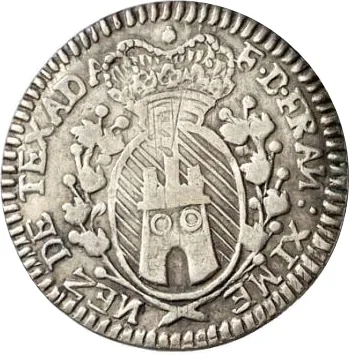
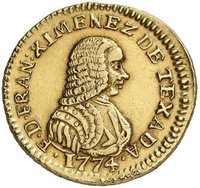
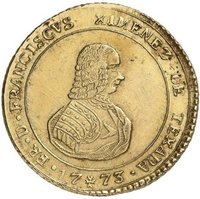
Obverse
Description:
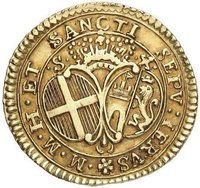
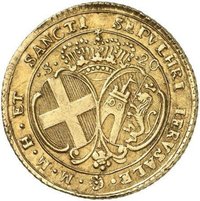
Crowned oval arms framed by leafy sprigs.
Inscription:
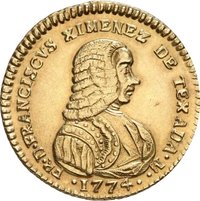
F.D.FRAN: XIME / NEZ DE TEXADA
Script: Latin
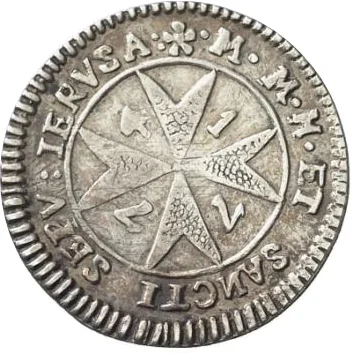
Reverse
Edge
Mintings
| Year | Mint Mark | Mintage | Quality | Collection |
|---|---|---|---|---|
| 1774 | — | — |
Historical background
In 1774, Malta's currency situation was complex and fragmented, reflecting its dual role as a sovereign monastic state under the Order of Saint John and a vibrant commercial hub in the Mediterranean. The official currency was the Maltese scudo, subdivided into 12 tari, each of 20 grani. However, the economy was awash with a multitude of foreign coins, primarily Spanish silver dollars (pieces of eight), Venetian sequins, and other Italian and Ottoman currencies. This proliferation was due to the island's reliance on international trade and the constant influx of corsairs, merchants, and sailors who conducted business in their own coinage, creating a chaotic monetary environment.
The Knights of the Order, who governed Malta, struggled to maintain monetary stability. They periodically issued edicts to fix exchange rates between the local scudo and the dominant foreign coins, but these were often ignored in daily commerce, leading to confusion and exploitation. A significant problem was the physical state of the coins in circulation; many were worn, clipped, or counterfeit, further eroding trust. The Order's own mint produced copper grani and silver tari and scudi, but these were insufficient in quantity to standardize the system, leaving the unreliable foreign "current money" as the de facto medium for most transactions.
This monetary instability posed a direct threat to the island's economic health, discouraging investment and complicating taxation and government finance. Recognizing the crisis, Grand Master Francisco Ximénez de Teada (1773-1775) took decisive action. In 1774, he implemented a sweeping monetary reform, introducing a new, standardized silver scudo and its subdivisions, which were minted to a precise weight and fineness. Crucially, he also demonetized the old, worn foreign coins, aiming to sweep them from circulation and establish a reliable, unitary currency. This reform was a landmark attempt to assert state control over the currency and provide the stability necessary for Malta's commercial prosperity.
The Knights of the Order, who governed Malta, struggled to maintain monetary stability. They periodically issued edicts to fix exchange rates between the local scudo and the dominant foreign coins, but these were often ignored in daily commerce, leading to confusion and exploitation. A significant problem was the physical state of the coins in circulation; many were worn, clipped, or counterfeit, further eroding trust. The Order's own mint produced copper grani and silver tari and scudi, but these were insufficient in quantity to standardize the system, leaving the unreliable foreign "current money" as the de facto medium for most transactions.
This monetary instability posed a direct threat to the island's economic health, discouraging investment and complicating taxation and government finance. Recognizing the crisis, Grand Master Francisco Ximénez de Teada (1773-1775) took decisive action. In 1774, he implemented a sweeping monetary reform, introducing a new, standardized silver scudo and its subdivisions, which were minted to a precise weight and fineness. Crucially, he also demonetized the old, worn foreign coins, aiming to sweep them from circulation and establish a reliable, unitary currency. This reform was a landmark attempt to assert state control over the currency and provide the stability necessary for Malta's commercial prosperity.
✨ Legendary