

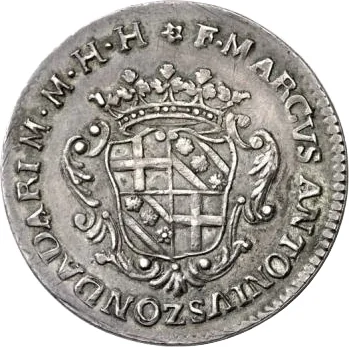
4 Tari – Malta
Malta
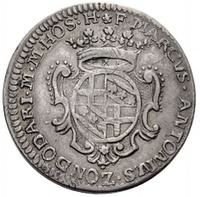
Obverse
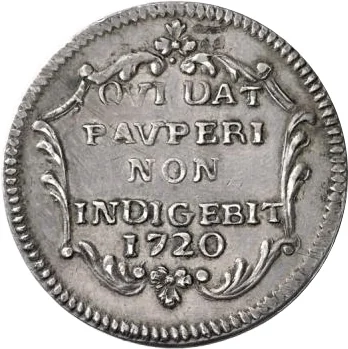
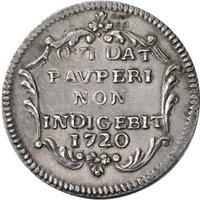
Reverse
Description:
Dated five-line inscription in a cartouche.
Inscription:
QVI DAT
PAVPERI
NON
INDIGEBIT
1720
PAVPERI
NON
INDIGEBIT
1720
Script: Latin
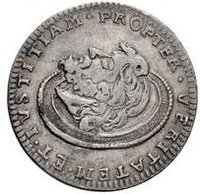
Edge
Mintings
| Year | Mint Mark | Mintage | Quality | Collection |
|---|---|---|---|---|
| 1720 | — | — |
Historical background
In 1720, Malta's currency situation was a complex tapestry of foreign coins and local imitations, reflecting its strategic position as a bustling Mediterranean hub under the rule of the Knights of St. John. The official monetary system was theoretically based on the Maltese scudo, but in practice, a multitude of Spanish, French, Italian, and Ottoman coins circulated freely in the ports and markets. This proliferation of foreign specie, particularly Spanish silver pieces of eight and their fractional coins, was essential for international trade but led to chronic instability, as the value of these coins fluctuated based on their metal content and the whims of international exchange.
The Knights attempted to impose order by minting their own copper grani and silver tari at the Malta Mint, but these local issues were insufficient and often undervalued, leading to widespread hoarding of full-weight foreign silver. A significant problem was the widespread clipping and counterfeiting of coins, which eroded trust in the already fragmented system. Furthermore, the Knights frequently issued bando (official proclamations) to adjust the legal valuation of specific foreign coins, often in a reactive attempt to prevent the export of good silver or to align with shifting commercial realities, causing confusion among merchants and the public.
Consequently, the early 18th century was marked by a persistent scarcity of sound small-change currency for everyday transactions, which hampered local commerce. The economy operated on a dual track: large-scale trade and Knightly finances functioned with imported silver, while the common populace contended with a degraded and unreliable mixed coinage. This unstable environment would eventually push the Order to pursue more comprehensive monetary reforms later in the century, but in 1720, Malta's currency remained a disordered but vital reflection of its interconnected, maritime economy.
The Knights attempted to impose order by minting their own copper grani and silver tari at the Malta Mint, but these local issues were insufficient and often undervalued, leading to widespread hoarding of full-weight foreign silver. A significant problem was the widespread clipping and counterfeiting of coins, which eroded trust in the already fragmented system. Furthermore, the Knights frequently issued bando (official proclamations) to adjust the legal valuation of specific foreign coins, often in a reactive attempt to prevent the export of good silver or to align with shifting commercial realities, causing confusion among merchants and the public.
Consequently, the early 18th century was marked by a persistent scarcity of sound small-change currency for everyday transactions, which hampered local commerce. The economy operated on a dual track: large-scale trade and Knightly finances functioned with imported silver, while the common populace contended with a degraded and unreliable mixed coinage. This unstable environment would eventually push the Order to pursue more comprehensive monetary reforms later in the century, but in 1720, Malta's currency remained a disordered but vital reflection of its interconnected, maritime economy.
Series: 1720 Malta circulation coins
✨ Legendary