

1 tallero – Republic of Ragusa
Add to wishlist
Croatia
Context
Years: 1725–1747
Country: Croatia
Issuer: Republic of Ragusa
Period:
(1294—1803)
Currency:
(1294—1803)
Subdivision: 1 tallero = 60 Grosetti
Demonetized: Yes
Total mintage: 1
Material
References
KM: #
Numista: #83727
Value
Bullion value: $71.54
Obverse
Description:
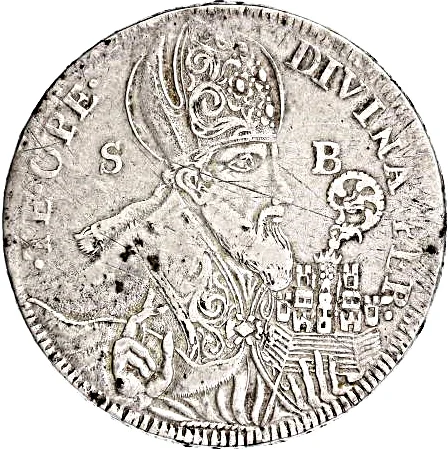
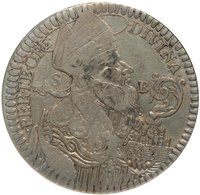
Bust of St. Blaise with bishop's staff and castle, flanked by letters S B.
Inscription:
・DIVINA・PER・・TE・OPE・
S B
S B
Script: Latin
Reverse
Description:
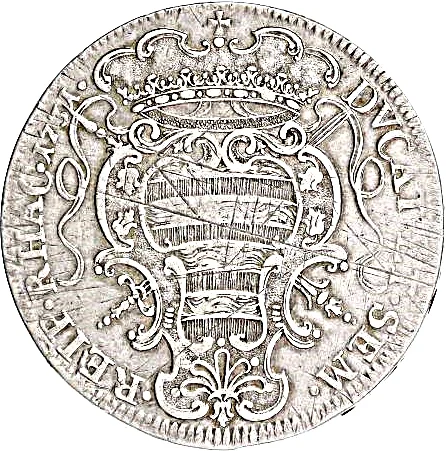
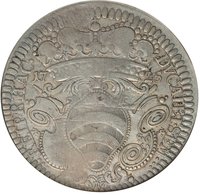
Ornate crowned Coat of Arms with encircling lettering and date.
Inscription:
・DVCAT・ET・SEM・・RIEP・RHAG・1731・
Script: Latin
Edge
Mintings
| Year | Mint Mark | Mintage | Quality | Collection |
|---|---|---|---|---|
| 1725 | — | — | ||
| 1730 | — | — | ||
| 1731 | — | — | ||
| 1733 | — | — | ||
| 1734 | — | — | ||
| 1735 | — | — | ||
| 1736 | — | — | ||
| 1738 | — | — | ||
| 1743 | — | — | ||
| 1747 | — | 1 |
Historical background
In 1725, the Republic of Ragusa (modern-day Dubrovnik) operated a sophisticated and multi-layered monetary system, a direct reflection of its status as a small but resilient mercantile republic navigating the economic spheres of greater empires. The official currency was the Ragusan perpera, subdivided into 12 soldi, but this domestic coinage was largely symbolic for accounting and smaller local transactions. The republic's limited minting capacity and the demands of its extensive maritime trade meant that the actual circulation was dominated by foreign specie, creating a de facto bimetallic system of gold and silver.
The lifeblood of Ragusan high finance and long-distance trade was foreign gold, primarily the Spanish dobla and the Venetian zecchino. These high-value coins settled international contracts and state debts. For everyday commerce, a flood of silver coins circulated, most notably the ubiquitous Tallero (Thaler) from the Austrian Empire and the Spanish Real. The Ottoman kuruş also had significant presence, underscoring Ragusa’s delicate political and economic balancing act between the Venetian Republic and the Ottoman Empire, to which it paid an annual tribute.
This reliance on external coinage presented chronic challenges for the Ragusan Senate in 1725. Key concerns included exchange rate volatility, the physical outflow of full-weight specie, and the circulation of worn or clipped coins, which could distort local prices and erode trust. While the mint periodically issued its own silver perperi, their quantity was insufficient to displace foreign currency. Thus, the government’s focus was less on creating a unified currency and more on rigorous regulation—publishing official exchange tariffs (tarifa) to fix values between the myriad coins and employing assayers at the customs house to verify the weight and fineness of incoming specie, striving to maintain stability in a inherently complex monetary environment.
The lifeblood of Ragusan high finance and long-distance trade was foreign gold, primarily the Spanish dobla and the Venetian zecchino. These high-value coins settled international contracts and state debts. For everyday commerce, a flood of silver coins circulated, most notably the ubiquitous Tallero (Thaler) from the Austrian Empire and the Spanish Real. The Ottoman kuruş also had significant presence, underscoring Ragusa’s delicate political and economic balancing act between the Venetian Republic and the Ottoman Empire, to which it paid an annual tribute.
This reliance on external coinage presented chronic challenges for the Ragusan Senate in 1725. Key concerns included exchange rate volatility, the physical outflow of full-weight specie, and the circulation of worn or clipped coins, which could distort local prices and erode trust. While the mint periodically issued its own silver perperi, their quantity was insufficient to displace foreign currency. Thus, the government’s focus was less on creating a unified currency and more on rigorous regulation—publishing official exchange tariffs (tarifa) to fix values between the myriad coins and employing assayers at the customs house to verify the weight and fineness of incoming specie, striving to maintain stability in a inherently complex monetary environment.
💎 Extremely Rare