

8 mark – Denmark
Add to wishlist
Denmark
Context
Material
References
KM: #
Numista: #83080
Value
Bullion value: $75.11
Obverse
Description:
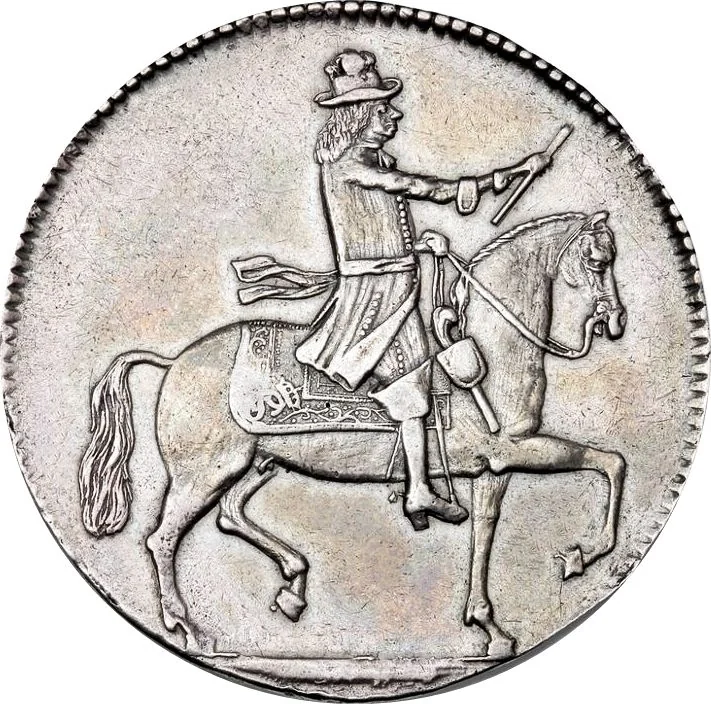
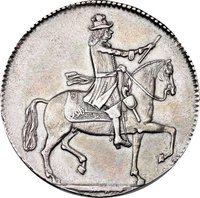
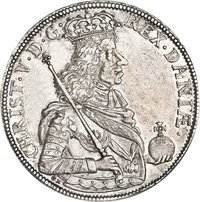
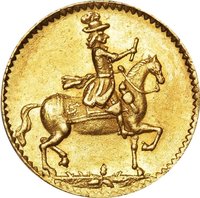
King on horseback facing right. Christian V wears a tall hat and long robe, holding reins with his left hand and extending a scepter with his right. Horse stands on either a line (KM#351.1) or grass (KM#351.2).
Reverse
Description:
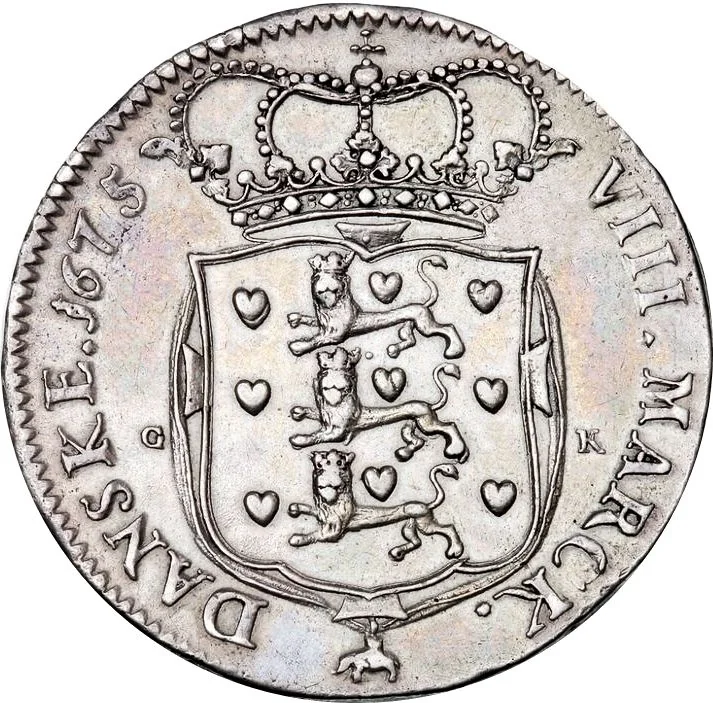
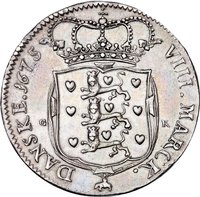
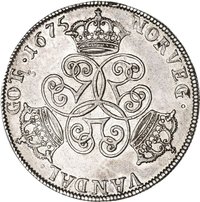
Danish arms on a wide-crowned shield above a cross, surrounded by the Order of the Elephant. Mintmark divided by shield sides. Value and date on rim.
Inscription:
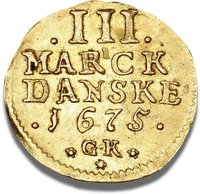
VIII MARCK. | DANSKE. 1675
G | K
G | K
Script: Latin
Edge
Categories
| Animal> Horse |
| Symbols> Coat of Arms |
Mints
| Name | Mark |
|---|---|
| Copenhagen | — |
Mintings
| Year | Mint Mark | Mintage | Quality | Collection |
|---|---|---|---|---|
| 1675 | — | — |
Historical background
In 1675, Denmark-Norway was embroiled in the Scanian War against Sweden, a conflict that placed immense fiscal strain on the state and directly destabilized its currency. King Christian V financed the war largely through borrowing and by dramatically increasing the money supply. The primary method was the minting of vast quantities of low-quality subsidiary coins, particularly the so-called klippe money—crudely stamped square coins made of debased silver. This intentional devaluation was a form of seigniorage, creating short-term revenue for the crown but at a great cost to the monetary system.
The result was a classic episode of inflation and Gresham's Law, where "bad money drives out good." The new, inferior coins flooded the market, while older, full-value silver speciesdalers and foreign currency were hoarded or exported, disappearing from daily circulation. This created a severe shortage of reliable money for commerce. Prices soared as the public lost confidence in the clipped and debased coins, and the effective exchange rate between the various circulating mediums became chaotic and subject to constant negotiation.
The situation provoked widespread economic distress and social unrest. Merchants struggled with unpredictable values, and the peasantry, often paid in the new debased coins but required to pay taxes and rents in older, higher-standard equivalents, faced ruinous effective tax increases. The royal attempts to fix official exchange rates by decree failed, as market rates continued to diverge. Thus, the currency crisis of 1675 was less a financial accident and more a direct consequence of wartime fiscal policy, creating a turbulent economic backdrop that would challenge the kingdom long after the war's end.
The result was a classic episode of inflation and Gresham's Law, where "bad money drives out good." The new, inferior coins flooded the market, while older, full-value silver speciesdalers and foreign currency were hoarded or exported, disappearing from daily circulation. This created a severe shortage of reliable money for commerce. Prices soared as the public lost confidence in the clipped and debased coins, and the effective exchange rate between the various circulating mediums became chaotic and subject to constant negotiation.
The situation provoked widespread economic distress and social unrest. Merchants struggled with unpredictable values, and the peasantry, often paid in the new debased coins but required to pay taxes and rents in older, higher-standard equivalents, faced ruinous effective tax increases. The royal attempts to fix official exchange rates by decree failed, as market rates continued to diverge. Thus, the currency crisis of 1675 was less a financial accident and more a direct consequence of wartime fiscal policy, creating a turbulent economic backdrop that would challenge the kingdom long after the war's end.
Series: 1675 Denmark circulation coins
💎 Extremely Rare