

2 Ducats – Denmark
Denmark
Context

Material
References
KM: #Click to copy to clipboard244
Numista: #82683
Value
Bullion value: $1130.72
Obverse
Description:
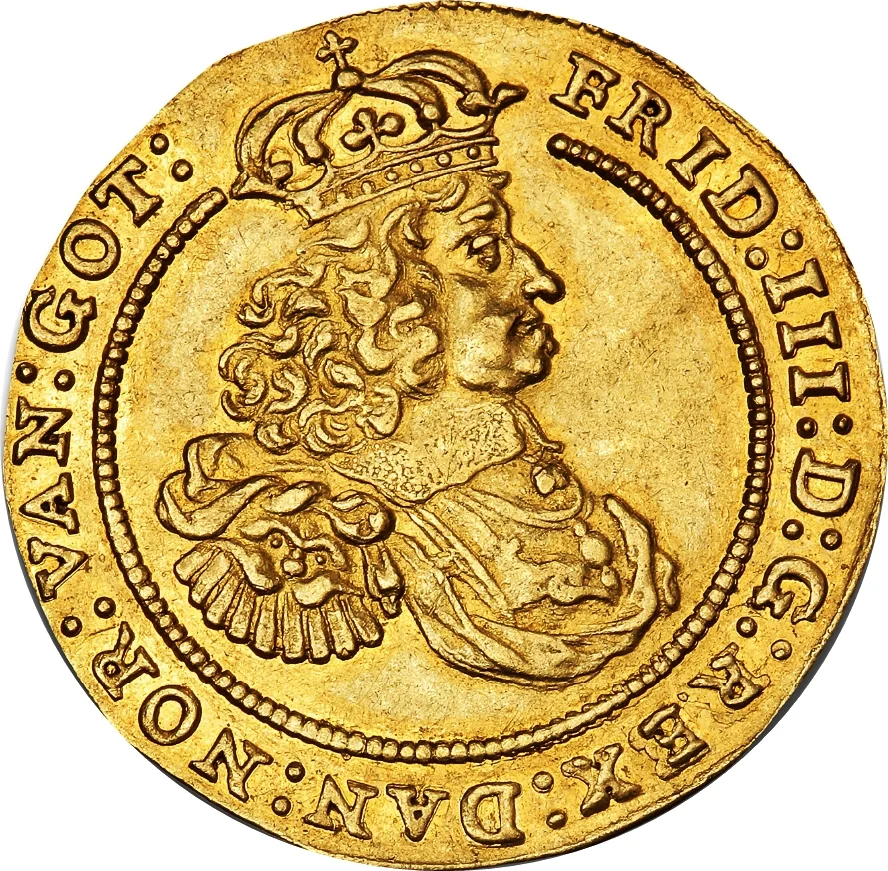
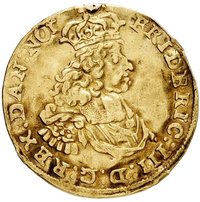
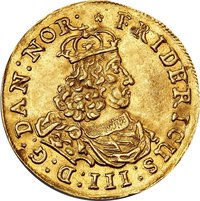
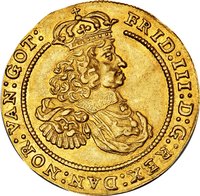
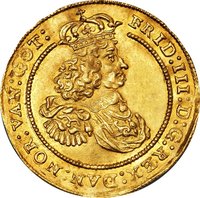
Crowned, draped bust of Frederick III facing right, with long curly hair.
Inscription:
FRID : III : D : G : REX : DAN : NOR : VAN : GOT :
Script: Latin
Reverse
Description:
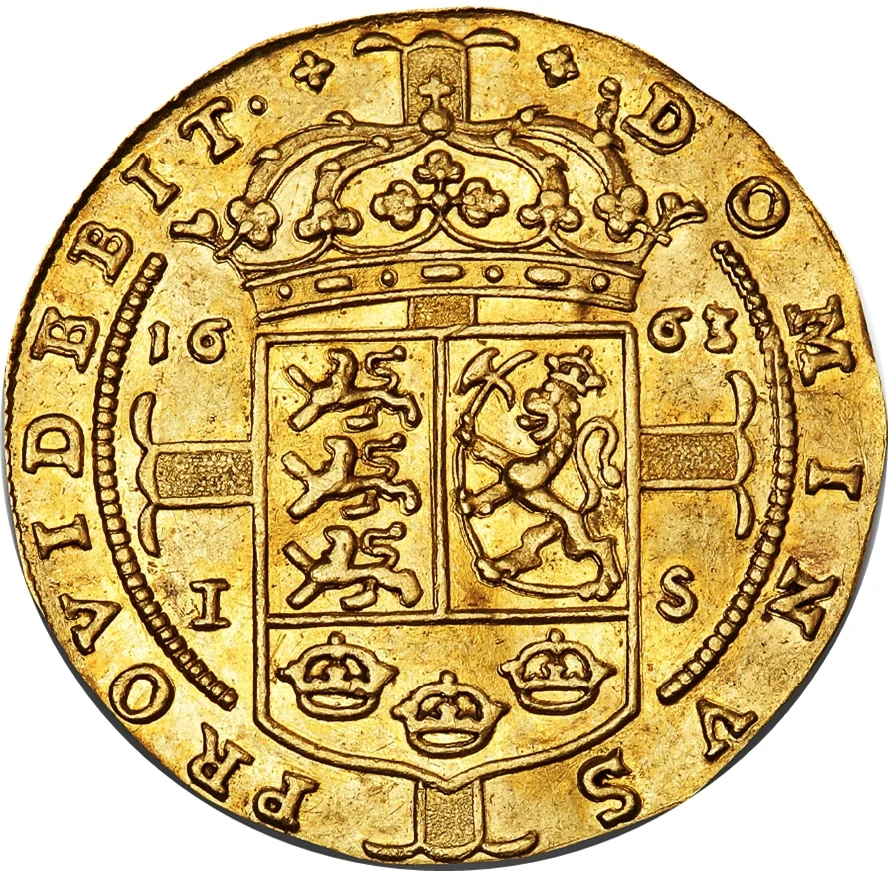
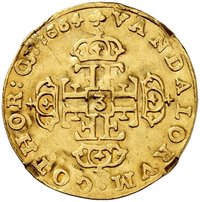
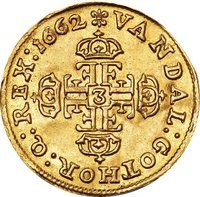
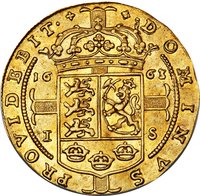
Shield with Norwegian and Swedish arms on a cross, within a circle. The King’s motto encircles it, with the date flanking the shield and mint master initials in the legend or beside the shield.
Inscription:
· I | S ·
16 63
DOMINVS PROVIDEBIT
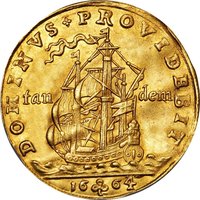
16 63
DOMINVS PROVIDEBIT
Script: Latin
Edge
Categories
| Person> Monarch |
| Symbols> Coat of Arms |
Mints
| Name | Mark |
|---|---|
| Royal Danish Mint | IS |
Historical background
In 1662, Denmark was navigating a complex and precarious monetary situation, largely a legacy of the costly wars of the mid-17th century. The state treasury was severely depleted, and to finance its expenditures, the government had repeatedly debased the coinage. This meant reducing the silver content in coins like the mark and skilling while insisting they retain their face value, a practice that led to widespread inflation, a loss of public trust, and the hoarding of older, purer coins. The monetary system was chaotic, with a confusing array of old and new coins of varying intrinsic values circulating simultaneously, severely disrupting trade and the economy.
Recognizing the crisis, King Frederik III, who had established a hereditary and absolute monarchy in 1660-61, initiated a major currency reform in 1662 as part of consolidating his new centralized power. The state announced a recall and demonetization of the old, debased coins. These were to be handed in and reminted into new, stable currency with a fixed and guaranteed silver content. This was a bold attempt to reset the monetary system, restore royal credibility, and assert control over the economy—a key prerogative of the new absolutist state.
The immediate aftermath of the 1662 reform was harsh for the populace. The exchange rate set for the old coins was unfavourable, effectively functioning as a steep capital levy that wiped out a portion of people's savings and caused significant short-term hardship. While the reform ultimately succeeded in establishing a more stable and unified currency system, providing a foundation for future economic administration, it came at a direct cost to ordinary citizens. The episode underscored the power of the absolute monarchy to impose financial solutions, for better or worse, on the Danish kingdom.
Recognizing the crisis, King Frederik III, who had established a hereditary and absolute monarchy in 1660-61, initiated a major currency reform in 1662 as part of consolidating his new centralized power. The state announced a recall and demonetization of the old, debased coins. These were to be handed in and reminted into new, stable currency with a fixed and guaranteed silver content. This was a bold attempt to reset the monetary system, restore royal credibility, and assert control over the economy—a key prerogative of the new absolutist state.
The immediate aftermath of the 1662 reform was harsh for the populace. The exchange rate set for the old coins was unfavourable, effectively functioning as a steep capital levy that wiped out a portion of people's savings and caused significant short-term hardship. While the reform ultimately succeeded in establishing a more stable and unified currency system, providing a foundation for future economic administration, it came at a direct cost to ordinary citizens. The episode underscored the power of the absolute monarchy to impose financial solutions, for better or worse, on the Danish kingdom.
Series: 1662 Denmark circulation coins
✨ Legendary