

2 mark – Denmark
Add to wishlist
Denmark
Context
Material
References
KM: #
Numista: #82679
Value
Bullion value: $16.07
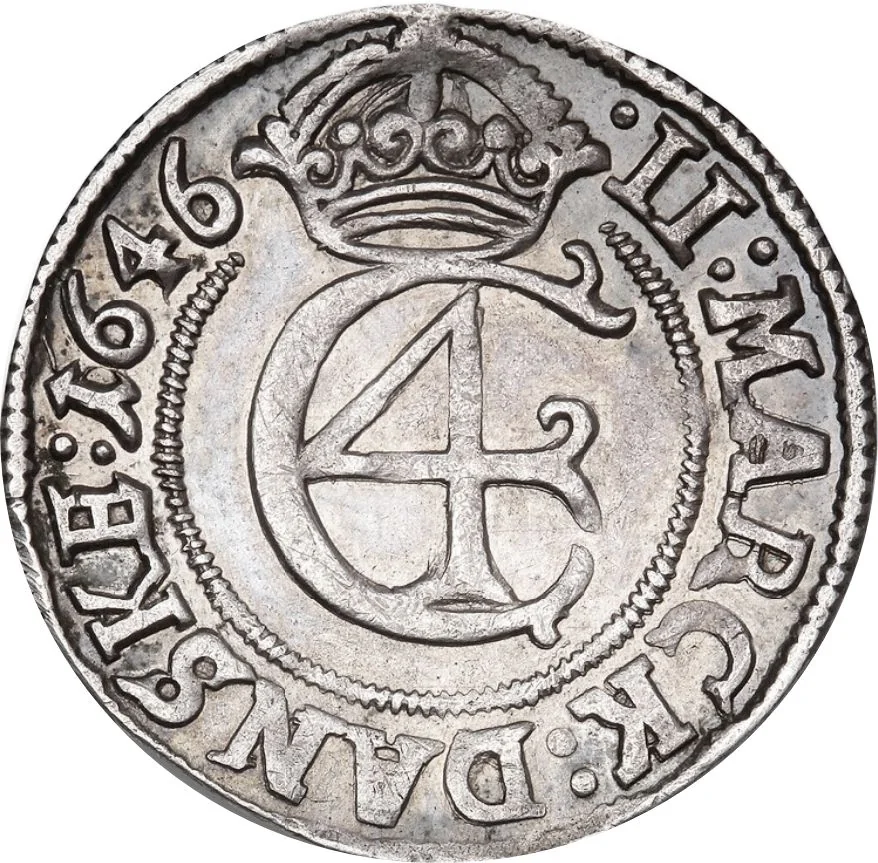
Obverse
Description:
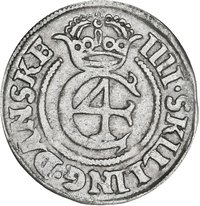
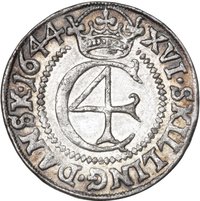
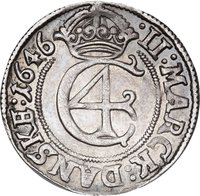
King's crowned monogram in circle. Value and date in legend.
Inscription:
C4
II: MARCK: DANSKE: 1646
II: MARCK: DANSKE: 1646
Script: Latin
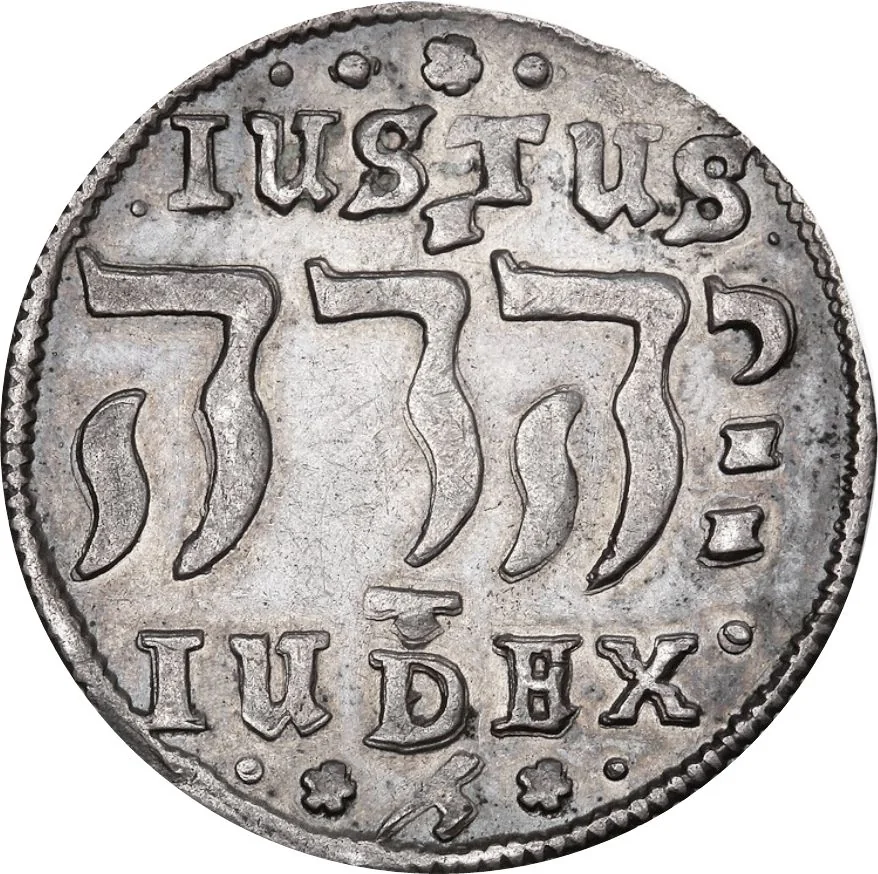
Reverse
Edge
Reeded
Mints
| Name | Mark |
|---|---|
| Copenhagen | — |
Mintings
| Year | Mint Mark | Mintage | Quality | Collection |
|---|---|---|---|---|
| 1644 | h | — | ||
| 1645 | h | — | ||
| 1646 | h | — |
Historical background
In 1644, Denmark operated under a bimetallic monetary system, a legacy of the 1625 Kurantordningen (Currency Regulation) enacted by King Christian IV. This system officially valued silver and gold coins in relation to a notional currency unit called the krone kurant, but in practice, the primary circulating coins were silver riksdaler and skilling. However, the system was under severe strain. Decades of costly warfare, particularly Denmark's involvement in the Thirty Years' War (which had just concluded in 1648), had drained the royal treasury. To finance these conflicts, the crown had repeatedly resorted to debasement—reducing the silver content in coins while maintaining their face value—a practice that eroded public trust and sparked inflation.
The year 1644 itself was a moment of acute crisis within this fragile context. Denmark was embroiled in the Torstenson War (1643-1645) against Sweden, a conflict that proved financially disastrous. The Swedish army occupied the rich Danish provinces of Skåne and Halland, crippling tax revenues from these vital regions. To meet soaring military expenses, the Danish government was forced into extreme monetary measures, including further debasement and the issuance of low-quality "emergency coinage." This led to a classic "bad money drives out good" scenario, where older, purer silver coins were hoarded or melted down, leaving the economy awash in depreciated currency.
Consequently, the domestic economy suffered from significant price instability and a lack of reliable specie for everyday transactions. Merchants and the public struggled with fluctuating exchange rates between different coin types and regions. The situation highlighted the fundamental weakness of the crown's fiscal policy and its reliance on currency manipulation as a short-term war fund. The monetary chaos of 1644 thus served as a stark prelude to the more comprehensive financial and political crises that would culminate in the introduction of absolute monarchy in 1660, partly as a remedy for the state's fiscal disarray.
The year 1644 itself was a moment of acute crisis within this fragile context. Denmark was embroiled in the Torstenson War (1643-1645) against Sweden, a conflict that proved financially disastrous. The Swedish army occupied the rich Danish provinces of Skåne and Halland, crippling tax revenues from these vital regions. To meet soaring military expenses, the Danish government was forced into extreme monetary measures, including further debasement and the issuance of low-quality "emergency coinage." This led to a classic "bad money drives out good" scenario, where older, purer silver coins were hoarded or melted down, leaving the economy awash in depreciated currency.
Consequently, the domestic economy suffered from significant price instability and a lack of reliable specie for everyday transactions. Merchants and the public struggled with fluctuating exchange rates between different coin types and regions. The situation highlighted the fundamental weakness of the crown's fiscal policy and its reliance on currency manipulation as a short-term war fund. The monetary chaos of 1644 thus served as a stark prelude to the more comprehensive financial and political crises that would culminate in the introduction of absolute monarchy in 1660, partly as a remedy for the state's fiscal disarray.
Series: 1644 Denmark circulation coins
💎 Extremely Rare