

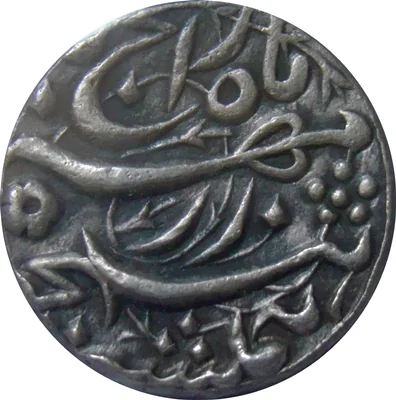
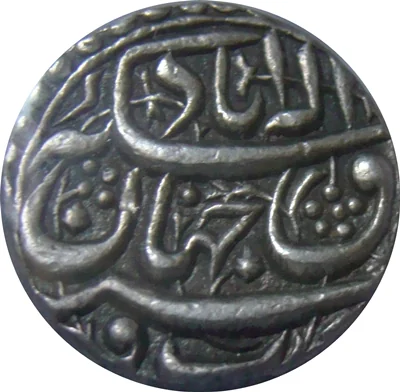
1 Rupee – Mughal Empire
India
Context
Years: 1599–1605
Country: India 
Issuer: Mughal Empire
Ruler: Akbar
Currency:
(1540—1842)
Demonetized: Yes
Material
Diameter: 21.06 mm
Weight: 11.33 g
Silver weight: 11.33 g
Shape: Irregular round
Composition: Silver
Magnetic: No
References
KM: #Click to copy to clipboard97.1
Numista: #82458
Value
Bullion value: $32.92
Obverse
Description:
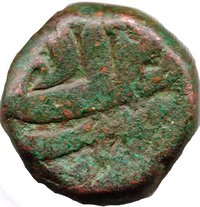
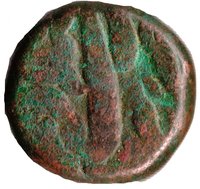
[Type 97 "Rebellion"] Riwaj Sikka Akbar
Reverse
Description:
Mint
Edge
Mintings
| Year | Mint Mark | Mintage | Quality | Collection |
|---|---|---|---|---|
| — | — | — |
Historical background
In 1599, the Mughal Empire under Emperor Akbar (r. 1556–1605) possessed a sophisticated and standardized monetary system that was a cornerstone of its economic and administrative strength. The empire’s currency was based on a trimetallic system of gold, silver, and copper coins, minted with strict uniformity in weight and purity across a vast network of imperial mints (dar al-zarb). The principal silver coin was the rupee (approximately 11.5 grams of pure silver), which served as the primary unit for revenue assessment, large transactions, and state treasury reserves. Alongside it circulated the gold mohur (valued at roughly 15 rupees) and the copper dam (40 dams to a rupee), which facilitated everyday local trade and taxation at the village level.
This monetary stability was a direct result of Akbar’s administrative reforms, particularly the Mansabdari system and the zabt (land revenue system). Salaries for the empire's military and bureaucratic elite (mansabdars) were calculated in rupees but often paid via revenue assignments (jagirs), creating a constant demand for coinage to settle accounts and pay troops. The year 1599 fell within a period of sustained imperial expansion and consolidation, with campaigns in the Deccan ongoing. This military activity required enormous liquid wealth, driving continuous minting to finance armies and integrate newly conquered territories into the imperial fiscal framework.
However, the system faced underlying pressures. The empire’s silver supply was largely dependent on imported bullion, primarily from the New World via European trade networks, making it vulnerable to external fluctuations. Furthermore, while the official currency was robust, older regional coinages and barter still persisted in remote areas. In 1599, the system functioned efficiently, underpinning Akbar’s centralized authority and economic prosperity. Yet, its future health would remain inextricably linked to global silver flows and the administrative vigor of his successors.
This monetary stability was a direct result of Akbar’s administrative reforms, particularly the Mansabdari system and the zabt (land revenue system). Salaries for the empire's military and bureaucratic elite (mansabdars) were calculated in rupees but often paid via revenue assignments (jagirs), creating a constant demand for coinage to settle accounts and pay troops. The year 1599 fell within a period of sustained imperial expansion and consolidation, with campaigns in the Deccan ongoing. This military activity required enormous liquid wealth, driving continuous minting to finance armies and integrate newly conquered territories into the imperial fiscal framework.
However, the system faced underlying pressures. The empire’s silver supply was largely dependent on imported bullion, primarily from the New World via European trade networks, making it vulnerable to external fluctuations. Furthermore, while the official currency was robust, older regional coinages and barter still persisted in remote areas. In 1599, the system functioned efficiently, underpinning Akbar’s centralized authority and economic prosperity. Yet, its future health would remain inextricably linked to global silver flows and the administrative vigor of his successors.
💎 Extremely Rare