

silver groschen – Polish–Lithuanian Commonwealth
Add to wishlist
Poland
Context
Years: 1766–1782
Country: Poland
Issuer: Polish–Lithuanian Commonwealth
Ruler: Stanisław II Augustus
Currency:
(1573—1795)
Demonetized: Yes
Total mintage: 8,455,131
References
KM: #
Numista: #82236
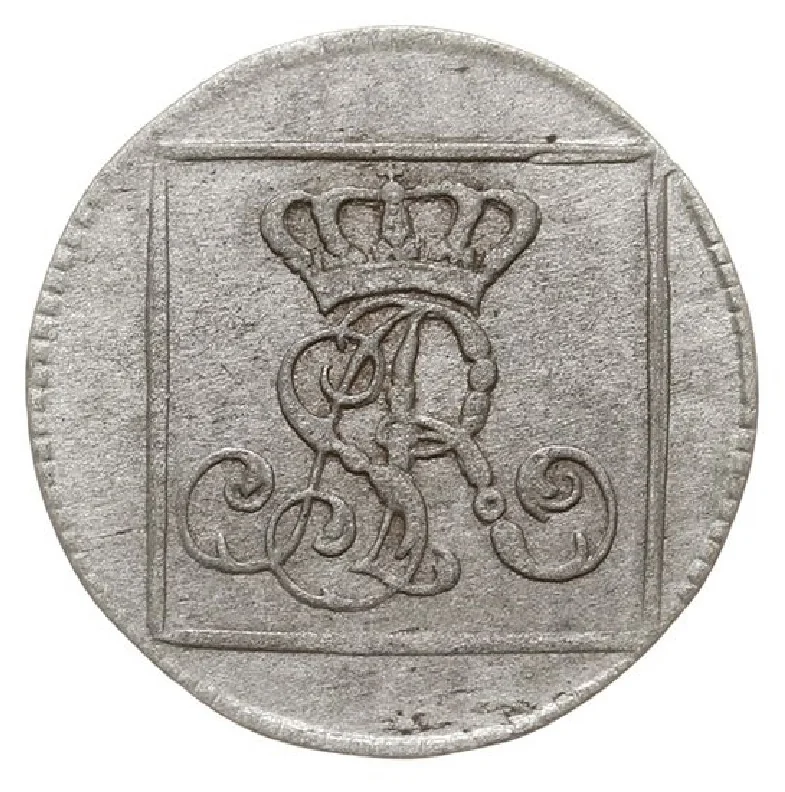
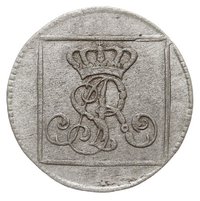
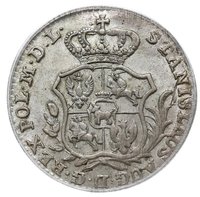
Obverse
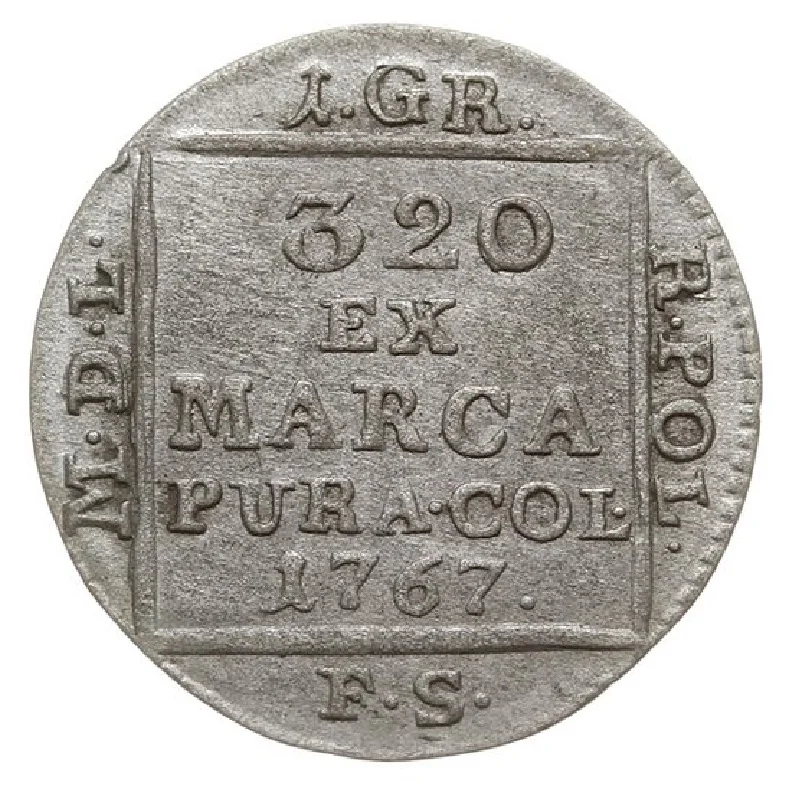
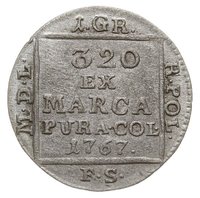
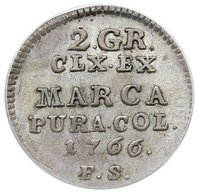
Reverse
Description:
Denomination and year above, mintmark below.
Inscription:
320
EX
MARCA
PURA·COL·
1767·
1.GR.
F· S·
R.POL.
M.D.L.
EX
MARCA
PURA·COL·
1767·
1.GR.
F· S·
R.POL.
M.D.L.
Script: Latin
Edge
Plain
Mints
| Name | Mark |
|---|---|
| Mint of Poland | — |
Mintings
| Year | Mint Mark | Mintage | Quality | Collection |
|---|---|---|---|---|
| 1766 | FS | 915,000 | ||
| 1767 | FS | 2,480,000 | ||
| 1768 | FS | — | ||
| 1768 | IS | 1,761,000 | ||
| 1772 | AP | 7,131 | ||
| 1773 | AP | 17,000 | ||
| 1774 | AP | 75,000 | ||
| 1775 | EB | 17,000 | ||
| 1776 | EB | 29,000 | ||
| 1777 | EB | 34,000 | ||
| 1778 | EB | 24,000 | ||
| 1779 | EB | 86,000 | ||
| 1780 | EB | 11,000 | ||
| 1781 | EB | 2,966,000 | ||
| 1782 | EB | 33,000 |
Historical background
The monetary system of the Polish–Lithuanian Commonwealth in 1766 was in a state of profound crisis, characterized by rampant debasement and economic instability. For decades, the state's unique political system, the liberum veto, allowed foreign powers and domestic magnates to block necessary reforms, including fiscal and monetary policy. This led to the proliferation of numerous private mints, often operated by powerful nobles, which flooded the Commonwealth with low-quality coinage containing far less precious metal than their face value declared. This practice, alongside a flood of counterfeit coins, destroyed public trust in the currency, crippled commerce, and drained full-value specie out of the country.
In response, King Stanisław August Poniatowski, newly elected and aiming for modernization, initiated a comprehensive monetary reform in 1766. The reform, prepared with the assistance of foreign experts, sought to centralize minting under state control and introduce a new, stable currency based on the Cologne mark of fine silver. The cornerstone was a new decimal system, introducing the złoty polski (Polish złoty), which was divided into 30 groszy, replacing the old system of złotys as accounting units. New copper shillings (szeląg) and silver coins (grosz, tymf, ducat) were minted in Warsaw, bearing the king's portrait and national symbols to reinforce state authority.
Despite its sound theoretical basis, the 1766 reform faced immediate and severe challenges. The Commonwealth's treasury was empty, lacking the necessary bullion reserves to fully back the new currency and conduct a complete recoinage. More critically, the political will to suppress the powerful magnates' private mints was insufficient, and the entrenched economic disorder proved difficult to reverse. Consequently, while the reform established the framework for a modern monetary system and introduced coins that would become iconic, it failed to fully stabilize the currency or stop the financial decay, a symptom of the deeper political paralysis that would soon lead to the partitions of Poland.
In response, King Stanisław August Poniatowski, newly elected and aiming for modernization, initiated a comprehensive monetary reform in 1766. The reform, prepared with the assistance of foreign experts, sought to centralize minting under state control and introduce a new, stable currency based on the Cologne mark of fine silver. The cornerstone was a new decimal system, introducing the złoty polski (Polish złoty), which was divided into 30 groszy, replacing the old system of złotys as accounting units. New copper shillings (szeląg) and silver coins (grosz, tymf, ducat) were minted in Warsaw, bearing the king's portrait and national symbols to reinforce state authority.
Despite its sound theoretical basis, the 1766 reform faced immediate and severe challenges. The Commonwealth's treasury was empty, lacking the necessary bullion reserves to fully back the new currency and conduct a complete recoinage. More critically, the political will to suppress the powerful magnates' private mints was insufficient, and the entrenched economic disorder proved difficult to reverse. Consequently, while the reform established the framework for a modern monetary system and introduced coins that would become iconic, it failed to fully stabilize the currency or stop the financial decay, a symptom of the deeper political paralysis that would soon lead to the partitions of Poland.
💎 Extremely Rare