

15 Kreuzer – Austrian Empire
Austria
Context
Year: 1675
Country: Austria 
Issuer: Austrian Empire
Ruler: Leopold I
Currency:
(1520—1754)
Demonetized: Yes
Material
References
KM: #Click to copy to clipboard1280
Numista: #82134
Value
Bullion value: $17.57
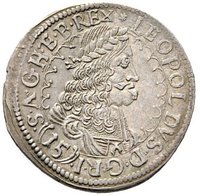
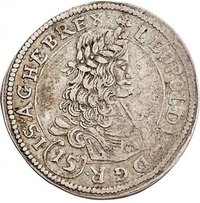
Obverse
Description:
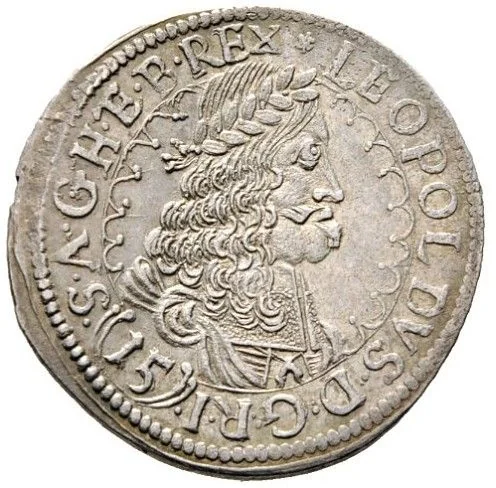
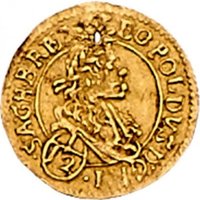
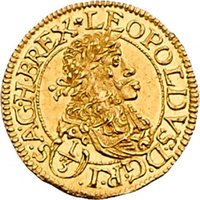
Right-facing laureate portrait in a circle, value below, legend: "Leopoldus...Rex".
Inscription:
LEOPOLDVS D G R I / S A G H B REX
Script: Latin
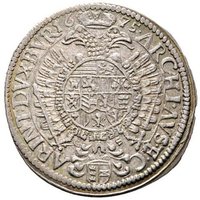
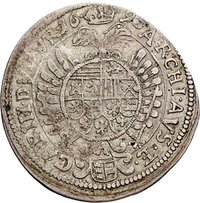
Reverse
Description:
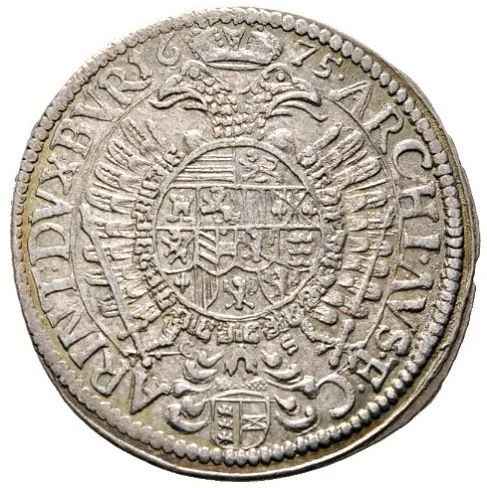
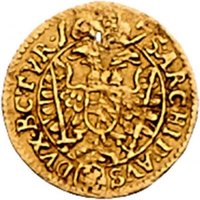
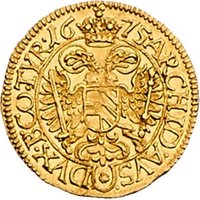
Imperial double-headed eagle with combined arms in a circle, a small Carinthian shield below. Mint marks flank the tail feathers; the date is split by the crown.
Inscription:
ARCHI AVS Et C / ARINTH DVX BVR
G S
G S
Script: Latin
Edge
Mints
| Name | Mark |
|---|---|
| Sankt Veit | — |
Mintings
| Year | Mint Mark | Mintage | Quality | Collection |
|---|---|---|---|---|
| 1675 | G | — | ||
| 1675 | GC | — |
Historical background
In 1675, the currency system of the Habsburg Monarchy, often referred to as the Austrian Empire, was a complex and fragmented patchwork of coins, reflecting the diverse and decentralized nature of the state itself. The primary large silver coin was the Reichsthaler, a theoretical standard used for large-scale accounting and international trade. However, the coins most commonly used in daily transactions within the Austrian hereditary lands (like Austria, Bohemia, and parts of Hungary) were the Guldiner and its fractional parts, as well as a plethora of smaller silver Kreuzer and copper Pfennig coins. Crucially, each constituent kingdom and territory often minted its own versions of these coins, leading to a bewildering variety of weights, fineness, and valuations in circulation.
This monetary fragmentation was exacerbated by the financial demands of near-constant warfare, particularly against the Ottoman Empire in the east and France in the west. To fund these conflicts, the Habsburg state frequently resorted to debasement—reducing the silver content in coins while maintaining their face value. This practice, alongside the influx of lower-quality coins from neighboring German states, led to chronic inflation, a loss of public trust in the currency, and severe price instability. The government's attempts to fix official exchange rates between the myriad coins often failed, as market rates diverged based on the actual metal content.
Consequently, the year 1675 fell within a period of significant monetary disorder. While Emperor Leopold I's court in Vienna struggled to centralize control and standardize the currency, effective reform remained elusive. The situation created a thriving business for money changers (Wechsler) but imposed a heavy burden on peasants, soldiers, and merchants who suffered from unpredictable purchasing power. This unstable financial backdrop would persist until more systematic reforms were attempted decades later under the guidance of officials like Gundaker von Starhemberg and the influence of new world silver.
This monetary fragmentation was exacerbated by the financial demands of near-constant warfare, particularly against the Ottoman Empire in the east and France in the west. To fund these conflicts, the Habsburg state frequently resorted to debasement—reducing the silver content in coins while maintaining their face value. This practice, alongside the influx of lower-quality coins from neighboring German states, led to chronic inflation, a loss of public trust in the currency, and severe price instability. The government's attempts to fix official exchange rates between the myriad coins often failed, as market rates diverged based on the actual metal content.
Consequently, the year 1675 fell within a period of significant monetary disorder. While Emperor Leopold I's court in Vienna struggled to centralize control and standardize the currency, effective reform remained elusive. The situation created a thriving business for money changers (Wechsler) but imposed a heavy burden on peasants, soldiers, and merchants who suffered from unpredictable purchasing power. This unstable financial backdrop would persist until more systematic reforms were attempted decades later under the guidance of officials like Gundaker von Starhemberg and the influence of new world silver.
✨ Legendary