

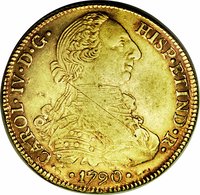
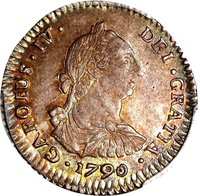
Obverse
Description:
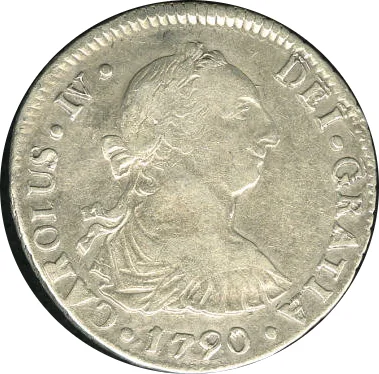
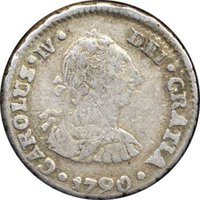
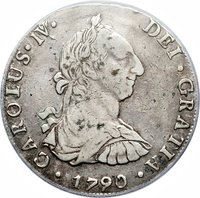
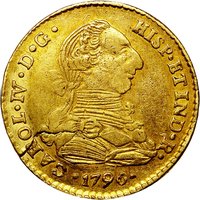
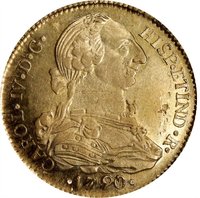
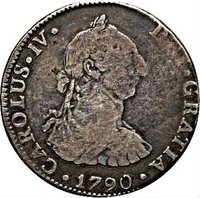
Bust of Carlos III right. Legend in name of Carlos IV, date below.
Inscription:
CAROLUS • IV • DEI • GRATIA
• 1790 •
• 1790 •
Script: Latin
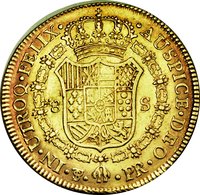
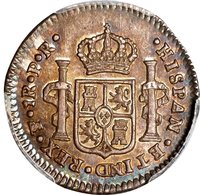
Reverse
Description:
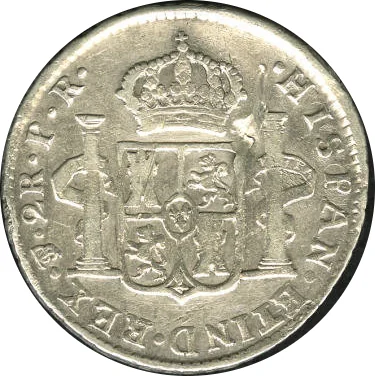
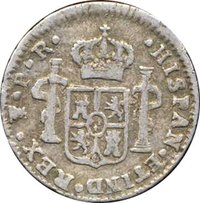
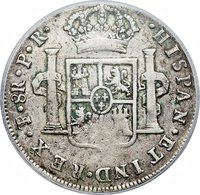
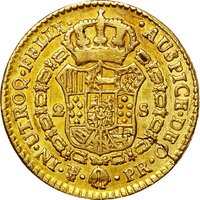
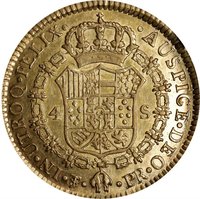
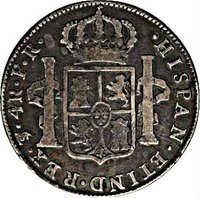
Arms between pillars. Legend with value, mint and engraver marks.
Inscription:
HISPAN·ETIND·REX·PTS·2R·P·R·
Script: Latin
Edge
Chained
Mintings
| Year | Mint Mark | Mintage | Quality | Collection |
|---|---|---|---|---|
| 1789 | PR | — | ||
| 1790 | PR | — | ||
| 1791 | PR | — |
Historical background
In 1789, the currency situation in the Royal Audience of Charcas (modern Bolivia) was defined by the enduring legacy of Potosí's silver and the complex monetary policies of the Spanish Crown. The region was the financial heart of the Spanish Empire, with the Cerro Rico of Potosí producing vast quantities of silver that were minted into coins, primarily the famous "piece of eight" (real de a ocho). However, the local economy suffered from a chronic shortage of circulating currency. The Crown's mercantilist policy, the quinto real (royal fifth), mandated that a significant portion of mined silver be shipped directly to Spain, while much of the remainder was exported to pay for imported European goods, leaving the local population with insufficient coinage for daily transactions.
This scarcity led to a persistent and problematic reliance on moneda macuquina—crudely cut and hammer-struck coins that were often debased or clipped. While officially minted in Potosí, their irregularity made them prone to counterfeiting and devaluation, creating a chaotic and inefficient medium of exchange. To facilitate local trade, merchants and hacendados (landowners) often resorted to using credit notes, barter, and even coca leaves as a de facto currency in indigenous markets. This dual system highlighted the stark contrast between the colony's immense mineral wealth and the scarcity of reliable money in its internal economy.
The year 1789 fell within the broader Bourbon Reforms, a period when the Spanish Crown sought to increase efficiency and revenue from its colonies. While significant monetary reforms, including the introduction of more standardized machine-struck coins, were being planned, they were not yet fully implemented in the region. Thus, the currency situation remained in a state of tension: a global symbol of wealth was produced locally, yet the populace navigated a fragmented and inadequate monetary landscape, setting the stage for the economic grievances that would later fuel independence movements.
This scarcity led to a persistent and problematic reliance on moneda macuquina—crudely cut and hammer-struck coins that were often debased or clipped. While officially minted in Potosí, their irregularity made them prone to counterfeiting and devaluation, creating a chaotic and inefficient medium of exchange. To facilitate local trade, merchants and hacendados (landowners) often resorted to using credit notes, barter, and even coca leaves as a de facto currency in indigenous markets. This dual system highlighted the stark contrast between the colony's immense mineral wealth and the scarcity of reliable money in its internal economy.
The year 1789 fell within the broader Bourbon Reforms, a period when the Spanish Crown sought to increase efficiency and revenue from its colonies. While significant monetary reforms, including the introduction of more standardized machine-struck coins, were being planned, they were not yet fully implemented in the region. Thus, the currency situation remained in a state of tension: a global symbol of wealth was produced locally, yet the populace navigated a fragmented and inadequate monetary landscape, setting the stage for the economic grievances that would later fuel independence movements.
Series: 1789 Bolivia circulation coins

💎 Extremely Rare