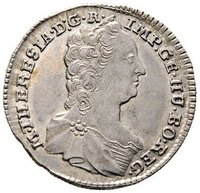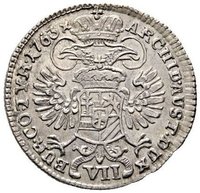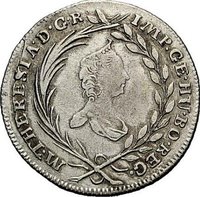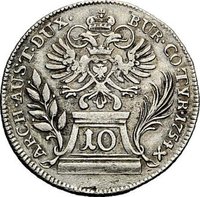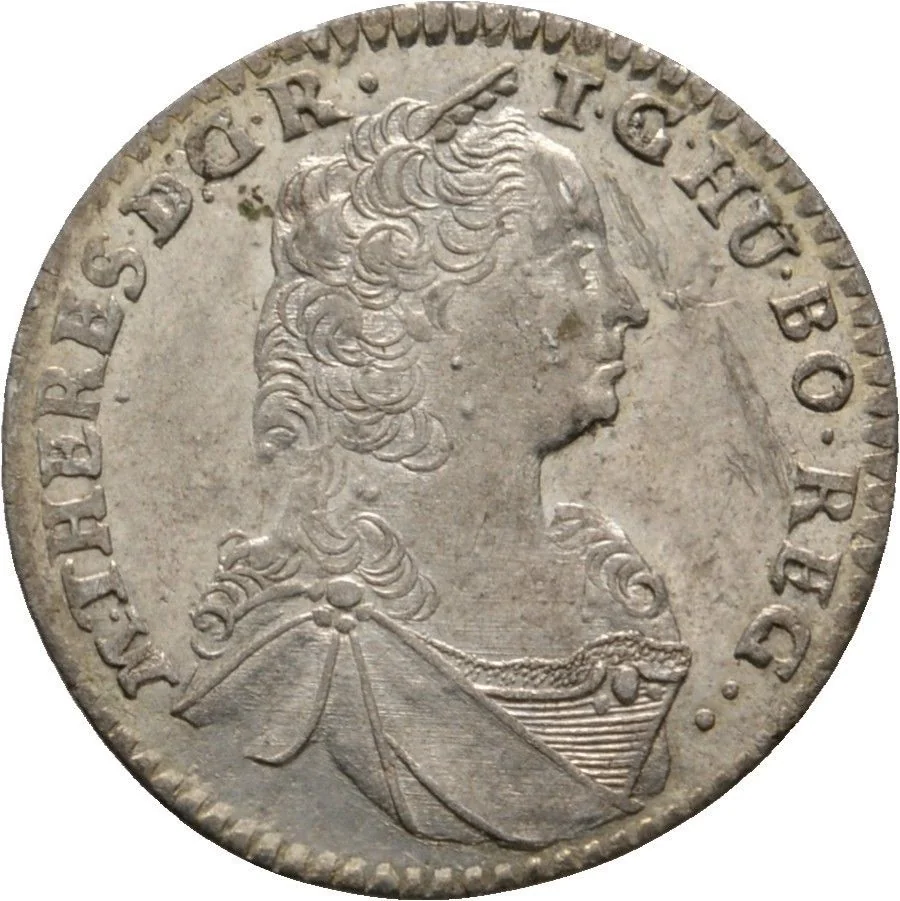
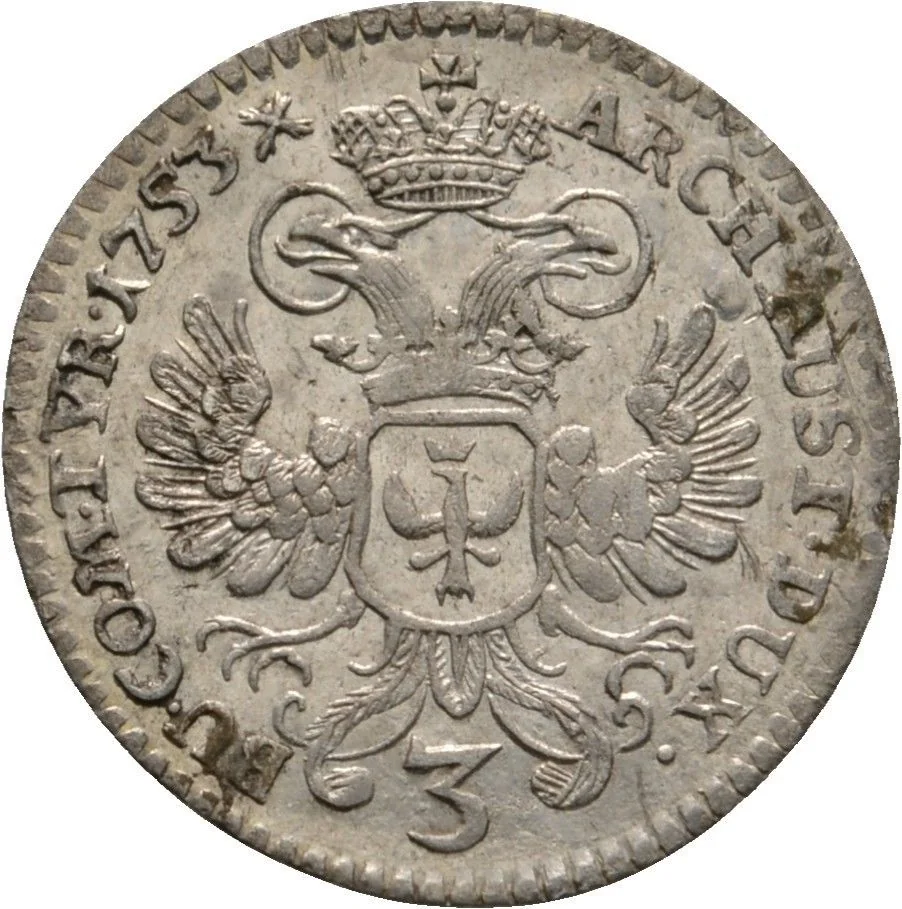
In 1752, the County of Tyrol, a crown land of the Habsburg Monarchy, operated within a complex and often chaotic monetary landscape. The region was not immune to the wider Holy Roman Empire's problem of
Kleinstaaterei, where numerous states issued their own coins, leading to a proliferation of circulating currencies. Alongside official Tyrolean issues, coins from neighboring German states, Italian territories, and older debased currencies circulated simultaneously, causing confusion for trade and daily transactions. This fragmentation created significant challenges for commerce, particularly for Tyrol's important mercantile and transit economy.
The primary official currency was based on the Conventionsthaler, a large silver coin standardized across much of the Habsburg Empire after 1750. In Tyrol, the local accounting system used Gulden (florins), Kreuzer, and Pfennige, with 1 Gulden = 60 Kreuzer. However, the physical coins in people's hands often did not match this ideal standard. The Habsburg state attempted to impose order, but the practical reality was a market where the value of coins fluctuated based on their metal content and origin, requiring constant evaluation and exchange by merchants.
This situation placed a burden on both the populace and the authorities in Innsbruck. For the government, controlling the money supply and securing seigniorage revenue was difficult. For citizens and traders, everyday transactions required careful calculation to avoid loss from undervalued or counterfeit coins. The year 1752 thus represents a point within a long period of monetary transition, where the old, fragmented system still held sway, but increasing pressure for standardization—driven by the needs of state finance and intra-empire trade—was steadily growing under Empress Maria Theresa's centralizing reforms.