

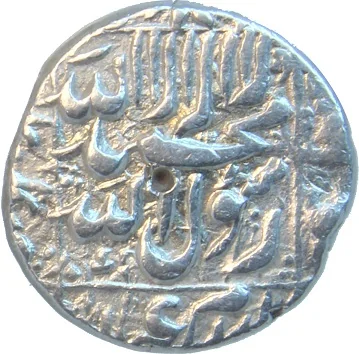
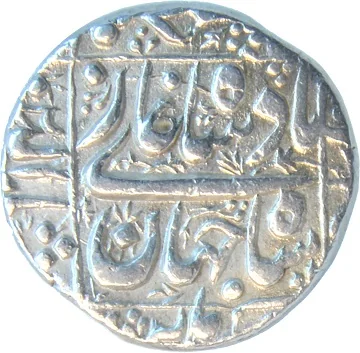
1 Rupee – Mughal Empire
India
Context
Years: 1630–1636
Country: India 
Issuer: Mughal Empire
Ruler: Shah Jahan
Currency:
(1540—1842)
Demonetized: Yes
Material
References
KM: #Click to copy to clipboard235.33
Numista: #81350
Value
Bullion value: $33.27
Obverse
Description:
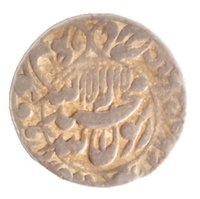
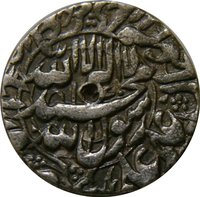
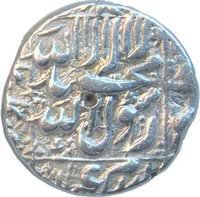
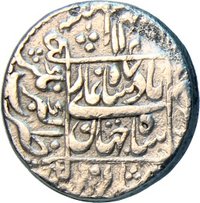
"khallada allah mulkahu" centrally inscribed within a square.
Reverse
Description:
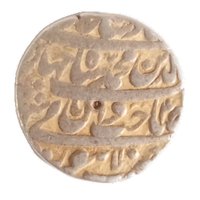
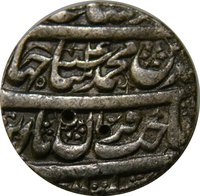
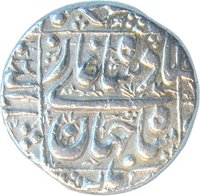
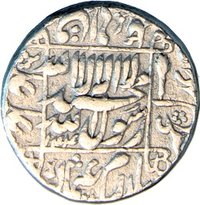
Central text in square
Edge
Plain
Mints
| Name | Mark |
|---|---|
| Burhanpur | — |
Mintings
| Year | Mint Mark | Mintage | Quality | Collection |
|---|---|---|---|---|
| 1630 | — | — | ||
| 1631 | — | — | ||
| 1632 | — | — | ||
| 1633 | — | — | ||
| 1634 | — | — | ||
| 1636 | — | — |
Historical background
In 1630, the Mughal Empire's currency system was a sophisticated and highly regulated bimetallic standard, primarily based on the silver rupee and the gold mohur. The reign of Emperor Shah Jahan (1628–1658) saw the system at its peak of organization and purity. The state maintained strict control over minting, with major mints (dar al-zarb) in imperial capitals like Agra, Delhi, and Lahore, ensuring standardized coinage across the vast empire. The silver rupee, weighing approximately 11.5 grams and of high purity, was the primary unit for revenue assessment, large-scale trade, and state transactions, while copper dams served as the ubiquitous currency for everyday local commerce.
This monetary stability, however, was severely tested in 1630 by the catastrophic Deccan famine, one of the worst in Indian history. The famine caused widespread economic dislocation, disrupting agriculture—the empire's revenue base—and trade networks. While the intrinsic value of the coins themselves remained largely unchanged due to the empire's vast silver reserves from global trade, the scarcity of food led to hyperinflation in grain prices. This created a severe liquidity crisis, as hoarding of both grain and precious metal coinage became common, making it difficult for the state to collect land revenue (zat) and for the normal flow of currency in markets to function.
Despite the acute economic distress, the imperial currency system's fundamentals remained intact. Shah Jahan's administration responded with famine relief efforts and continued its ambitious building projects, which injected silver into the economy through wages. The empire's access to New World silver, flowing in via European traders in exchange for Indian textiles and spices, helped replenish stocks and maintain the long-term stability of the rupee. Thus, in 1630, the Mughal currency was a pillar of imperial authority in a time of severe natural crisis, demonstrating both its resilience and the centralizing power of the Mughal state.
This monetary stability, however, was severely tested in 1630 by the catastrophic Deccan famine, one of the worst in Indian history. The famine caused widespread economic dislocation, disrupting agriculture—the empire's revenue base—and trade networks. While the intrinsic value of the coins themselves remained largely unchanged due to the empire's vast silver reserves from global trade, the scarcity of food led to hyperinflation in grain prices. This created a severe liquidity crisis, as hoarding of both grain and precious metal coinage became common, making it difficult for the state to collect land revenue (zat) and for the normal flow of currency in markets to function.
Despite the acute economic distress, the imperial currency system's fundamentals remained intact. Shah Jahan's administration responded with famine relief efforts and continued its ambitious building projects, which injected silver into the economy through wages. The empire's access to New World silver, flowing in via European traders in exchange for Indian textiles and spices, helped replenish stocks and maintain the long-term stability of the rupee. Thus, in 1630, the Mughal currency was a pillar of imperial authority in a time of severe natural crisis, demonstrating both its resilience and the centralizing power of the Mughal state.
💎 Extremely Rare