

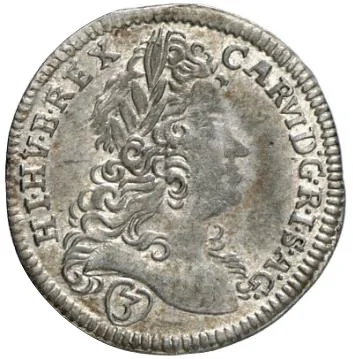
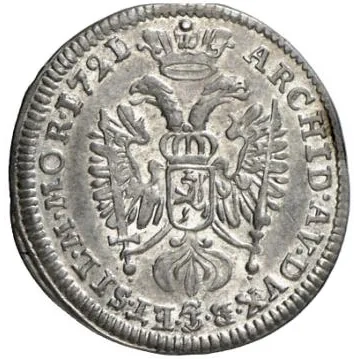
3 Kreuzers – Kingdom of Bohemia
Context
Years: 1717–1723
Country: Bohemia
Issuer: Kingdom of Bohemia
Ruler: Charles VI
Currency:
(1520—1754)
Demonetized: Yes
Material
References
KM: #Click to copy to clipboard680
Numista: #80603
Value
Bullion value: $4.77
Obverse
Description:
Portrait laureate, head and shoulders dividing legend from 1 o'clock. Value in frame, no inner circle.
Inscription:
CAR VI D G R I S A G (3) HI HV B REX
Script: Latin
Reverse
Description:
Imperial eagle with Bohemian shield, no inner circle, possible mint mark in legend.
Inscription:
ARCHID AV DVX B / ET SIL M MOR 172I
Script: Latin
Edge
Plain
Mints
| Name | Mark |
|---|---|
| Prague | — |
Mintings
| Year | Mint Mark | Mintage | Quality | Collection |
|---|---|---|---|---|
| 1717 | — | — | ||
| 1718 | — | — | ||
| 1719 | — | — | ||
| 1720 | — | — | ||
| 1720 | FS | — | ||
| 1721 | FS | — | ||
| 1722 | FS | — | ||
| 1723 | FS | — |
Historical background
In 1717, the Kingdom of Bohemia, a core hereditary land of the Habsburg Monarchy, operated under a complex and strained currency system. The primary circulating coin was the silver Konventionstaler, a product of the 1690 Leipziger Münzfuß agreement, which standardized the silver content across several German states. However, the reality in Bohemian markets was a chaotic mix of older domestic coins, such as the Kreuzer and Groschen, alongside various foreign currencies from neighboring German and Polish territories. This proliferation of coins of varying intrinsic values created significant challenges for trade and daily transactions.
The root of this monetary instability lay in the financial exhaustion of the Habsburg state following decades of near-continuous warfare, most recently the War of the Spanish Succession (1701-1714). To fund these conflicts, the Vienna court had repeatedly resorted to debasement—reducing the precious metal content in coins while maintaining their face value. This practice, alongside the activities of counterfeiters, led to a severe loss of public trust in the currency. "Bad money" (debased coins) tended to drive "good money" (full-weight coins) out of circulation, as people hoarded the latter, a phenomenon described by Gresham's Law.
Consequently, by 1717, Bohemia faced persistent inflation, price volatility, and a cumbersome exchange process that hampered economic activity. While the Habsburg authorities recognized the need for monetary reform, comprehensive action was still years away. The pivotal Wiener Münzvertrag (Vienna Coinage Treaty) of 1717, which would establish a new, more stable Conventionsmünzfuß standard, was either being negotiated or had just been concluded that very year. Its full implementation across Bohemia, however, would be a gradual process, meaning that for the ordinary Bohemian in 1717, currency remained a daily source of confusion and financial insecurity.
The root of this monetary instability lay in the financial exhaustion of the Habsburg state following decades of near-continuous warfare, most recently the War of the Spanish Succession (1701-1714). To fund these conflicts, the Vienna court had repeatedly resorted to debasement—reducing the precious metal content in coins while maintaining their face value. This practice, alongside the activities of counterfeiters, led to a severe loss of public trust in the currency. "Bad money" (debased coins) tended to drive "good money" (full-weight coins) out of circulation, as people hoarded the latter, a phenomenon described by Gresham's Law.
Consequently, by 1717, Bohemia faced persistent inflation, price volatility, and a cumbersome exchange process that hampered economic activity. While the Habsburg authorities recognized the need for monetary reform, comprehensive action was still years away. The pivotal Wiener Münzvertrag (Vienna Coinage Treaty) of 1717, which would establish a new, more stable Conventionsmünzfuß standard, was either being negotiated or had just been concluded that very year. Its full implementation across Bohemia, however, would be a gradual process, meaning that for the ordinary Bohemian in 1717, currency remained a daily source of confusion and financial insecurity.

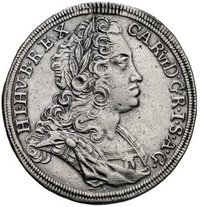
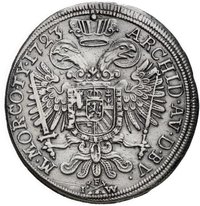
💎 Extremely Rare