

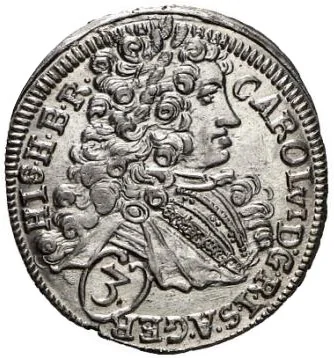
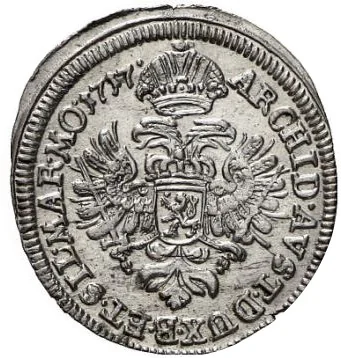
3 Kreuzers – Kingdom of Bohemia
Context
Years: 1712–1719
Country: Bohemia
Issuer: Kingdom of Bohemia
Ruler: Charles VI
Currency:
(1520—1754)
Demonetized: Yes
Material
References
KM: #Click to copy to clipboard666
Numista: #80476
Value
Bullion value: $5.05
Obverse
Description:
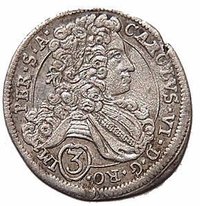
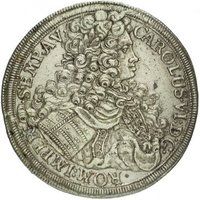
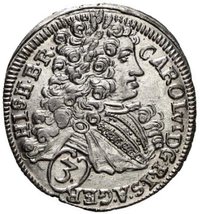
Laureate right portrait, curly wig. Legend split by head, framed value below. No inner circle.
Inscription:
CAROLUS VI D G R I S A GER / HIS H B R
ou
HIS HU B R
ou
HIS HU B R
Script: Latin
Reverse
Description:
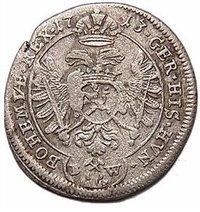
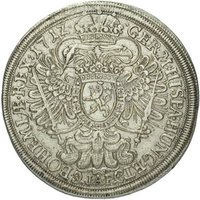
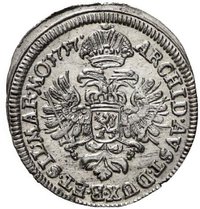
Imperial double-headed eagle with crowned Bohemian shield. No inner circle.
Inscription:
ARCHID AUST DUX B ET SIL MAR MO 1717
Script: Latin
Edge
Plain
Mints
| Name | Mark |
|---|---|
| Prague | — |
Mintings
| Year | Mint Mark | Mintage | Quality | Collection |
|---|---|---|---|---|
| 1712 | — | — | ||
| 1713 | — | — | ||
| 1714 | — | — | ||
| 1715 | — | — | ||
| 1716 | — | — | ||
| 1717 | — | — | ||
| 1718 | — | — | ||
| 1719 | — | — |
Historical background
In 1712, the Kingdom of Bohemia, a core hereditary land of the Habsburg Monarchy, operated within a complex and strained currency system. The primary circulating coin was the silver Konventionstaler, a product of the 1704 Leipzig Currency Treaty between Austria and Bavaria, which aimed to standardize coinage across the Holy Roman Empire. However, the reality in Bohemia was one of monetary duality and debasement. Alongside these official coins, the kingdom was flooded with chronically depreciated Landmünze (small change coinage) and vast quantities of low-quality Klippe coins—emergency money, often crudely minted on square flans, issued to finance the Habsburgs' protracted wars, most notably the War of the Spanish Succession.
This situation created severe economic instability. The fixed exchange rate between the valuable Konventionstaler (used for foreign trade and state reserves) and the debased domestic coinage was artificial and unsustainable, leading to Gresham's Law in practice: "bad money drove out good." Hoarders and merchants saved full-weight silver coins, while markets were saturated with inferior money, fueling price inflation and harming wage-earners and peasants. The Habsburg state's relentless minting of debased coinage to pay for military expenses functioned as a form of inflation tax, extracting value from the economy and undermining commercial confidence.
Consequently, the year 1712 fell within a period of mounting monetary crisis that would necessitate major reform. The pressures of war finance, the coexistence of multiple coinage standards, and the widespread circulation of emergency money created a chaotic financial environment that stifled Bohemia's once-vibrant economy. This turmoil would ultimately compel Emperor Charles VI to enact a significant monetary reform in 1714, which aimed to unify the coinage system, retire the Klippe, and stabilize the currency, though with only partial and temporary success.
This situation created severe economic instability. The fixed exchange rate between the valuable Konventionstaler (used for foreign trade and state reserves) and the debased domestic coinage was artificial and unsustainable, leading to Gresham's Law in practice: "bad money drove out good." Hoarders and merchants saved full-weight silver coins, while markets were saturated with inferior money, fueling price inflation and harming wage-earners and peasants. The Habsburg state's relentless minting of debased coinage to pay for military expenses functioned as a form of inflation tax, extracting value from the economy and undermining commercial confidence.
Consequently, the year 1712 fell within a period of mounting monetary crisis that would necessitate major reform. The pressures of war finance, the coexistence of multiple coinage standards, and the widespread circulation of emergency money created a chaotic financial environment that stifled Bohemia's once-vibrant economy. This turmoil would ultimately compel Emperor Charles VI to enact a significant monetary reform in 1714, which aimed to unify the coinage system, retire the Klippe, and stabilize the currency, though with only partial and temporary success.
✨ Legendary