

1 Kreuzer – Austrian Empire
Austria
Context
Years: 1756–1762
Country: Austria 
Issuer: Austrian Empire
Ruler: Maria Theresa
Currency:
(1754—1857)
Demonetized: Yes
Material
References
KM: #Click to copy to clipboard1820
Numista: #79658
Value
Bullion value: $2.03
Obverse
Description:
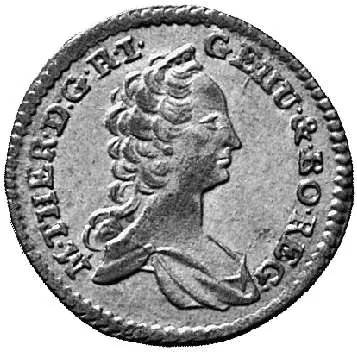
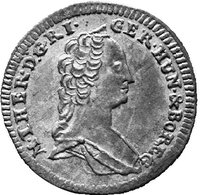
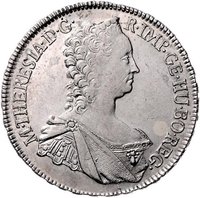
Portrait of Maria Theresia facing right, with legend: "Maria Theresia Dei Gratia Romanorum Imperatrix Germaniae Hungariae Bohemiae Regina."
Inscription:
M THER D G R I / GE HU & BO REG
Script: Latin
Reverse
Description:
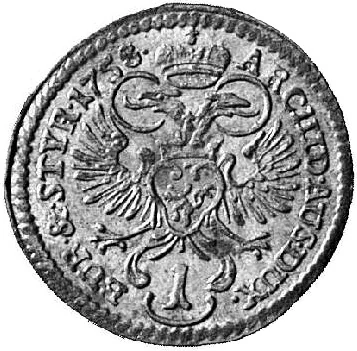
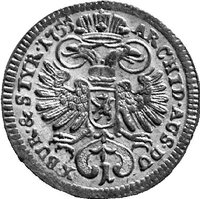
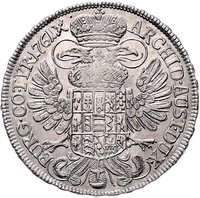
Imperial double-headed eagle with Styrian arms, value below arched line. Legend: "Archiducisa Austriae Ducisa Burgundiae Styriae" (starts at 1h).
Inscription:
ARCHID AUST DUX 1 BURG & STYR 1758
Script: Latin
Edge
Mints
| Name | Mark |
|---|---|
| Graz | — |
Mintings
| Year | Mint Mark | Mintage | Quality | Collection |
|---|---|---|---|---|
| 1756 | — | — | ||
| 1757 | — | — | ||
| 1758 | — | — | ||
| 1762 | — | — |
Historical background
In 1756, the currency system of the Habsburg Monarchy (often referred to as the Austrian Empire) was a complex and fragmented patchwork, reflecting the empire's diverse and non-integrated territories. The primary unit was the Conventionsthaler (or Konventionsthaler), established by the monetary convention of 1753 between Austria and Bavaria. This silver coin, containing a defined amount of fine silver, was intended to bring stability by creating a common standard across the southern German states and Habsburg lands. However, in practice, it circulated alongside a bewildering array of older regional coins, such as the Reichsthaler and the Kreuzer, as well as various debased subsidiary coins.
The system was under persistent strain due to the state's chronic fiscal needs, particularly the costs of maintaining a large military and bureaucracy. The Seven Years' War, which began in 1756, dramatically exacerbated these pressures. To finance the massive war effort against Prussia and its allies, the state resorted to expedients that undermined monetary stability. This included the issuance of low-quality subsidiary coinage and, more significantly, the production of paper money known as Bancozettel from the state-backed Wiener Stadtbanco. While these notes provided crucial short-term liquidity, they marked the beginning of a long-term inflationary trend.
Consequently, by the outbreak of the war in 1756, the currency situation was one of fragile and enforced standardization, already teetering on the brink of manipulation. The theoretical stability promised by the Conventionsthaler was immediately challenged by the fiscal realities of a major continental conflict. The stage was set for the monetary degradation that would characterize the following decades, as the empire increasingly relied on debt monetization and paper money, laying bare the fundamental disconnect between its ambitious great-power politics and its underdeveloped fiscal and monetary institutions.
The system was under persistent strain due to the state's chronic fiscal needs, particularly the costs of maintaining a large military and bureaucracy. The Seven Years' War, which began in 1756, dramatically exacerbated these pressures. To finance the massive war effort against Prussia and its allies, the state resorted to expedients that undermined monetary stability. This included the issuance of low-quality subsidiary coinage and, more significantly, the production of paper money known as Bancozettel from the state-backed Wiener Stadtbanco. While these notes provided crucial short-term liquidity, they marked the beginning of a long-term inflationary trend.
Consequently, by the outbreak of the war in 1756, the currency situation was one of fragile and enforced standardization, already teetering on the brink of manipulation. The theoretical stability promised by the Conventionsthaler was immediately challenged by the fiscal realities of a major continental conflict. The stage was set for the monetary degradation that would characterize the following decades, as the empire increasingly relied on debt monetization and paper money, laying bare the fundamental disconnect between its ambitious great-power politics and its underdeveloped fiscal and monetary institutions.
✨ Legendary