

5 shillings – Uganda
Add to wishlist
Uganda
Context
Year: 1972
Issuer: Uganda
Issuing organization: Bank of Uganda
Period:
(since 1962)
Currency:
(1966—1987)
Demonetized: Yes
Total mintage: 8,000,000
Material
Diameter: 30 mm
Weight: 13.5 g
Thickness: 2 mm
Shape: Equilateral curve heptagon
Composition: Copper-nickel
Technique: Milled
Alignment: Medal alignment
flip
References
KM: #
Numista: #12004
Value
Exchange value: 5 UGS
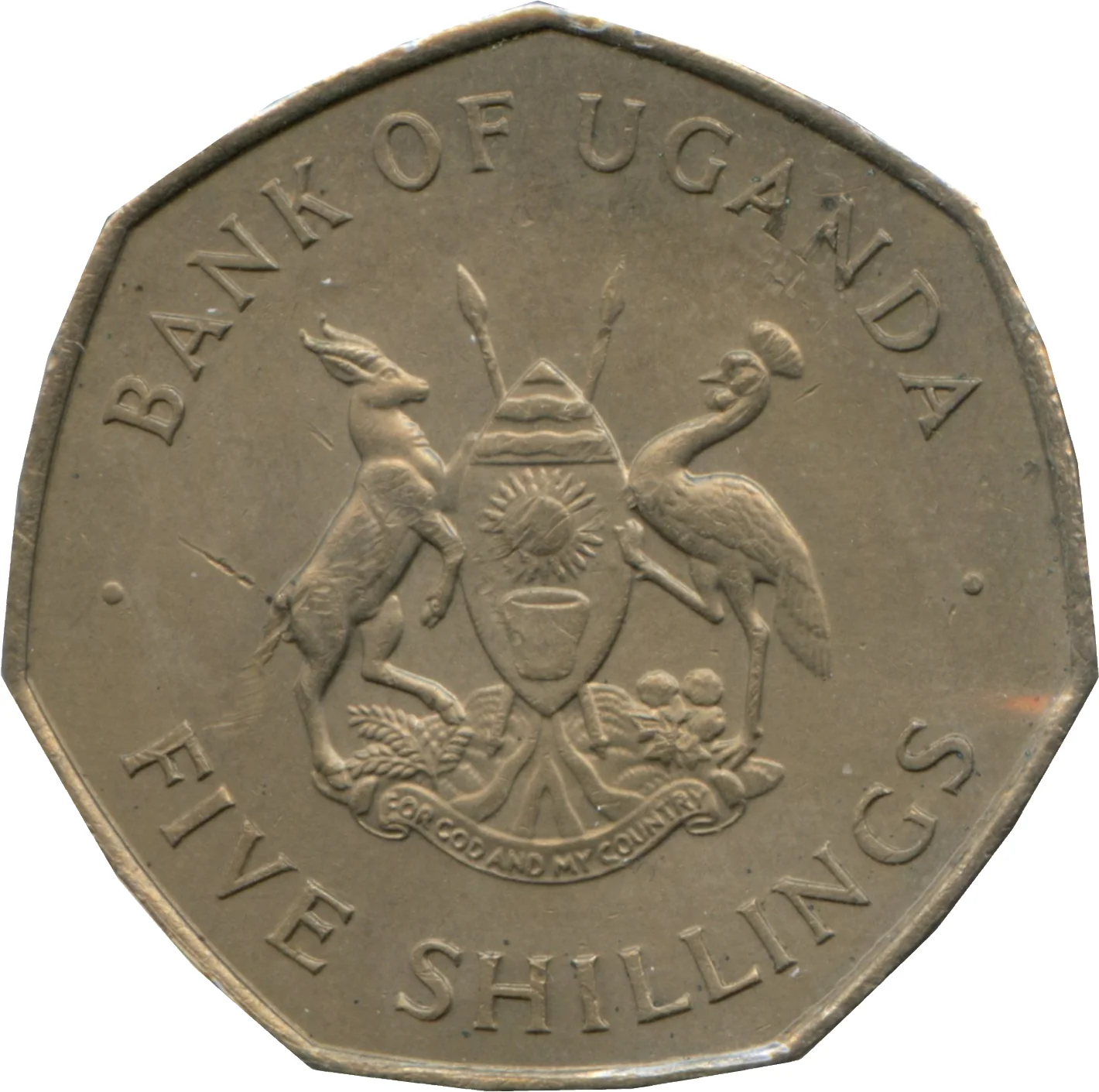
Obverse
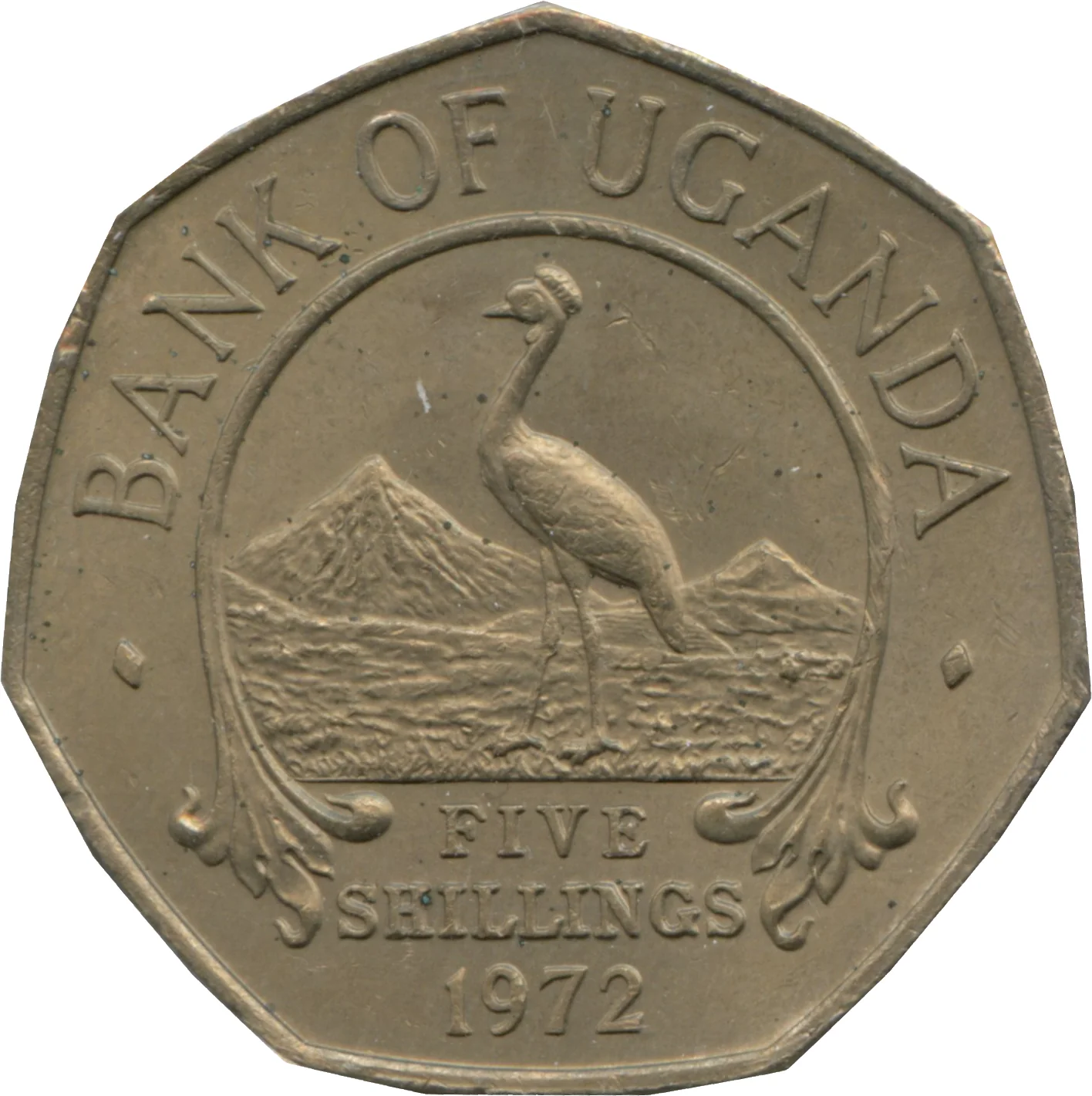
Reverse
Description:
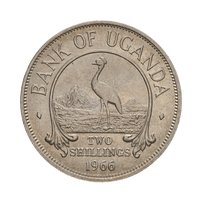
Grey crowned crane facing left, floral ornament, mountains behind.
Inscription:
· BANK OF UGANDA ·
FIVE
SHILLINGS
1972
FIVE
SHILLINGS
1972
Script: Latin
Edge
Plain
Categories
| Animal> Bird |
| Symbols> Coat of Arms |
Mints
| Name | Mark |
|---|---|
| Royal Mint | — |
Mintings
| Year | Mint Mark | Mintage | Quality | Collection |
|---|---|---|---|---|
| 1972 | — | 8,000,000 |
Historical background
In 1972, Uganda's currency situation was directly shaped by the radical economic policies of President Idi Amin, who had seized power the previous year. His most impactful decision was the expulsion of the country's Asian community in August 1972, a group that dominated commerce and industry. This abrupt action caused immediate economic paralysis, disrupting supply chains, crippling manufacturing, and leading to severe shortages of goods. The resulting collapse in formal economic activity and tax revenue placed enormous strain on the Ugandan shilling and the government's finances.
Concurrently, Amin's regime embarked on a massive expansion of the money supply to finance grandiose projects and placate the military, his key base of support. This reckless monetary policy, divorced from any growth in real economic output, triggered rampant inflation. The shilling began a rapid devaluation on the parallel black market, as confidence in the currency evaporated. Price controls were imposed in a futile attempt to curb inflation, but these only worsened shortages and fueled a thriving underground economy where essential goods were traded at exorbitant prices.
By the end of 1972, the foundations for a prolonged economic crisis were firmly in place. The expulsion had destroyed the productive sector, while fiscal indiscipline and money printing had ignited inflationary fires. The official exchange rate became increasingly divorced from reality, and the black market for foreign currency and goods became a necessary feature of daily survival. Thus, 1972 marked the beginning of a severe devaluation and loss of purchasing power for the Ugandan shilling, a direct consequence of political decisions that prioritized regime survival over economic stability.
Concurrently, Amin's regime embarked on a massive expansion of the money supply to finance grandiose projects and placate the military, his key base of support. This reckless monetary policy, divorced from any growth in real economic output, triggered rampant inflation. The shilling began a rapid devaluation on the parallel black market, as confidence in the currency evaporated. Price controls were imposed in a futile attempt to curb inflation, but these only worsened shortages and fueled a thriving underground economy where essential goods were traded at exorbitant prices.
By the end of 1972, the foundations for a prolonged economic crisis were firmly in place. The expulsion had destroyed the productive sector, while fiscal indiscipline and money printing had ignited inflationary fires. The official exchange rate became increasingly divorced from reality, and the black market for foreign currency and goods became a necessary feature of daily survival. Thus, 1972 marked the beginning of a severe devaluation and loss of purchasing power for the Ugandan shilling, a direct consequence of political decisions that prioritized regime survival over economic stability.
🌟 Uncommon