

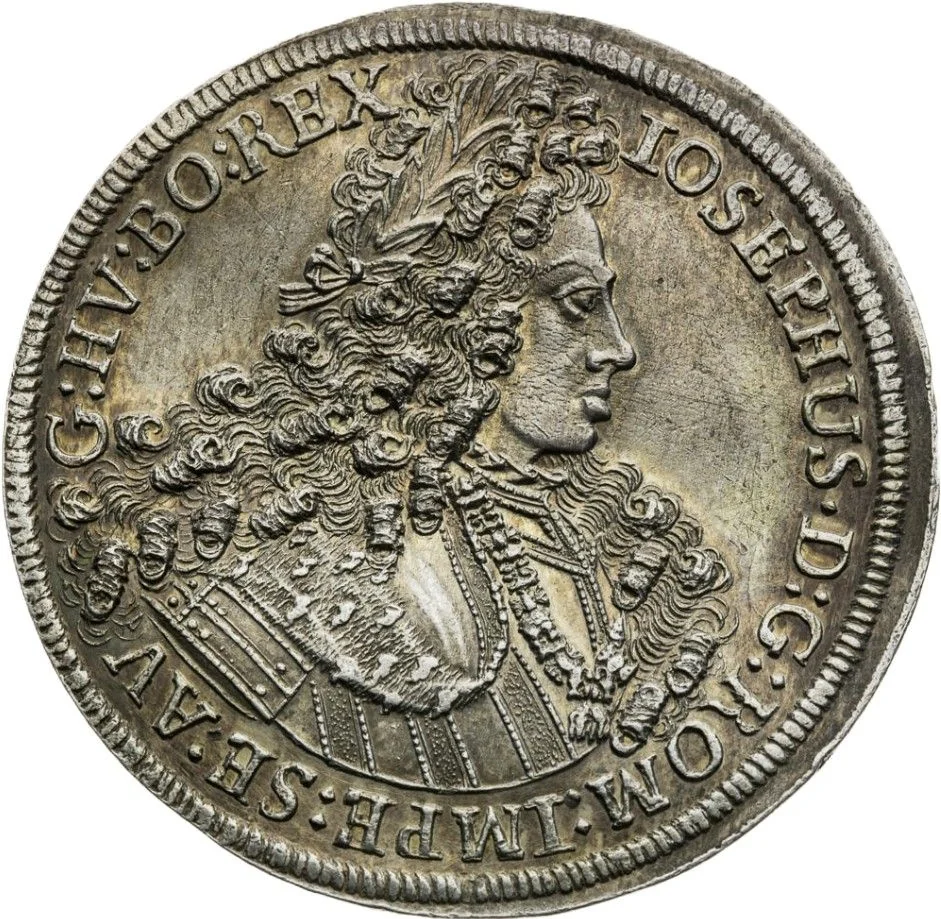

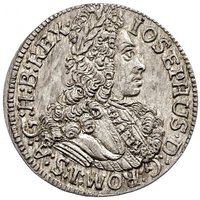
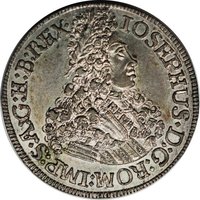
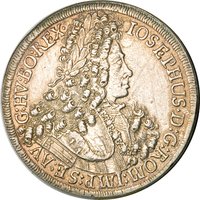
Obverse
Description:
Armoured portrait facing right with curly wig and Golden Fleece chain. Legend divided by head, no inner circle.
Inscription:
IOSEPHUS D G ROM IMPE SE AV G HV BO REX
Script: Latin
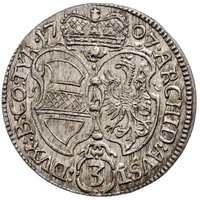
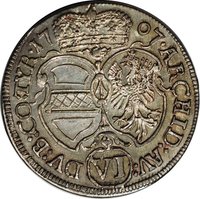
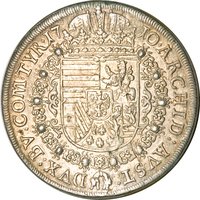
Reverse
Description:
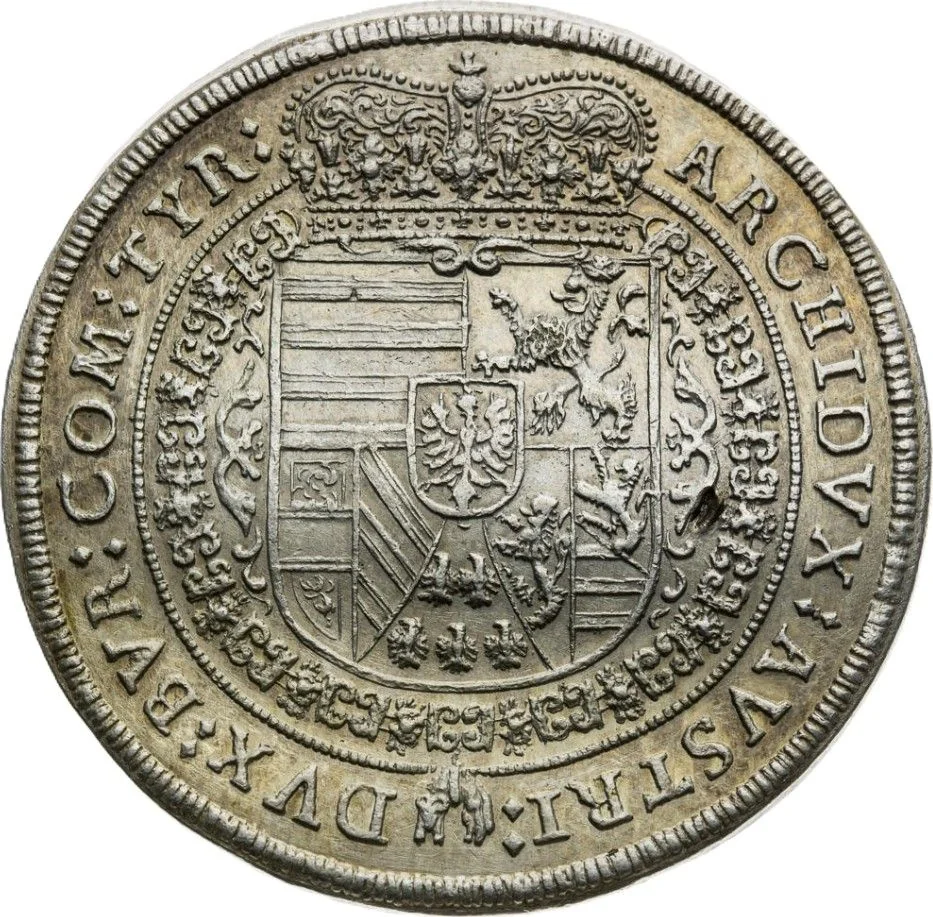
Arms of Hungary, Bohemia, Austria, and Habsburg, with five eagles of Lower Austria below. Central Tyrol shield, encircled by the Golden Fleece chain and a beaded border.
Inscription:
ARCHIDVX AVSTRI DVX BVR COM TYR
Script: Latin
Edge
Mints
| Name | Mark |
|---|---|
| Hall | — |
Mintings
| Year | Mint Mark | Mintage | Quality | Collection |
|---|---|---|---|---|
| — | — | — |
Historical background
In 1707, the County of Tyrol, a strategic Alpine territory within the Habsburg monarchy, faced a complex and deteriorating currency situation. The primary issue stemmed from the widespread debasement of coinage, a practice not unique to Tyrol but rampant across the German states during this period. Local mints, such as those at Hall, repeatedly reduced the precious metal content in coins to generate short-term profit for the treasury, especially to fund the Habsburgs' ongoing military commitments in the War of the Spanish Succession. This created a flood of low-value, "bad" money circulating alongside older, full-weight "good" money.
The economic consequences were severe and followed Gresham's Law, where "bad money drives out good." Hoarders and merchants exported the older, valuable coins, leaving the debased currency to dominate local trade. This led to rapid inflation, a loss of public confidence in the currency, and significant disruption to commerce. The problem was exacerbated by the circulation of foreign coins and counterfeits, creating a chaotic monetary environment where the actual value of a coin was often disputed, harming both daily transactions and broader economic stability.
Attempts at reform were piecemeal and largely ineffective in the short term. While the central authorities in Vienna recognized the problem, the urgent financial demands of war often took precedence over sound monetary policy. Local Tyrolean estates complained bitterly about the economic damage, but comprehensive reform would only begin to materialize in the following decades. Thus, in 1707, Tyrol was caught in a cycle of debasement and inflation, a microcosm of the fiscal strains facing the Habsburg Empire at the turn of the 18th century.
The economic consequences were severe and followed Gresham's Law, where "bad money drives out good." Hoarders and merchants exported the older, valuable coins, leaving the debased currency to dominate local trade. This led to rapid inflation, a loss of public confidence in the currency, and significant disruption to commerce. The problem was exacerbated by the circulation of foreign coins and counterfeits, creating a chaotic monetary environment where the actual value of a coin was often disputed, harming both daily transactions and broader economic stability.
Attempts at reform were piecemeal and largely ineffective in the short term. While the central authorities in Vienna recognized the problem, the urgent financial demands of war often took precedence over sound monetary policy. Local Tyrolean estates complained bitterly about the economic damage, but comprehensive reform would only begin to materialize in the following decades. Thus, in 1707, Tyrol was caught in a cycle of debasement and inflation, a microcosm of the fiscal strains facing the Habsburg Empire at the turn of the 18th century.
✨ Legendary