

1 Cash – Southern Ming regimes
China
Context

Material
Diameter: 25 mm
Weight: 3.72 g
Thickness: 1.1 mm
Shape: Round with a square hole
Composition: Brass
Magnetic: No
Technique: Cast
Alignment: Medal alignment
flip
References
KM: #Click to copy to clipboard122
Numista: #79141
Obverse
Description:
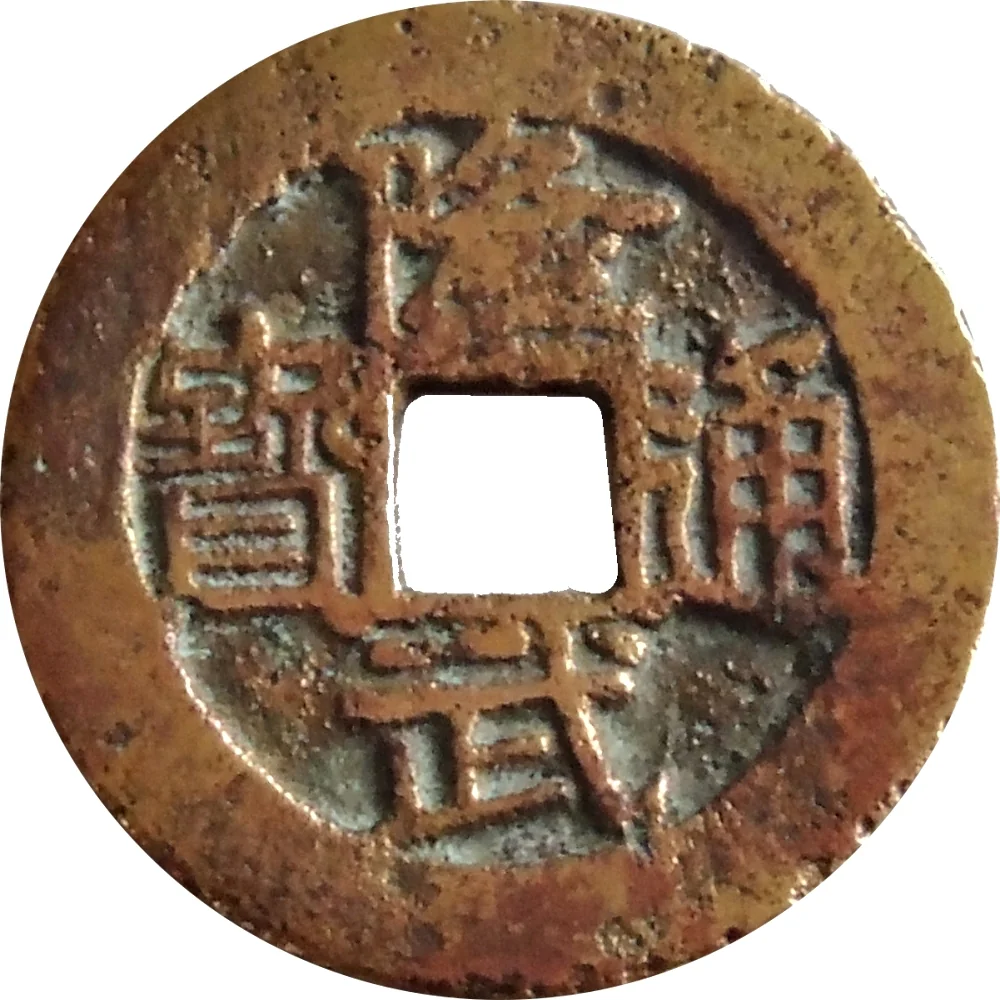
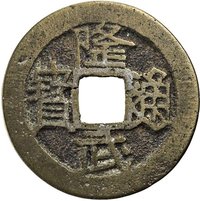
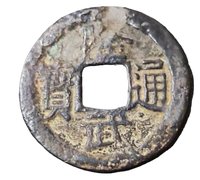
Four Chinese characters read vertically, right to left.
Inscription:
隆
通 寶
武
通 寶
武
Scripts: Chinese (traditional, regular script)
Reverse
Description:
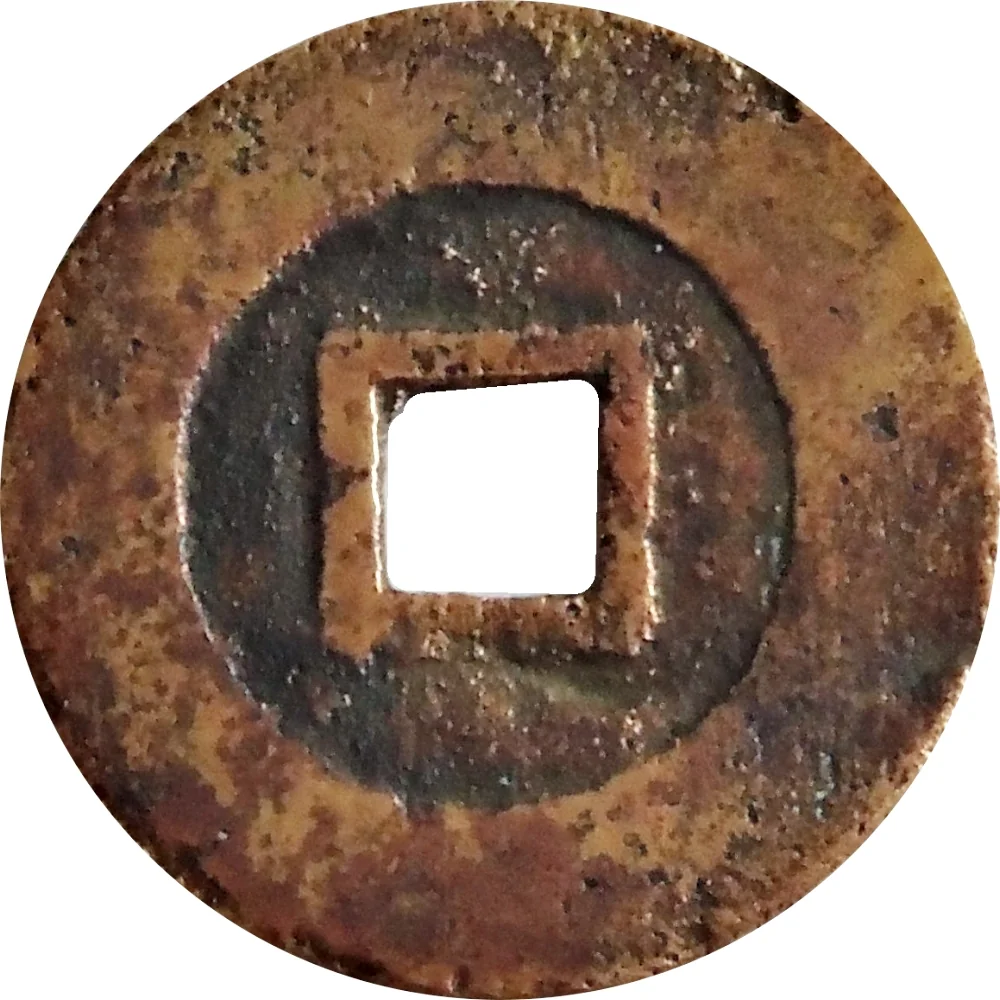
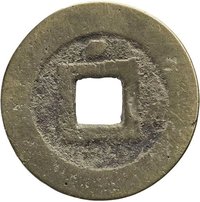
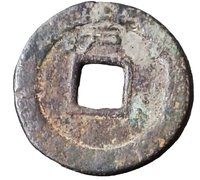
Blank (uniface).
Edge
Plain
Mintings
| Year | Mint Mark | Mintage | Quality | Collection |
|---|---|---|---|---|
| — | — | — |
Historical background
Following the collapse of the Ming dynasty's central authority in 1644 with the fall of Beijing, the Southern Ming regimes that formed in Nanjing and elsewhere faced an immediate and severe currency crisis. The Hongguang court (1644-1645) inherited a financial system devastated by decades of hyperinflation of Ming baochao paper notes and chronic debasement of copper coinage. Crucially, it lost control of the northern mints and tax revenues, while military expenditure against both peasant rebels and the advancing Qing armies was desperate and enormous. The regime's solution was a reckless fiscal policy centered on casting and issuing vast quantities of inferior copper coin, known as Hongguang tongbao, and reviving the discredited paper currency to pay troops and officials.
The currency issued was of notoriously poor quality, often made from melted-down utensils and ritual objects, leading to light, brittle coins that inspired little public confidence. This, combined with the forced circulation of worthless paper notes, caused rapid depreciation and rampant price inflation in the areas under Southern Ming control. The economic instability severely undermined the regime's legitimacy and logistical capacity, as soldiers paid in debased coinage became destitute and mutinous, and the populace resisted accepting the official currency. Furthermore, the Southern Ming's limited territorial control meant its currency could not circulate widely, while older, more reliable Ming coins and even privately minted coins often remained preferred mediums of exchange.
Thus, by 1645, the currency situation was a critical symptom of the Southern Ming's fatal weaknesses: lack of secure territory, desperate finances, and collapsing administrative control. The failure to establish a stable monetary system eroded the very economic foundation needed to sustain resistance. When the Qing armies captured Nanjing in June 1645, the Hongguang currency immediately became obsolete, demonstrating that the Southern Ming's economic authority had never taken root, contributing directly to the swiftness of its political and military collapse.
The currency issued was of notoriously poor quality, often made from melted-down utensils and ritual objects, leading to light, brittle coins that inspired little public confidence. This, combined with the forced circulation of worthless paper notes, caused rapid depreciation and rampant price inflation in the areas under Southern Ming control. The economic instability severely undermined the regime's legitimacy and logistical capacity, as soldiers paid in debased coinage became destitute and mutinous, and the populace resisted accepting the official currency. Furthermore, the Southern Ming's limited territorial control meant its currency could not circulate widely, while older, more reliable Ming coins and even privately minted coins often remained preferred mediums of exchange.
Thus, by 1645, the currency situation was a critical symptom of the Southern Ming's fatal weaknesses: lack of secure territory, desperate finances, and collapsing administrative control. The failure to establish a stable monetary system eroded the very economic foundation needed to sustain resistance. When the Qing armies captured Nanjing in June 1645, the Hongguang currency immediately became obsolete, demonstrating that the Southern Ming's economic authority had never taken root, contributing directly to the swiftness of its political and military collapse.

💎 Extremely Rare