

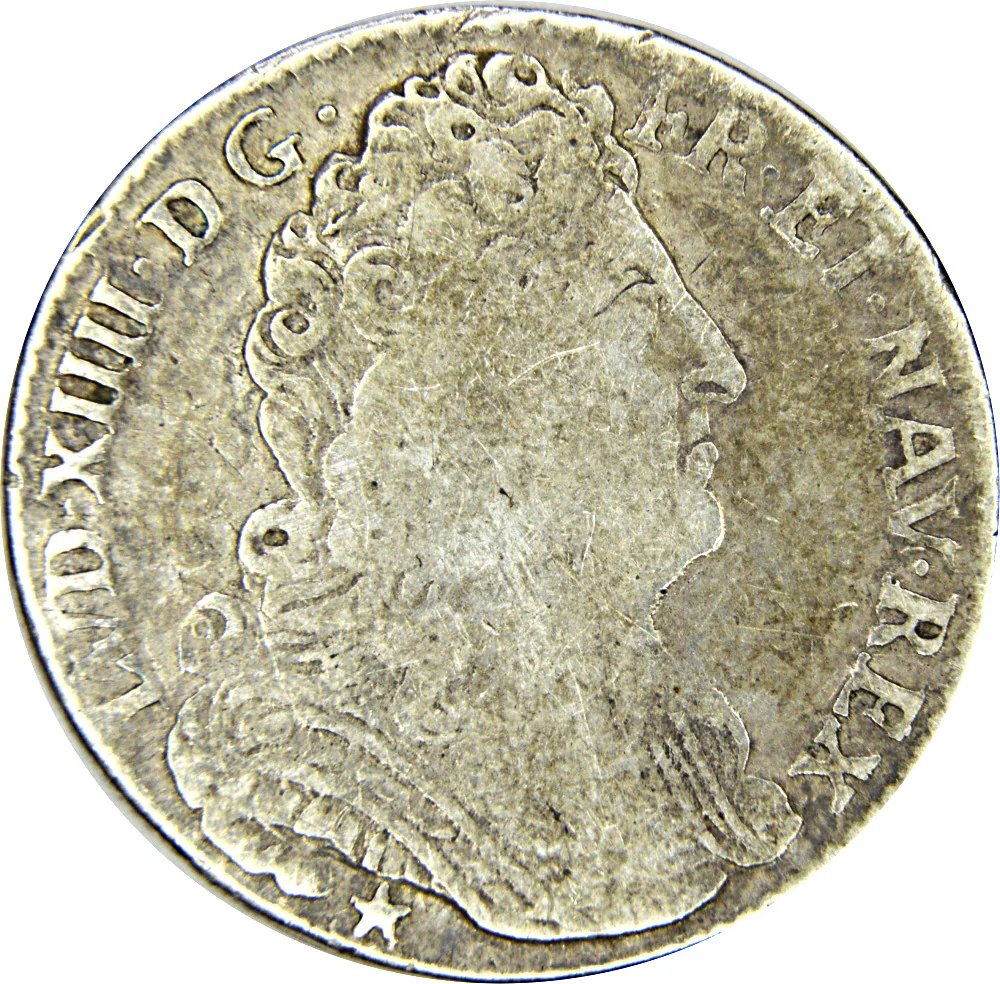
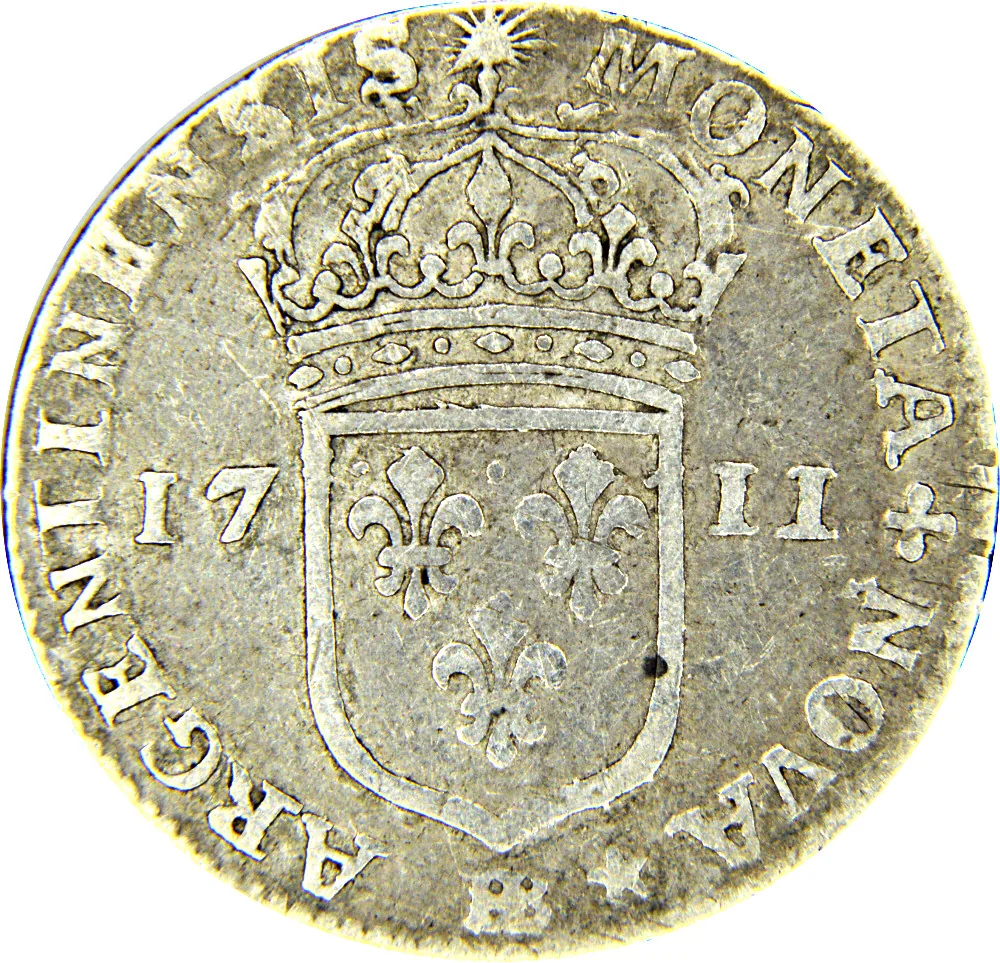
Obverse
Description:
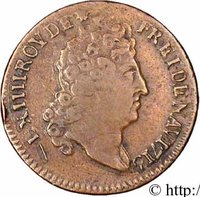
Louis XIV bust right. Legend begins at 7 o'clock.
Inscription:
LVD•XIIII•D•G• FR•ET•NAV•REX
Script: Latin
Reverse
Description:
French crowned shield flanked by the date, different workshop in exergue.
Inscription:
MONETA ♣ NOVA *ARGENTINENSIS
Script: Latin
Edge
Plain
Mints
| Name | Mark |
|---|---|
| Monnaie de Paris | A |
| Strasbourg | BB |
Historical background
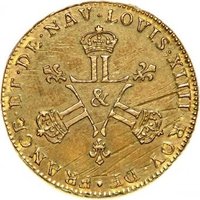
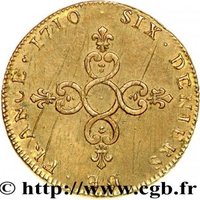
In 1710, France was in the throes of a severe monetary and fiscal crisis, a direct consequence of King Louis XIV's relentless wars, most notably the ongoing War of the Spanish Succession. The state treasury was effectively bankrupt, drained by military expenditures. To finance these wars, the government, under the control of Finance Minister Michel Chamillart, had resorted to a series of desperate and destructive measures, including devaluing the coinage, selling offices and titles, and borrowing at exorbitant rates. The fundamental problem was a catastrophic mismatch between the royal government's expenses and its tax revenues, which were inefficiently collected and riddled with exemptions for the nobility and clergy.
The currency situation was particularly chaotic due to repeated official manipulations. The government engaged in augmentations (raising the official face value of coins) and diminutions (lowering it), causing wild fluctuations in the livre's value. A key feature was the attempt to maintain a bimetallic system of gold louis d'or and silver écus, but the mint ratios were constantly altered, leading to Gresham's Law in action: good, full-weight coins were hoarded or exported, while debased currency flooded the market. This instability shattered public confidence, disrupted commerce, and caused rampant price inflation, severely burdening the peasantry and urban poor who were paid in depreciating currency.
This financial turmoil reached its peak with the emergency issuance of government debt notes and, infamously, billets de monnaie (currency notes) from 1701 onward. Initially intended as temporary instruments, these paper notes were soon over-issued and began to trade at a steep discount to their face value. By 1710, the system of credit was collapsing, and the billets were widely distrusted. The crisis would force a drastic solution within a few years, setting the stage for the radical—and ultimately disastrous—experiments of the Scottish economist John Law in the subsequent reign of Louis XV.
The currency situation was particularly chaotic due to repeated official manipulations. The government engaged in augmentations (raising the official face value of coins) and diminutions (lowering it), causing wild fluctuations in the livre's value. A key feature was the attempt to maintain a bimetallic system of gold louis d'or and silver écus, but the mint ratios were constantly altered, leading to Gresham's Law in action: good, full-weight coins were hoarded or exported, while debased currency flooded the market. This instability shattered public confidence, disrupted commerce, and caused rampant price inflation, severely burdening the peasantry and urban poor who were paid in depreciating currency.
This financial turmoil reached its peak with the emergency issuance of government debt notes and, infamously, billets de monnaie (currency notes) from 1701 onward. Initially intended as temporary instruments, these paper notes were soon over-issued and began to trade at a steep discount to their face value. By 1710, the system of credit was collapsing, and the billets were widely distrusted. The crisis would force a drastic solution within a few years, setting the stage for the radical—and ultimately disastrous—experiments of the Scottish economist John Law in the subsequent reign of Louis XV.
✨ Legendary