

3 Polker – Swedish Livonia
Context
Year: 1669
Country: Livonia
Issuer: Swedish Livonia
Ruler: Charles XI
Currency:
(1629—1710)
Subdivision: 3 Polker = 1⁄24 Thaler
Demonetized: Yes
Material
References
KM: #Click to copy to clipboard6
Numista: #78796
Value
Bullion value: $2.62
Obverse
Description:
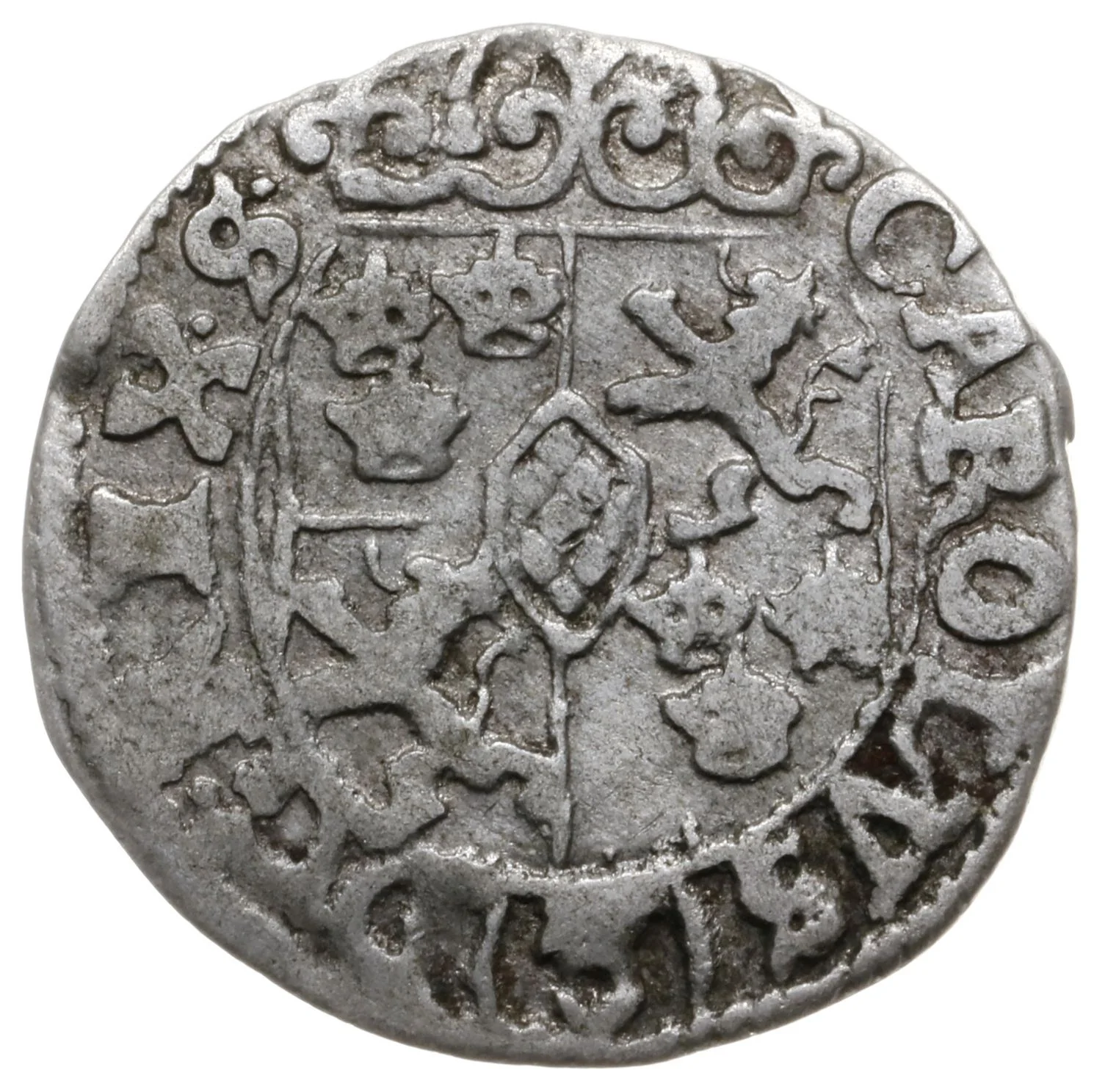
Quartered shield with crown, encircled by inscription.
Inscription:
CAROLVS · D · G · REX · S ·
3
3
Script: Latin
Reverse
Description:
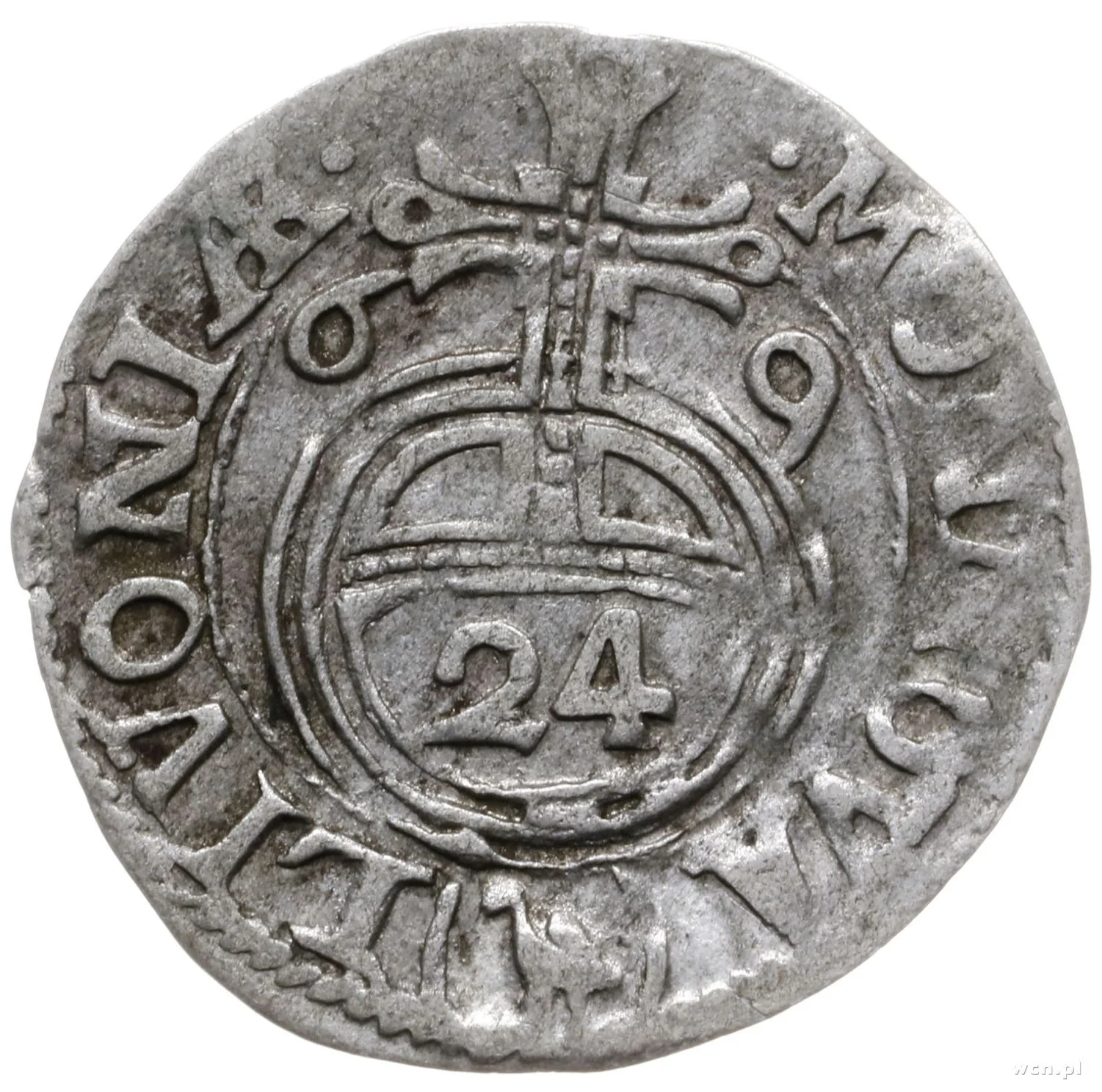
Cross on orb with value and date, encircled by legend.
Inscription:
MON · NOVA · LIVONIÆ ·
6 - 9
24
6 - 9
24
Script: Latin
Edge
Plain
Mints
| Name | Mark |
|---|---|
| Riga | — |
Mintings
| Year | Mint Mark | Mintage | Quality | Collection |
|---|---|---|---|---|
| 1669 | — | — |
Historical background
In 1669, Swedish Livonia (encompassing most of modern-day Latvia and southern Estonia) operated under a complex and strained monetary system. The province, a vital source of grain and tax revenue for the Swedish Empire, was officially integrated into the kingdom's currency area, which was based on the silver daler. However, the reality on the ground was one of monetary pluralism and disorder. Alongside Swedish coin, a multitude of older and foreign currencies remained in active circulation, including Polish złoty and grosz, Lithuanian coins, and various German thalers, leading to constant difficulties with exchange rates and valuation in daily trade.
This chaotic situation was exacerbated by a chronic shortage of small-denomination coinage, which crippled local markets and wage payments. To address this, the Swedish Crown had authorized the city of Riga to mint its own copper schilling coins since the 1650s. By 1669, these coins, along with other low-value copper money, formed the backbone of the local petty economy. However, their value was unstable and often divorced from their metallic content, causing inflation and public distrust, especially among the peasantry who paid taxes in silver but often received wages in depreciated copper.
The underlying tension in 1669, therefore, was between the centralizing aims of the Swedish state, which sought to impose a uniform monetary standard for control and tax efficiency, and the entrenched, practical needs of a frontier province with deep-rooted economic ties to the Polish-Lithuanian Commonwealth and the wider Baltic region. This period represented a transitional and problematic phase, where monetary policy struggled to keep pace with economic reality, creating a fragile and often contradictory financial environment in Swedish Livonia.
This chaotic situation was exacerbated by a chronic shortage of small-denomination coinage, which crippled local markets and wage payments. To address this, the Swedish Crown had authorized the city of Riga to mint its own copper schilling coins since the 1650s. By 1669, these coins, along with other low-value copper money, formed the backbone of the local petty economy. However, their value was unstable and often divorced from their metallic content, causing inflation and public distrust, especially among the peasantry who paid taxes in silver but often received wages in depreciated copper.
The underlying tension in 1669, therefore, was between the centralizing aims of the Swedish state, which sought to impose a uniform monetary standard for control and tax efficiency, and the entrenched, practical needs of a frontier province with deep-rooted economic ties to the Polish-Lithuanian Commonwealth and the wider Baltic region. This period represented a transitional and problematic phase, where monetary policy struggled to keep pace with economic reality, creating a fragile and often contradictory financial environment in Swedish Livonia.
✨ Legendary