

3 Kreuzer – Austrian Empire
Austria
Context
Years: 1706–1711
Country: Austria 
Issuer: Austrian Empire
Ruler: Joseph I
Currency:
(1520—1754)
Demonetized: Yes
Material
References
KM: #Click to copy to clipboard1463
Numista: #78787
Value
Bullion value: $4.29
Obverse
Description:
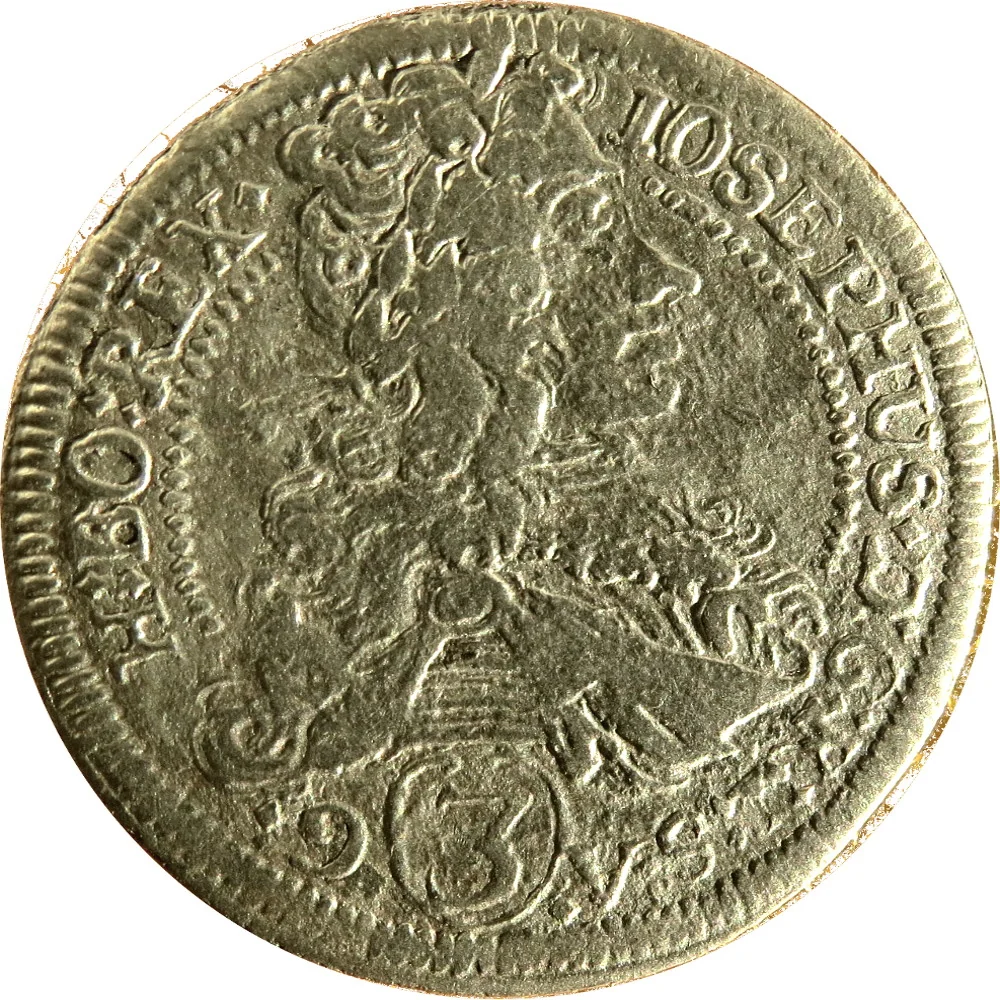
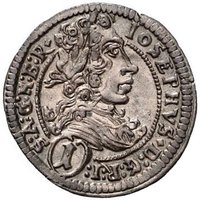
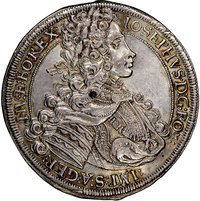
Bust of Joseph I facing right within a beaded circle, intersecting the rim and legend. Surrounding inscription: "Joseph, Dei Gratia, Romanorum Imperator Semper Augustus, Germaniae, Hungariae Bohemiaeque rex".
Inscription:
IOSEPHUS D G R I S A (3) G H BO REX
Script: Latin
Engraver: Johann Jakob Aigmann
Reverse
Description:
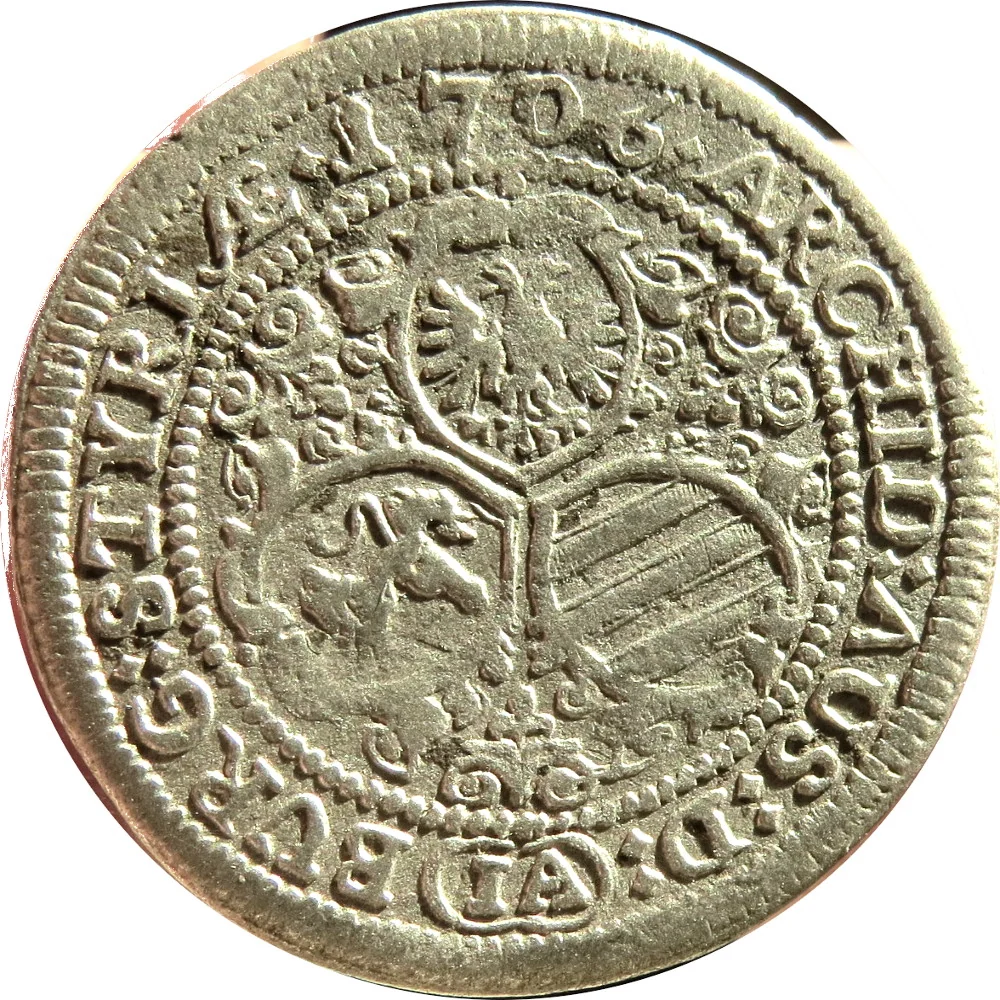
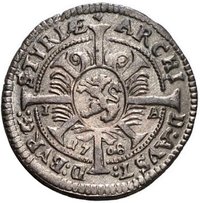
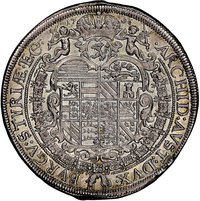
Three heart-shaped shields—Austria (top), Burgundy (right), Styria (left)—point inward, with ornaments between them, within a beaded circle. The mint mark below divides the legend: “ARCHIDUX AVSTRIAE DVX BVRGVNDIAE ET STYRIAE.”
Inscription:
ARCHID AUS D (IA) BURG STYRIÆ 1706
Script: Latin
Edge
Mints
| Name | Mark |
|---|---|
| Graz | — |
Mintings
| Year | Mint Mark | Mintage | Quality | Collection |
|---|---|---|---|---|
| 1706 | — | — | ||
| 1707 | — | — | ||
| 1708 | — | — | ||
| 1709 | — | — | ||
| 1710 | — | — | ||
| 1711 | — | — |
Historical background
In 1706, the Austrian Habsburg Monarchy was embroiled in the War of the Spanish Succession (1701-1714), a conflict that placed immense fiscal strain on the imperial treasury. The need to fund large armies fighting across multiple fronts, from the Low Countries to Italy and Hungary, led to severe financial shortfalls. This pressure directly corrupted the coinage system, as the government resorted to debasement—reducing the precious metal content in coins while maintaining their face value—to generate quick revenue. This practice, while providing immediate cash, eroded public trust and sparked inflation, as more coins of lower intrinsic value chased the same goods.
The currency landscape was notoriously complex and fragmented. There was no single, unified imperial currency. Instead, the empire operated on a dual system: the Reichsthaler (imperial thaler) used for large-scale accounting and trade in the German hereditary lands, and the Gulden (florin), which was divided into 60 Kreuzer. Furthermore, various regional mints in territories like Tyrol, Bohemia, and Hungary often issued their own coinage with varying standards. This fragmentation, combined with wartime debasement, led to a chaotic circulation of coins of uncertain and fluctuating value, hampering commerce and complicating tax collection.
The situation was further aggravated by the ongoing Rákóczi Uprising for Hungarian independence (1703-1711), which controlled much of the Kingdom of Hungary and its mining regions. This deprived the Vienna court of crucial silver and gold revenues from the mines of Upper Hungary (modern Slovakia), a traditional source of bullion for coinage. Consequently, the government's ability to produce high-value, stable currency was severely weakened. The monetary chaos of 1706 was thus a direct symptom of the empire's existential military struggles, reflecting a state financing a fight for survival at the cost of its economic stability.
The currency landscape was notoriously complex and fragmented. There was no single, unified imperial currency. Instead, the empire operated on a dual system: the Reichsthaler (imperial thaler) used for large-scale accounting and trade in the German hereditary lands, and the Gulden (florin), which was divided into 60 Kreuzer. Furthermore, various regional mints in territories like Tyrol, Bohemia, and Hungary often issued their own coinage with varying standards. This fragmentation, combined with wartime debasement, led to a chaotic circulation of coins of uncertain and fluctuating value, hampering commerce and complicating tax collection.
The situation was further aggravated by the ongoing Rákóczi Uprising for Hungarian independence (1703-1711), which controlled much of the Kingdom of Hungary and its mining regions. This deprived the Vienna court of crucial silver and gold revenues from the mines of Upper Hungary (modern Slovakia), a traditional source of bullion for coinage. Consequently, the government's ability to produce high-value, stable currency was severely weakened. The monetary chaos of 1706 was thus a direct symptom of the empire's existential military struggles, reflecting a state financing a fight for survival at the cost of its economic stability.
💎 Very Rare