Logo Title
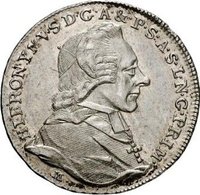
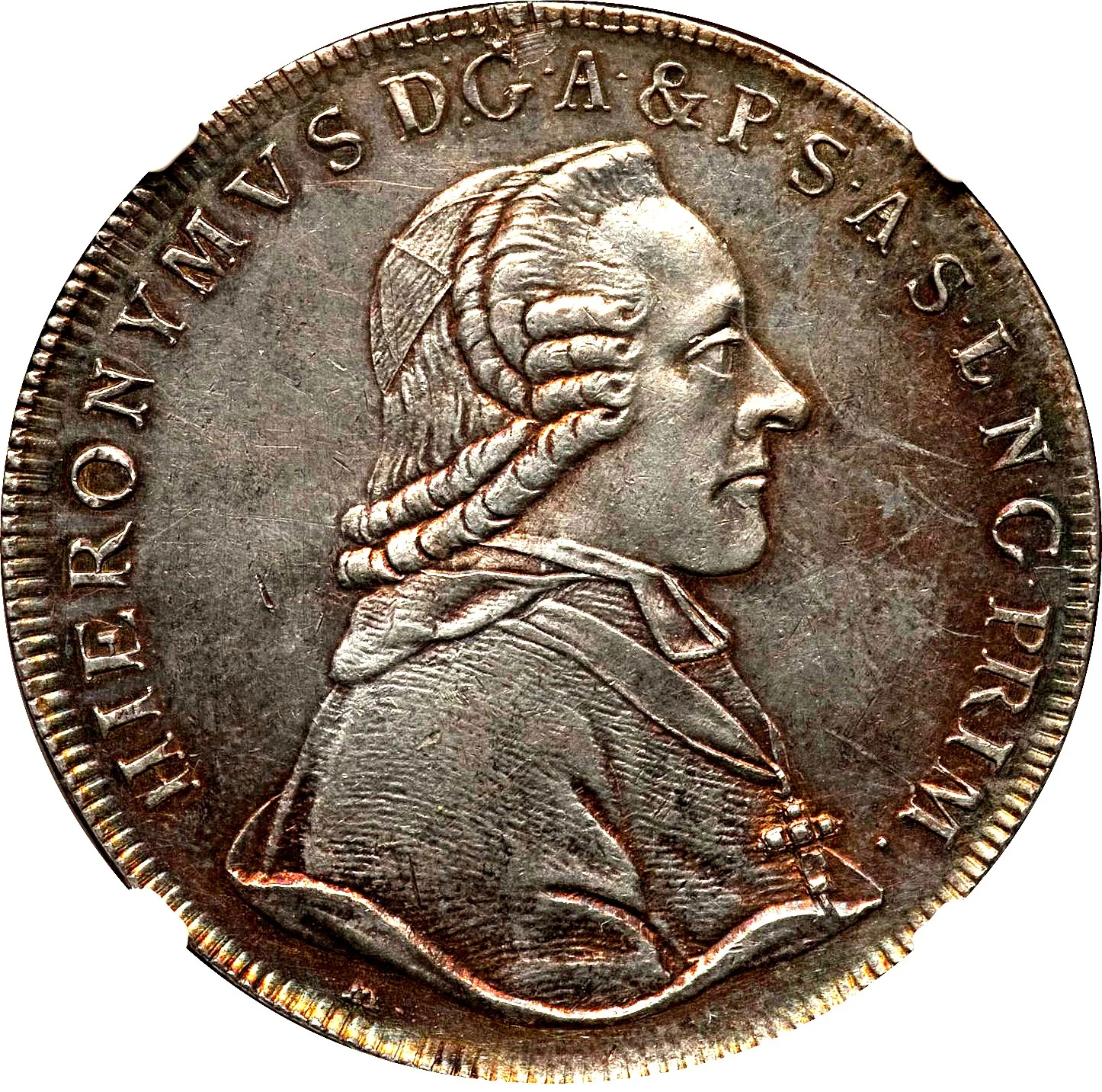
obverse
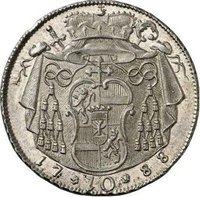
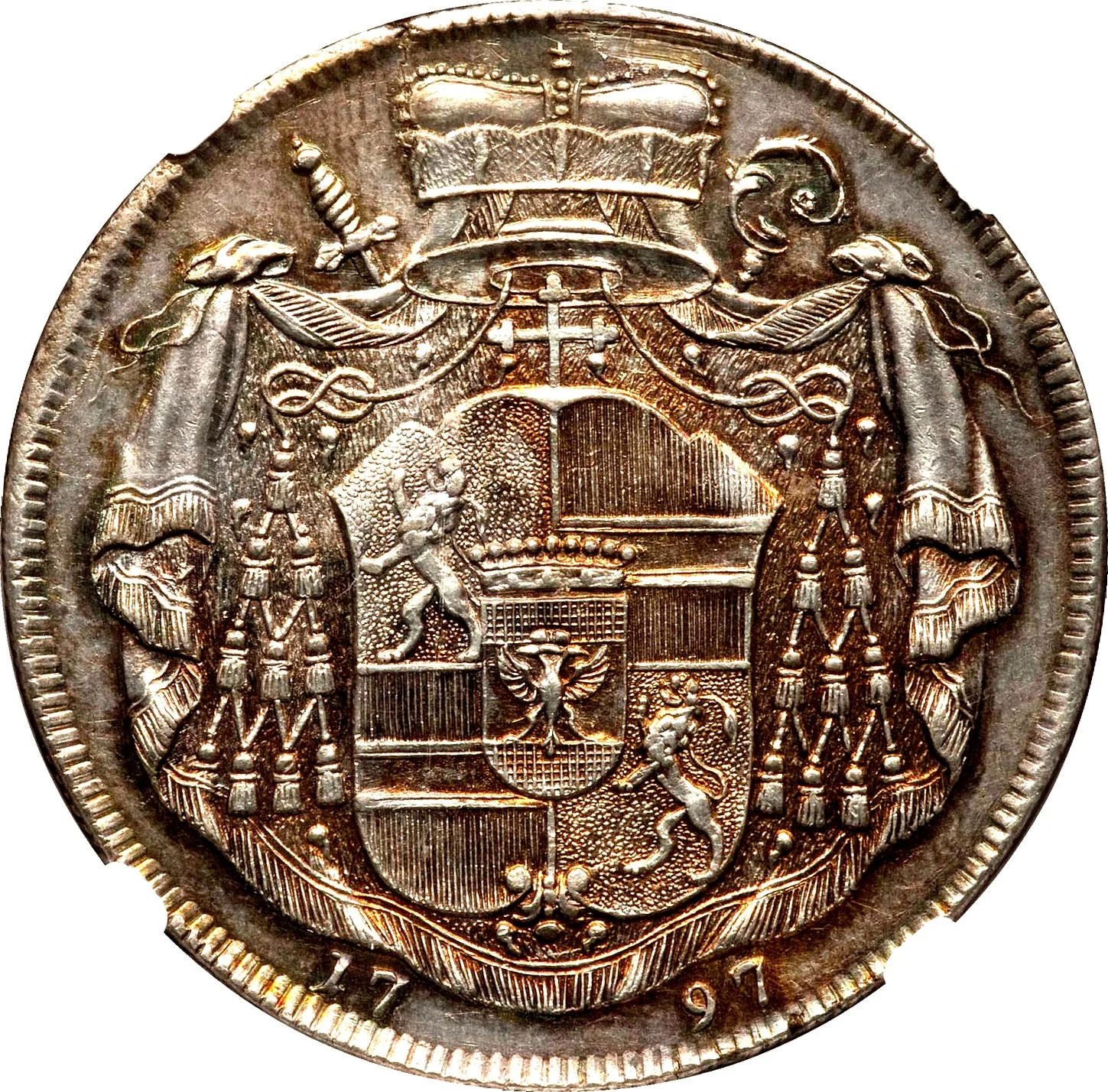
reverse
Heritage Auctions
Context
Years: 1788–1803
Currency:
Demonetized: Yes
Material
Diameter: 42 mm
Weight: 28.06 g
Silver weight: 23.37 g
Shape: Round
Composition: 83.3% Silver
Magnetic: No
Technique: Milled
References
KM: #Click to copy to clipboard465
Numista: #78572
Value
Bullion value: $65.12

Obverse

Description:
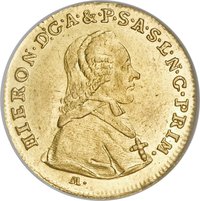
Bust of Prince-Archbishop Hieronymus von Colloredo in profile, wearing a mantle and cross on a neck ribbon.
Inscription:
HIERONYMVS D : G · A · & · P · S · A · S · L · N · G · PRIM .

M
Script: Latin

Reverse

Description:
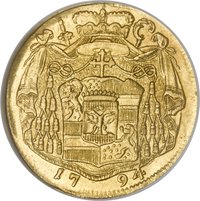
Prince-archbishop Hieronymus von Colloredo's coat of arms, featuring a cross, a tasseled galero, and a crowned mantle with a sword and crosier. Dated below.
Inscription:
17 97
Script: Latin

Edge

Plain, except Zöttl #3244.

Mints

NameMark
Salzburg

Mintings

YearMint MarkMintageQualityCollection
1788
1789
1789M
1790M
1791M
1792M
1793M
1794M
1795M
1796M
1797M
1798M
1799M
1800M
1801M
1802M
1803M

Historical background

In 1788, the Bishopric of Salzburg, while still a nominally independent ecclesiastical principality within the Holy Roman Empire, was operating under profound financial and political strain, largely dictated by its powerful neighbour, the Habsburg Monarchy. The currency situation was not autonomous but was effectively integrated into the Austrian monetary system. Salzburg primarily circulated Conventionstaler and Kreuzer coins minted according to the 1753 Bavarian-Austrian monetary convention, which standardized the silver content of the gulden (florin) across the region. This meant Salzburg's currency was stable in terms of its external value and exchangeability with Austrian lands, but it was subject to the monetary policies and fiscal demands emanating from Vienna.

The Prince-Archbishop at the time, Hieronymus von Colloredo, was a reform-minded ruler influenced by Enlightenment ideals, but his state's finances were heavily burdened. The need to fund administrative reforms, maintain a modest military, and support lavish court culture, combined with a traditional agrarian economy of limited means, created persistent budget deficits. To raise revenue, the bishopric not only relied on taxes and its lucrative salt mines but also on the regalian right of coinage. The Salzburg mint actively produced subsidiary coinage (kreuzers) for local use, and the profit from this seigniorage—the difference between the face value of the coins and the cost of the metal and minting—provided a crucial, though often insufficient, income stream for the treasury.

This fiscal context unfolded under the looming shadow of geopolitical change. By 1788, the Habsburg monarchy under Emperor Joseph II was aggressively centralizing its power, and Salzburg's sovereignty was being steadily eroded. The currency system, tied to Austria, reflected this reality. Within a few years, in 1803, the bishopric would be secularized, ending its independent political existence. Therefore, the monetary situation of 1788 represents the final phase of an ancient ecclesiastical state operating with a borrowed financial stability, while its underlying economic fragility and political dependence foreshadowed its imminent dissolution and absorption into the Bavarian and Austrian spheres.
💎 Very Rare