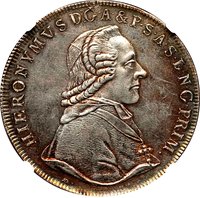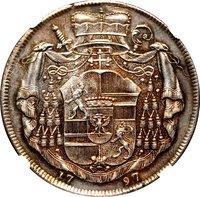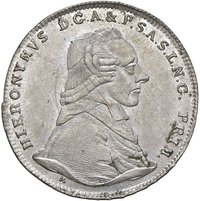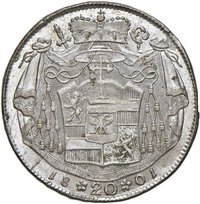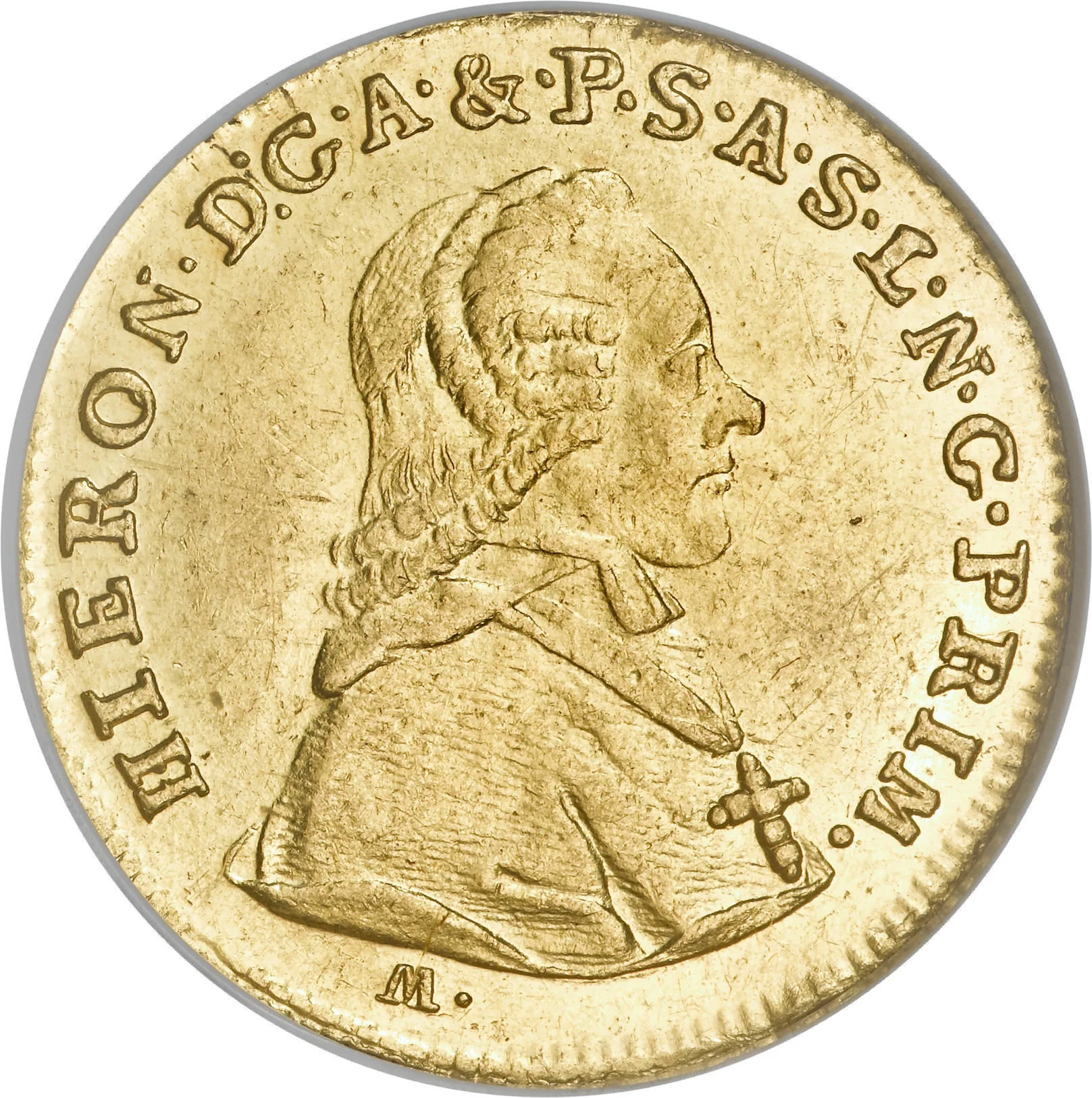
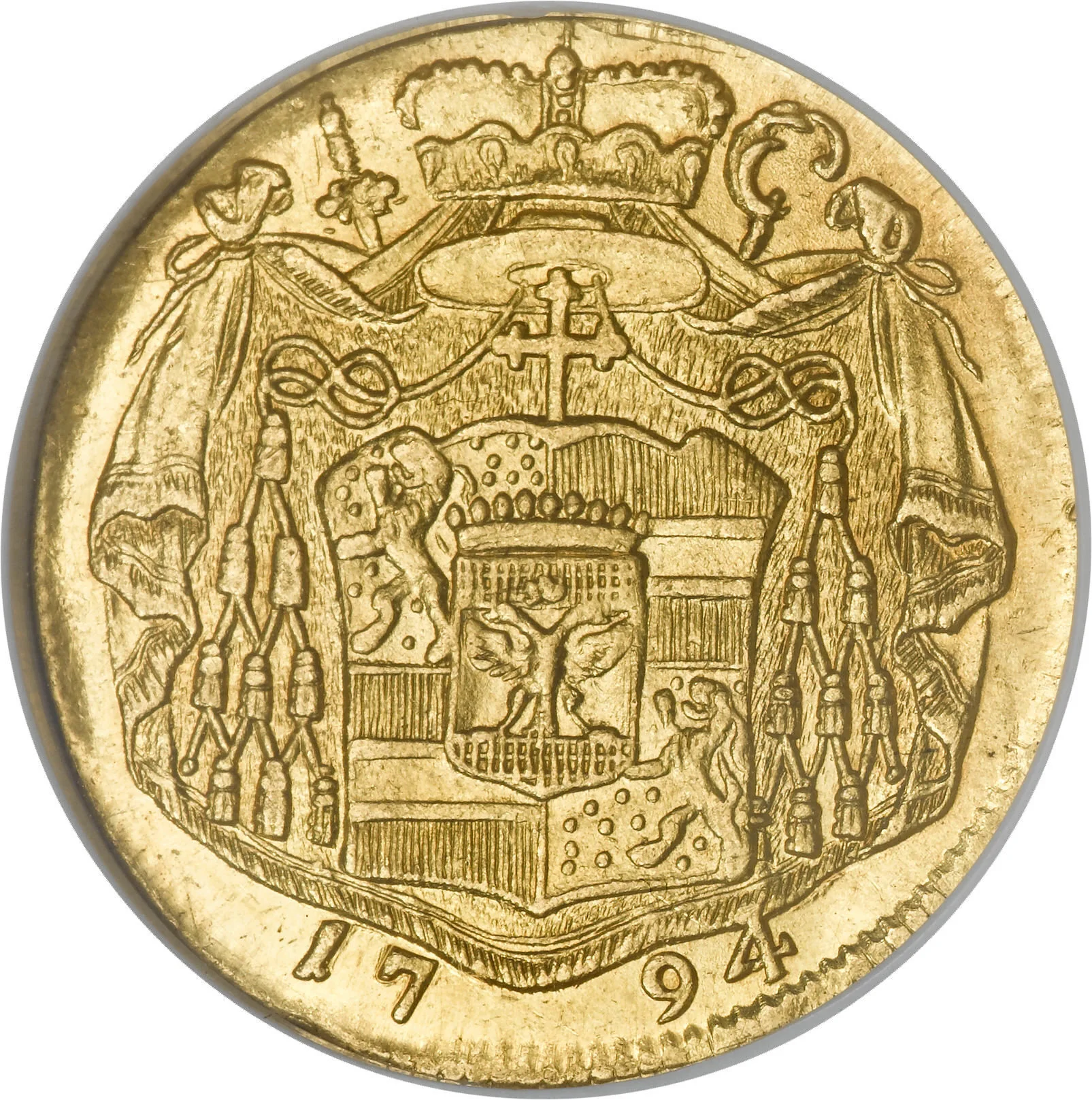
In 1789, the Prince-Archbishopric of Salzburg operated within a complex and fragmented monetary system typical of the Holy Roman Empire. It did not possess the sovereign right to mint its own principal coinage; instead, it relied on the currency systems of its larger neighbors. The most important of these was the
Austrian Conventionsthaler (or Konventionsthaler), a large silver coin standardized by the Bavarian-Austrian monetary convention of 1753. This stable, high-value thaler, divided into 2 Gulden or 120 Kreuzer, served as the bedrock for major transactions, state finance, and trade within the archbishopric and across Central Europe.
However, daily commerce was conducted using a plethora of smaller, often debased coins. Salzburg did mint its own lower-denomination coins, such as
Kreuzer and
Pfennige, but their value and metal content were subject to fluctuation. Furthermore, a multitude of currencies from neighboring German states, Swiss cantons, and Italian territories circulated freely, leading to constant calculation headaches for merchants and citizens. This system required published exchange tables (
Wechseltabellen) and was prone to manipulation, as bad money (debased coin) tended to drive out good (full-weight coin).
This monetary landscape existed on the brink of seismic change. The political independence of the Prince-Archbishopric itself was in its final years. In 1803, it would be secularized, and by 1816, it would be fully incorporated into the Austrian Empire. Consequently, the year 1789 represents the twilight of Salzburg's old financial order, still defined by ecclesiastical rule and imperial complexity, but soon to be swept away by the Napoleonic reorganizations and eventual absorption into the uniform Austrian monetary system of the 19th century.