

3 pfennigs – East Frisia
Add to wishlist
Germany
Context
Material
References
KM: #
Numista: #78495
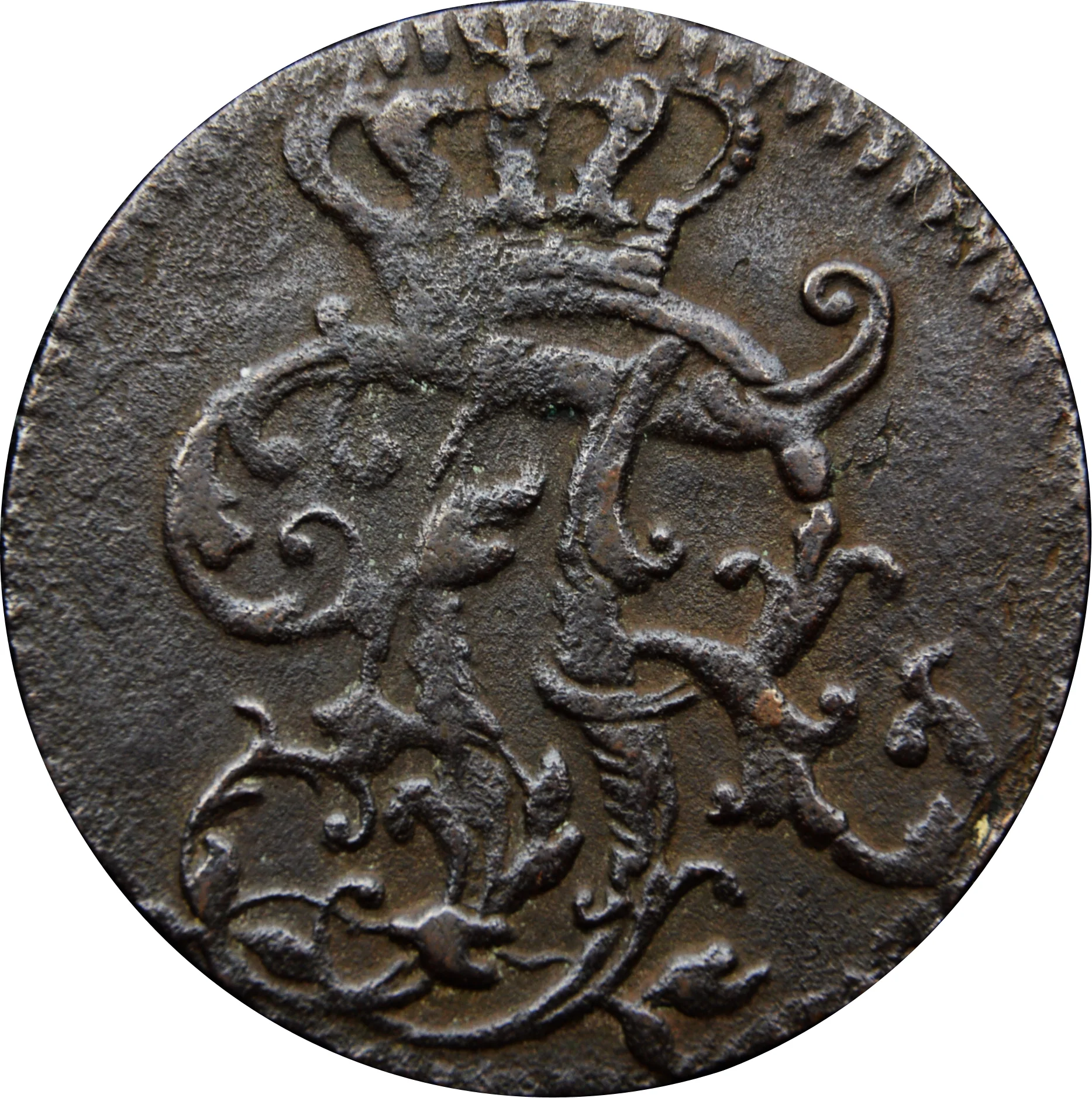
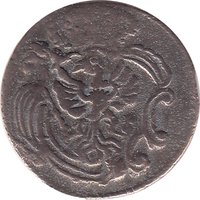
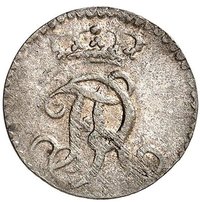
Obverse
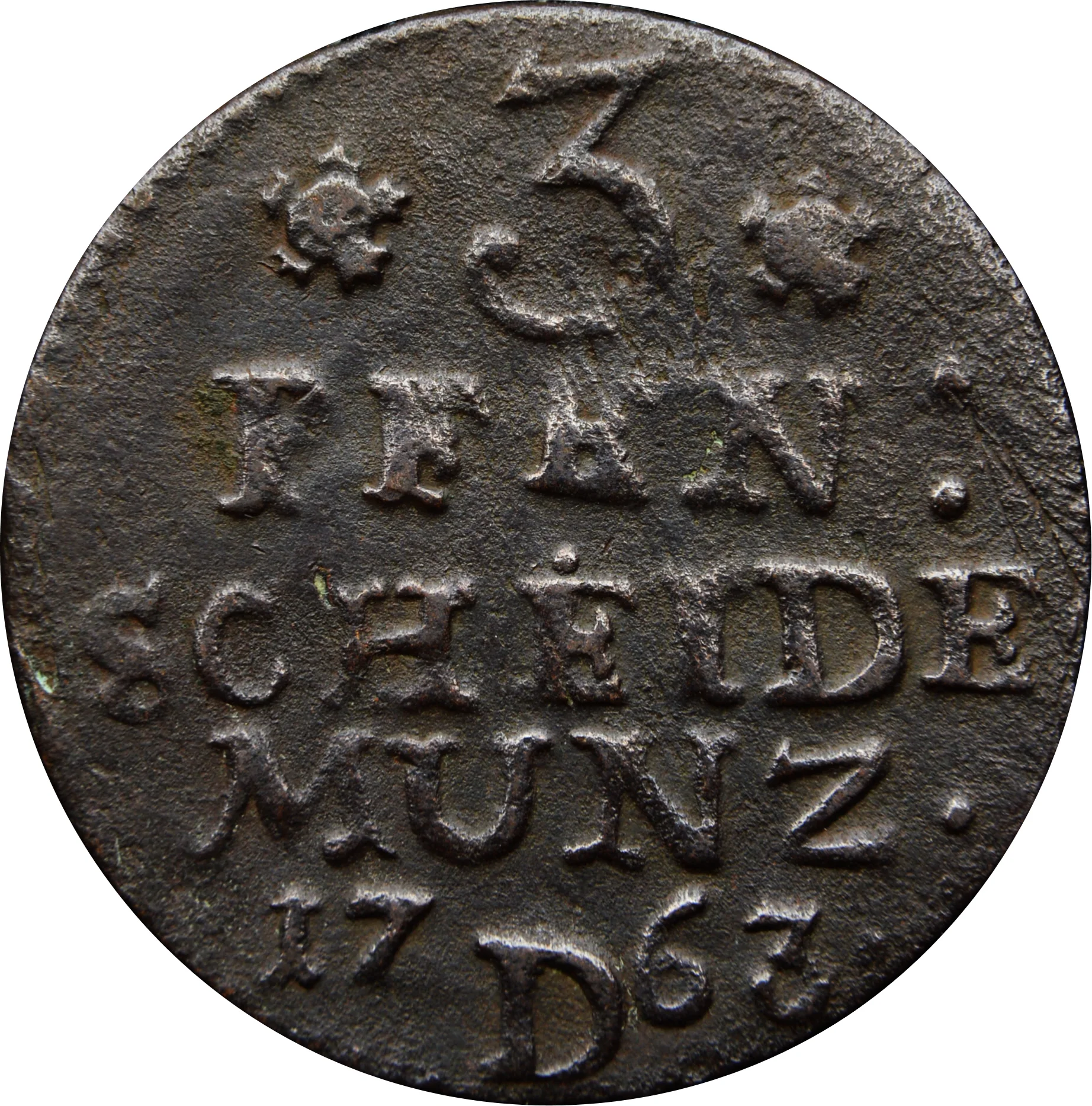
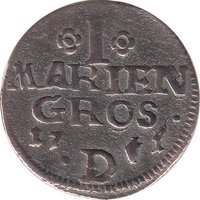
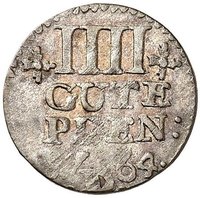
Reverse
Description:
Four lines. Value and date separated by mintmark.
Inscription:
✿ 3 ✿ ꟾ PFEN: ꟾ SCHEIDE ꟾ MUNZ. ꟾ 17 D 63
Script: Latin
Edge
Plain
Mints
| Name | Mark |
|---|---|
| Aurich | D |
Mintings
| Year | Mint Mark | Mintage | Quality | Collection |
|---|---|---|---|---|
| 1763 | D | — |
Historical background
In 1763, the currency situation in East Frisia, a small but strategically located territory on the North Sea coast, was one of profound instability and complexity, directly tied to the aftermath of the Seven Years' War. The region, then under Prussian administration following its annexation in 1744, was inundated with a chaotic mix of debased and depreciated coinage. This "monetary swamp" was largely caused by the massive issuance of low-value Scheidemünzen (small change coins) by various German states and cities to finance the war, leading to rampant inflation and a severe loss of public trust in the circulating medium.
The core of the problem lay in the discrepancy between the official Reichsthaler (Imperial Thaler) and the proliferating fractional coins. While accounts were kept in Reichsthaler, everyday transactions relied on a confusing array of overvalued small coins from neighboring Münster, Cologne, and the Netherlands, among others. This disconnect caused prices to soar in nominal terms, crippling trade and causing hardship for the population. The Prussian authorities, recognizing the economic damage, faced the immense challenge of restoring a uniform and stable currency system to facilitate commerce and tax collection.
Consequently, 1763 marked a pivotal year of attempted reform. Following the Prussian example set by the Münzedikt of May 1763 for its core territories, East Frisian authorities sought to implement a standardized coinage. The goal was to recall the debased money and reintulate a fixed relationship between the Reichsthaler and its subdivisions, thereby restoring confidence. However, this process was gradual and met with practical difficulties, as removing the deeply entrenched foreign coins from circulation and managing the recoinage proved a protracted struggle, leaving a legacy of monetary adjustment that would continue for years.
The core of the problem lay in the discrepancy between the official Reichsthaler (Imperial Thaler) and the proliferating fractional coins. While accounts were kept in Reichsthaler, everyday transactions relied on a confusing array of overvalued small coins from neighboring Münster, Cologne, and the Netherlands, among others. This disconnect caused prices to soar in nominal terms, crippling trade and causing hardship for the population. The Prussian authorities, recognizing the economic damage, faced the immense challenge of restoring a uniform and stable currency system to facilitate commerce and tax collection.
Consequently, 1763 marked a pivotal year of attempted reform. Following the Prussian example set by the Münzedikt of May 1763 for its core territories, East Frisian authorities sought to implement a standardized coinage. The goal was to recall the debased money and reintulate a fixed relationship between the Reichsthaler and its subdivisions, thereby restoring confidence. However, this process was gradual and met with practical difficulties, as removing the deeply entrenched foreign coins from circulation and managing the recoinage proved a protracted struggle, leaving a legacy of monetary adjustment that would continue for years.
💎 Very Rare