

15 Kreuzer – Austrian Empire
Austria
Context
Year: 1728
Country: Austria 
Issuer: Austrian Empire
Ruler: Charles VI
Currency:
(1520—1754)
Demonetized: Yes
Material
References
KM: #Click to copy to clipboard1624
Numista: #78401
Value
Bullion value: $17.91
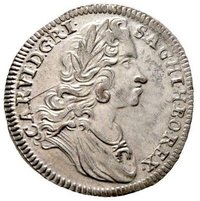
Obverse
Description:
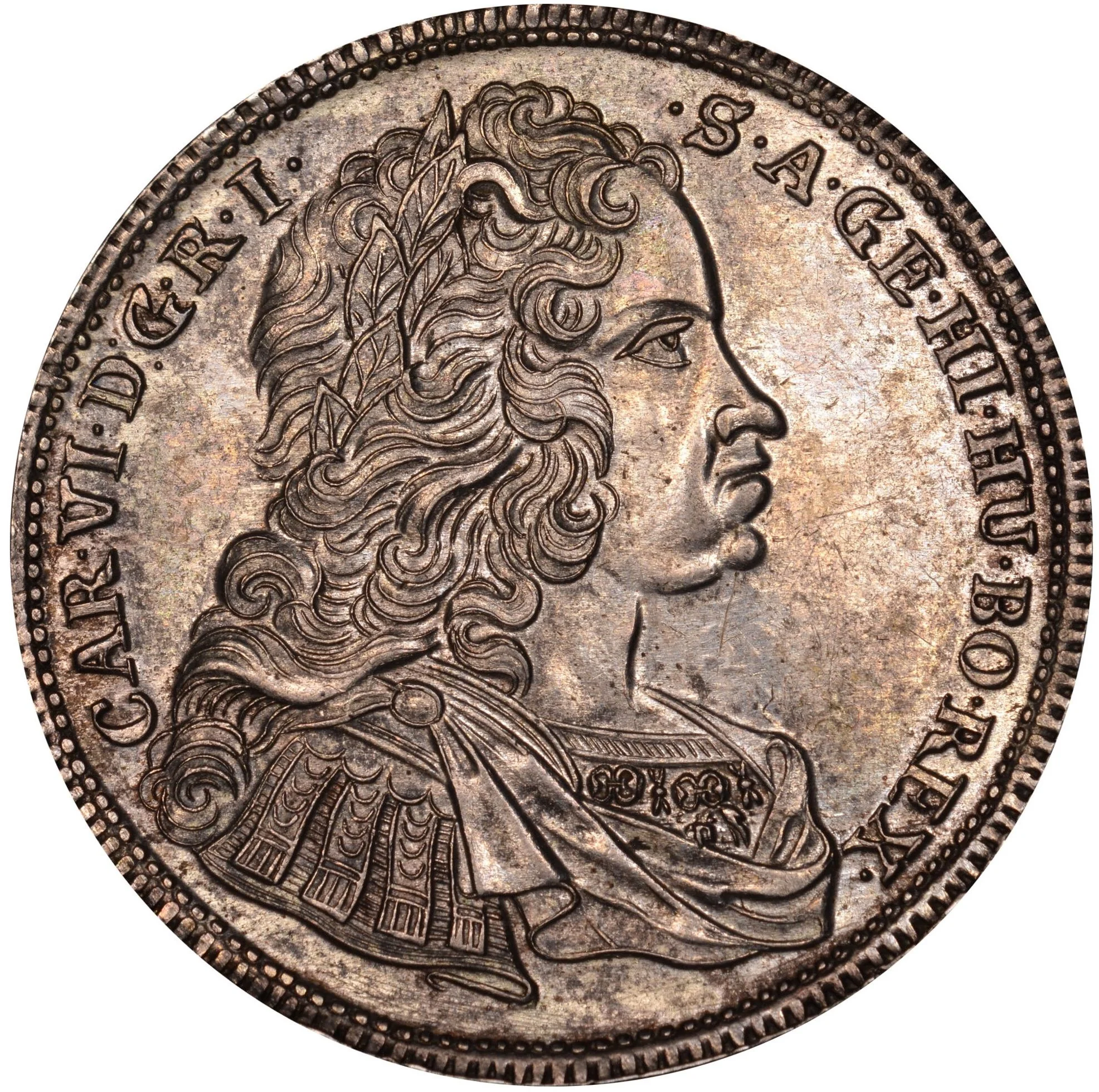
Armored right-facing portrait. Legend: "Carolus VI Dei Gratia Romanorum Imperator Semper Augustus Germaniae, Hispaniae, Hungariae, Bohemiaeque Rex."
Inscription:
CAR VI D G R I S A GE HI HU BO REX
Script: Latin
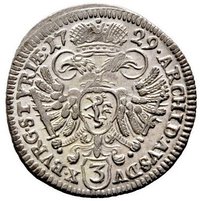
Reverse
Description:
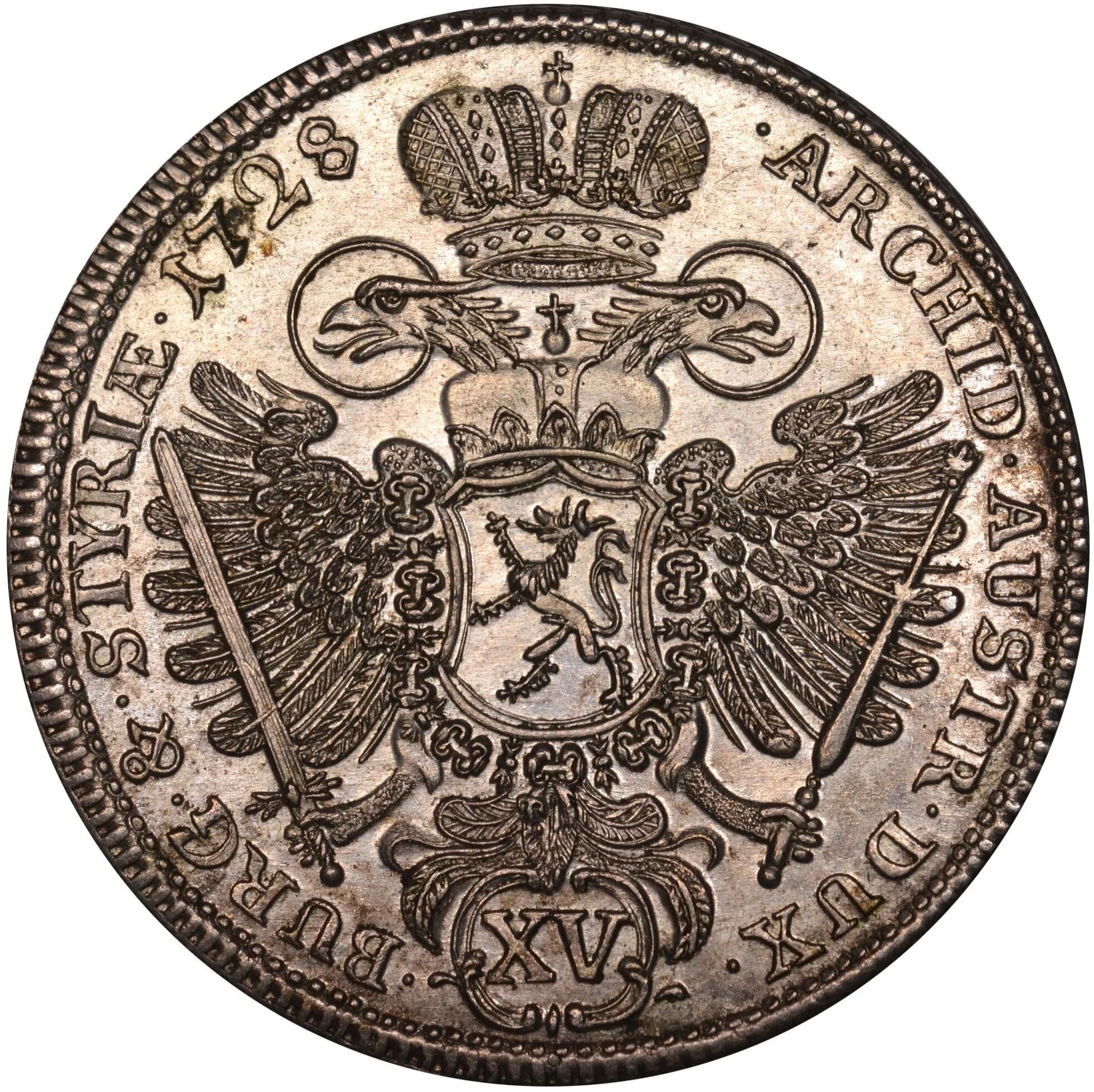
Imperial double-headed eagle with Styrian shield (fire-spitting panther); value divides legend: "Archidux Austriae Dux Burgundiae et Styriae."
Inscription:
ARCHID AUSTR DUX BURG & STYRIÆ 1728
XV
XV
Script: Latin
Edge
Mints
| Name | Mark |
|---|---|
| Graz | — |
Mintings
| Year | Mint Mark | Mintage | Quality | Collection |
|---|---|---|---|---|
| 1728 | — | — |
Historical background
In 1728, the currency situation within the Habsburg-ruled Austrian Empire was complex and fragmented, reflecting the empire's diverse and non-integrated economic landscape. The official currency was based on the Convention standard, established in 1753, but in 1728, the system was still governed by the older Reichsthaler and Gulden (florin) standards set by the Imperial Minting Ordinance of 1559. However, in practice, a multitude of different coins circulated. Each hereditary land (like Austria, Bohemia, and Hungary) often issued its own subsidiary coinage, and numerous German states within the Holy Roman Empire also had their currencies in circulation, leading to a chaotic exchange environment where coins' intrinsic metal value often differed from their face value.
This monetary fragmentation was exacerbated by decades of war, particularly against the Ottoman Empire and during the War of Spanish Succession, which had strained imperial finances. To cover expenses, authorities frequently debased the coinage—reducing the precious metal content while maintaining the same nominal value. This practice, alongside the influx of lower-quality coins from neighboring regions, led to inflationary pressures and a loss of public trust. People hoarded older, higher-quality coins (Gresham's Law in action), further complicating everyday trade and state revenue collection.
Consequently, the year 1728 fell within a period of monetary instability and transition. While Emperor Charles VI's government was aware of the problems, comprehensive reform was still a quarter-century away. The economy operated with a cumbersome system of constant exchange and valuation, hindering commerce and central administration. This unsatisfactory currency situation underscored the broader challenge of governing a composite monarchy and would eventually compel Charles VI's daughter, Maria Theresa, to enact the pivotal Currency Convention of 1753, which finally standardized the gulden and kreutzer across most Habsburg lands.
This monetary fragmentation was exacerbated by decades of war, particularly against the Ottoman Empire and during the War of Spanish Succession, which had strained imperial finances. To cover expenses, authorities frequently debased the coinage—reducing the precious metal content while maintaining the same nominal value. This practice, alongside the influx of lower-quality coins from neighboring regions, led to inflationary pressures and a loss of public trust. People hoarded older, higher-quality coins (Gresham's Law in action), further complicating everyday trade and state revenue collection.
Consequently, the year 1728 fell within a period of monetary instability and transition. While Emperor Charles VI's government was aware of the problems, comprehensive reform was still a quarter-century away. The economy operated with a cumbersome system of constant exchange and valuation, hindering commerce and central administration. This unsatisfactory currency situation underscored the broader challenge of governing a composite monarchy and would eventually compel Charles VI's daughter, Maria Theresa, to enact the pivotal Currency Convention of 1753, which finally standardized the gulden and kreutzer across most Habsburg lands.
✨ Legendary