

1 schilling – Polish–Lithuanian Commonwealth
Add to wishlist
Poland
Context
Year: 1666
Country: Poland
Issuer: Polish–Lithuanian Commonwealth
Ruler: John II Casimir Vasa
Currency:
(1573—1795)
Demonetized: Yes
Material
References
KM: #
Numista: #119357
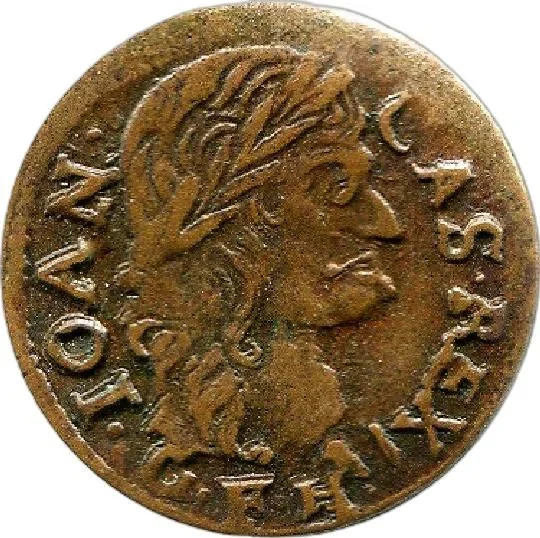
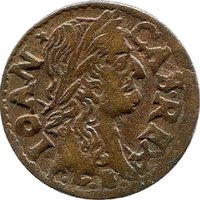
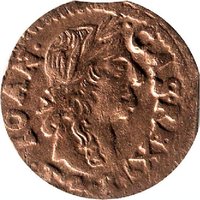
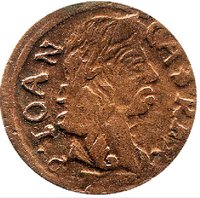
Obverse
Inscription:
IOAN CAS REX G.F.H.
IOAN CAS REX G.F.G.
IOAN CAS REX G.F.G.
Script: Latin
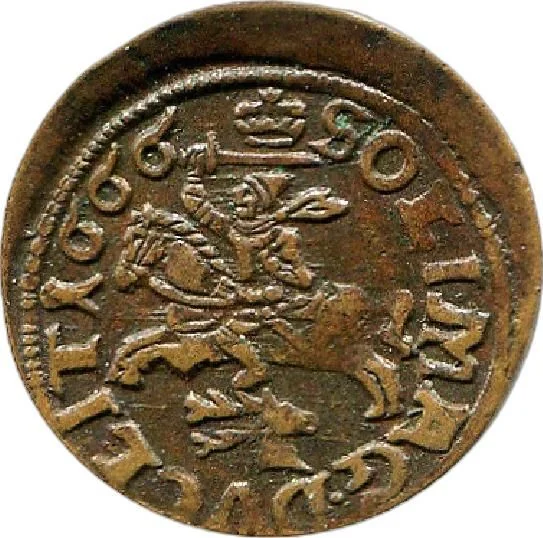
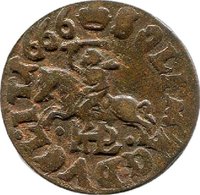
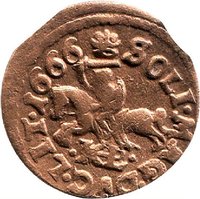
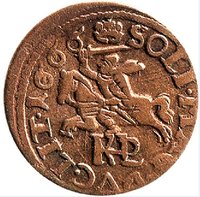
Reverse
Inscription:
SOLI MAG DVC LIT 1666 (crown)
SOLI MAG DVC LIT 1666 -- (crown)
SOLI MAG D -- VC LIT 1666 (crown)
SOLI MAG D - VC LIT 1666 (crown)
SOLI MAG (inverted D) -- VC LIT 1666 (crown)
OLI MAG DVC LIT -- 1666 (crown)
SOLI MAG DVC LIT 1666 -- (crown)
SOLI MAG D -- VC LIT 1666 (crown)
SOLI MAG D - VC LIT 1666 (crown)
SOLI MAG (inverted D) -- VC LIT 1666 (crown)
OLI MAG DVC LIT -- 1666 (crown)
Script: Latin
Edge
Plain
Mints
| Name | Mark |
|---|---|
| Kaunas | — |
Mintings
| Year | Mint Mark | Mintage | Quality | Collection |
|---|---|---|---|---|
| 1666 | — | — |
Historical background
By 1666, the currency situation in the Polish–Lithuanian Commonwealth was one of profound crisis and debasement, a direct consequence of the devastating series of mid-century conflicts known as The Deluge (1648-1667). To finance wars against the Cossacks, Swedes, Russians, and Transylvanians, the state mints, particularly those in Kraków, Ujazdów, and Vilnius, engaged in rampant coinage debasement. The treasury, operating under short-term leases (arenda), dramatically reduced the silver content in coins like the tymf and the smaller szeląg, flooding the economy with inferior money while the old, full-value coins were hoarded or melted down.
This monetary chaos led to Gresham's Law in action, where "bad money drives out good," crippling domestic trade and credit. The situation was exacerbated by the widespread circulation of foreign coins and counterfeit money. The resulting hyperinflation destroyed savings, eroded trust in the currency, and placed a particularly heavy burden on the peasantry and townsfolk, who faced skyrocketing prices for basic goods while their fixed incomes in debased coinage lost value. The szlachta (nobility) also suffered, as their rents, often fixed in nominal terms, plummeted in real value.
The year 1666 itself fell in a brief lull between war phases, but no effective monetary reform was enacted. The government of King John II Casimir Vasa was politically and financially paralyzed, unable to consolidate the debt or regain control over the mints. The monetary system remained a patchwork of discredited domestic coins and foreign currency until the more comprehensive, though still only partially successful, reforms attempted under King John III Sobieski in the 1670s. Thus, the currency of 1666 symbolized the Commonwealth's deeper political weakness—the inability of the central authority to assert fiscal control over a nobility suspicious of strong royal power.
This monetary chaos led to Gresham's Law in action, where "bad money drives out good," crippling domestic trade and credit. The situation was exacerbated by the widespread circulation of foreign coins and counterfeit money. The resulting hyperinflation destroyed savings, eroded trust in the currency, and placed a particularly heavy burden on the peasantry and townsfolk, who faced skyrocketing prices for basic goods while their fixed incomes in debased coinage lost value. The szlachta (nobility) also suffered, as their rents, often fixed in nominal terms, plummeted in real value.
The year 1666 itself fell in a brief lull between war phases, but no effective monetary reform was enacted. The government of King John II Casimir Vasa was politically and financially paralyzed, unable to consolidate the debt or regain control over the mints. The monetary system remained a patchwork of discredited domestic coins and foreign currency until the more comprehensive, though still only partially successful, reforms attempted under King John III Sobieski in the 1670s. Thus, the currency of 1666 symbolized the Commonwealth's deeper political weakness—the inability of the central authority to assert fiscal control over a nobility suspicious of strong royal power.
⭐ Somewhat Rare