

⅛ speciedaler – Norway
Add to wishlist
Norway
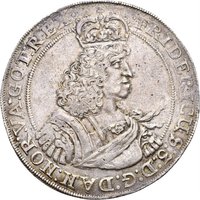
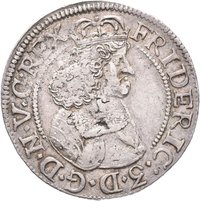
Obverse
Description:
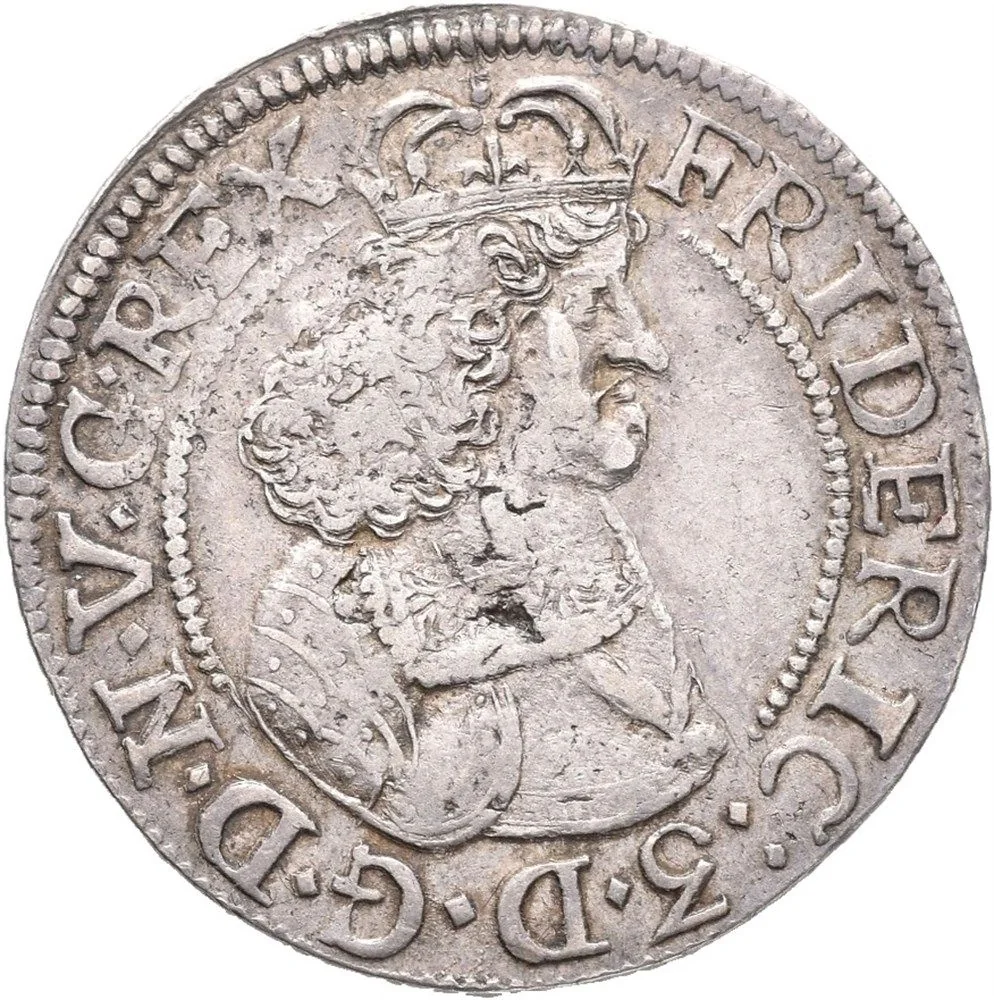
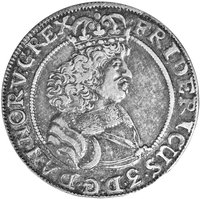
Right-facing crowned bust of Frederick III with long hair within a beaded circle and inscription. Beaded rim.
Inscription:
FRIDERIC:3·D·G·D·N·V·G·REX
Script: Latin
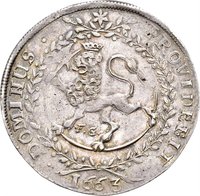
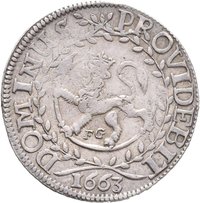
Reverse
Description:
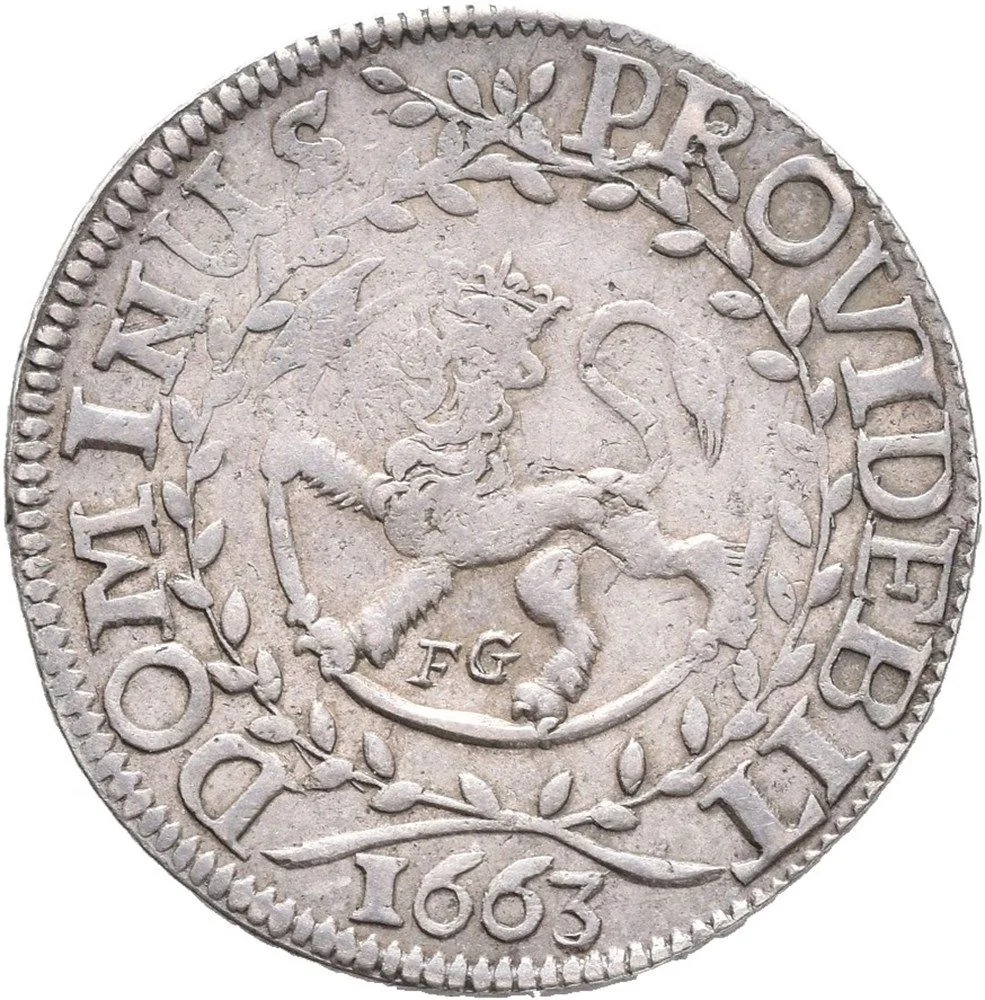
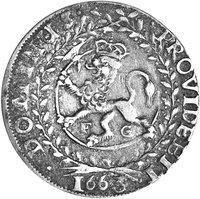
Rampant crowned lion left, holding a curved halberd, within a laurel wreath and inscription. Beaded rim.
Inscription:
DOMINUS PROVIDEBIT
FG
1663
FG
1663
Script: Latin
Edge
Plain.
Categories
| Animal |
| Person> Monarch |
| Symbol> Crown |
| Symbols> Coat of Arms |
| Symbol> Wreath |
| Object> Cold weapons |
Mints
| Name | Mark |
|---|---|
| Christiania | — |
Mintings
| Year | Mint Mark | Mintage | Quality | Collection |
|---|---|---|---|---|
| 1663 | — | — |
Historical background
In 1663, Norway found itself in a complex monetary transition, deeply influenced by its political union with Denmark. The dominant currency was the Danish rigsdaler, a large silver coin, but the system was chaotic due to the widespread circulation of numerous foreign coins, particularly German and Dutch, and the severe debasement of smaller domestic coinage. This created significant problems for daily commerce, as the value of coins was often determined by their actual metal content rather than their face value, leading to confusion and inefficiency in trade.
That year marked a pivotal moment with the introduction of a major monetary reform by the Danish-Norwegian monarchy. A new silver coin, the kurantdaler, was established as the official standard, intended to have a fixed and reliable silver content. More notably for everyday transactions, 1663 saw the first minting of the skilling in a new, durable copper form, replacing the easily worn and debased silver skilling. This was part of a broader effort to create a stable, state-controlled decimal system (where 1 rigsdaler = 6 mark = 96 skilling), aiming to centralize monetary authority and drive out unstable foreign coins.
The reform of 1663 was a crucial step toward modernizing the economy, but its success was limited in the short term. The new copper skilling eventually suffered from overproduction and inflation in the following decades, and the older, chaotic mix of coins remained in circulation for years. Nevertheless, this year laid the administrative foundation for a unified currency, reflecting the state's growing desire to assert control over the economy and facilitate smoother taxation and trade within the dual monarchy.
That year marked a pivotal moment with the introduction of a major monetary reform by the Danish-Norwegian monarchy. A new silver coin, the kurantdaler, was established as the official standard, intended to have a fixed and reliable silver content. More notably for everyday transactions, 1663 saw the first minting of the skilling in a new, durable copper form, replacing the easily worn and debased silver skilling. This was part of a broader effort to create a stable, state-controlled decimal system (where 1 rigsdaler = 6 mark = 96 skilling), aiming to centralize monetary authority and drive out unstable foreign coins.
The reform of 1663 was a crucial step toward modernizing the economy, but its success was limited in the short term. The new copper skilling eventually suffered from overproduction and inflation in the following decades, and the older, chaotic mix of coins remained in circulation for years. Nevertheless, this year laid the administrative foundation for a unified currency, reflecting the state's growing desire to assert control over the economy and facilitate smoother taxation and trade within the dual monarchy.
Series: 1663 Norway circulation coins

✨ Legendary