

2.50 escudos – São Tomé and Príncipe
Add to wishlist
Sao Tome and Principe
Context
Years: 1962–1971
Country: Sao Tome and Principe
Issuer: São Tomé and Príncipe
Period:
(1951—1975)
Currency:
(1914—1974)
Demonetized: Yes
Total mintage: 390,000
Material
References
KM: #
Numista: #11995
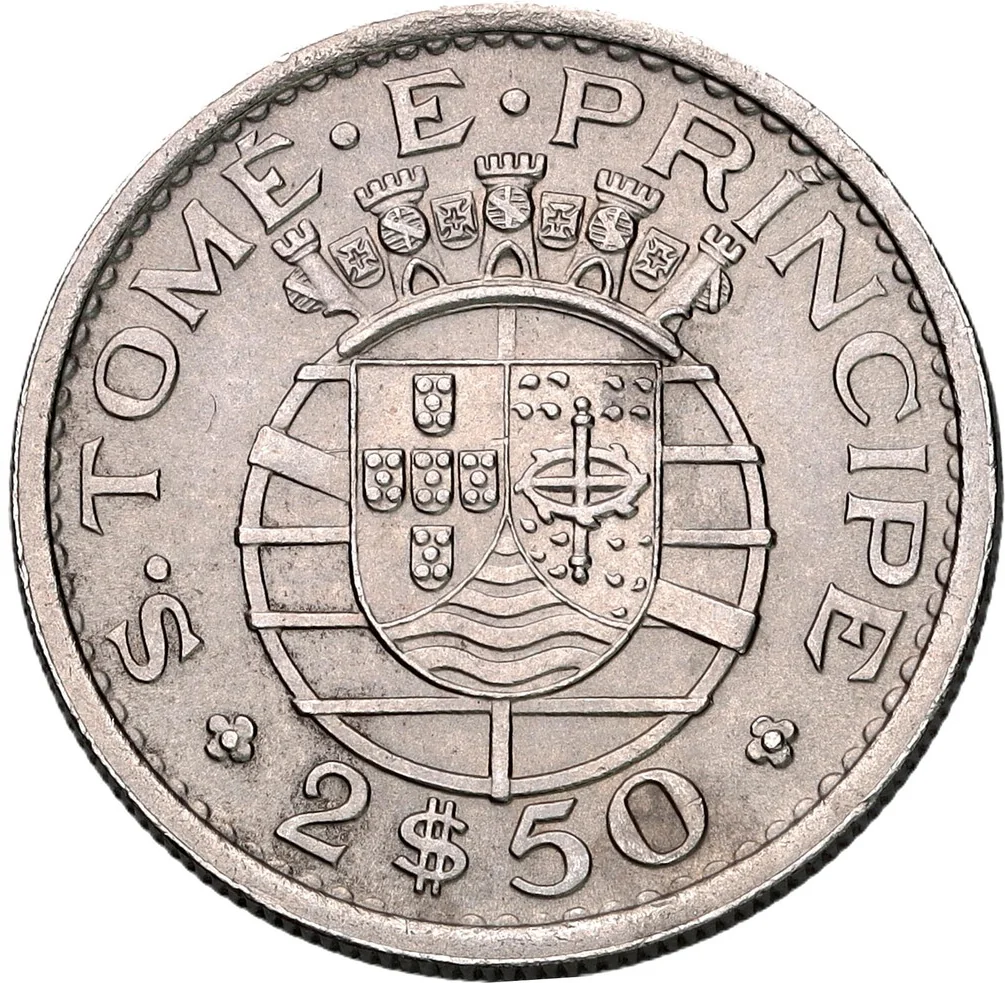
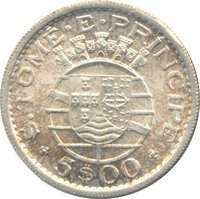
Obverse
Description:
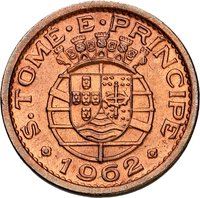
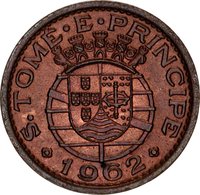
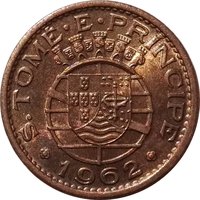
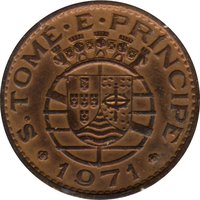
Crowned globe with shield.
Inscription:
S. TOMÉ·E·PRÍNCIPE
2$50
2$50
Translation:
Saint Thomas and Prince
2$50
2$50
Script: Latin
Language: Portuguese
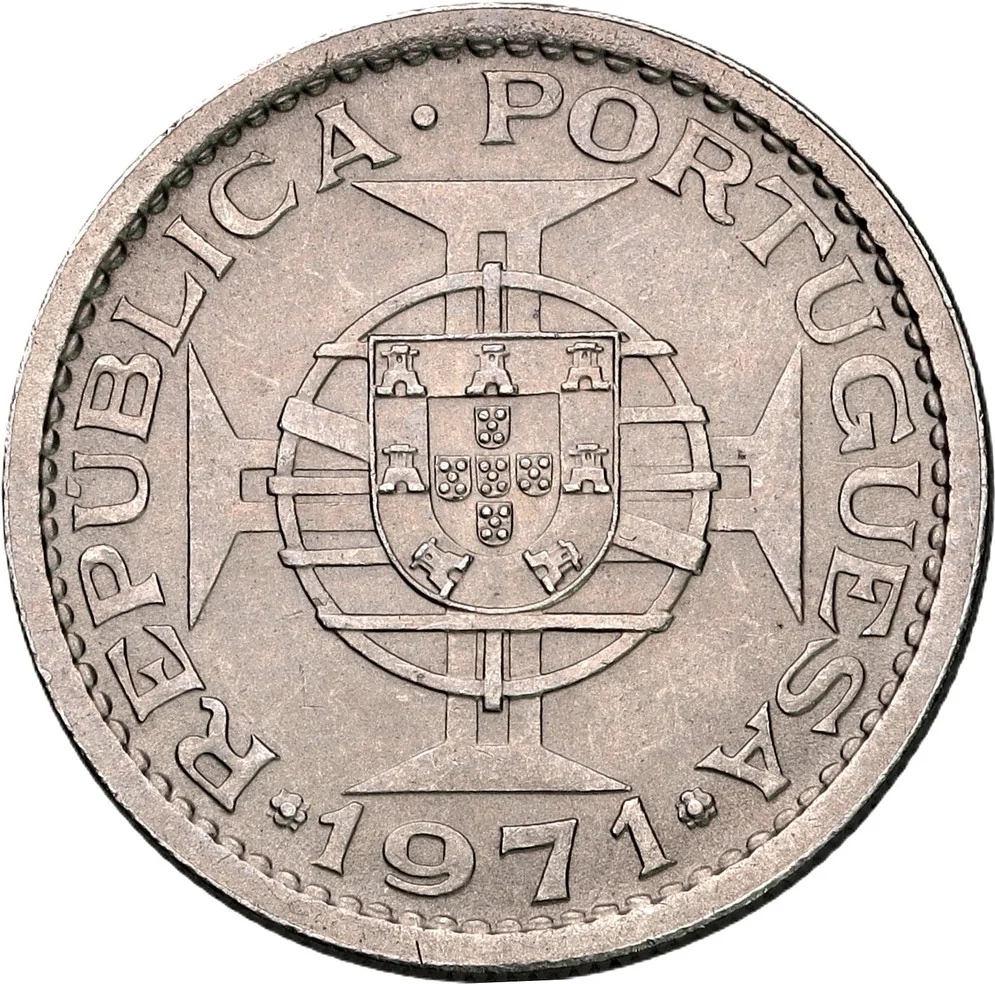
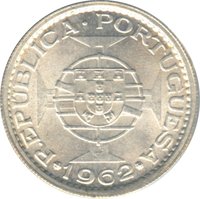
Reverse
Description:
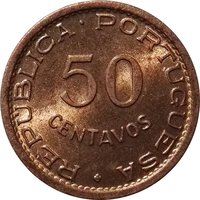
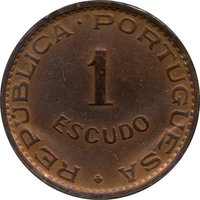
Shield on globe over cross.
Inscription:
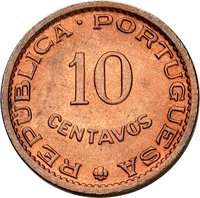
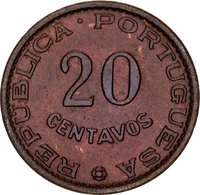
REPÚBLICA · PORTUGUESA
·1962·
·1962·
Translation:
PORTUGUESE REPUBLIC
·1962·
·1962·
Script: Latin
Language: Portuguese
Edge
Categories
| Symbols> Coat of Arms |
| Symbol> Cross |
Mints
| Name | Mark |
|---|---|
| Imprensa Nacional - Casa da Moeda | — |
Mintings
| Year | Mint Mark | Mintage | Quality | Collection |
|---|---|---|---|---|
| 1962 | — | 140,000 | ||
| 1971 | — | 250,000 |
Historical background
In 1962, São Tomé and Príncipe remained under Portuguese colonial rule, and its currency situation was entirely dictated by Lisbon. The official currency was the Portuguese escudo, which circulated on the islands as the São Tomé and Príncipe escudo. It was not an independent currency but a geographical designation for the metropolitan currency used in the colony, pegged at par with the Portuguese escudo. This system integrated the archipelago's economy fully into Portugal's financial sphere, with all monetary policy, issuance, and foreign exchange reserves controlled by the Banco Nacional Ultramarino in Lisbon.
The economy in 1962 was overwhelmingly dominated by the roça system—vast plantations primarily producing cocoa, as well as coffee and coconuts, for export. This monoculture export model meant that the currency's stability and value were directly tied to global commodity prices and the health of the Portuguese economy. There was little local financial infrastructure or need for independent monetary tools, as the colony's purpose was to supply raw materials. The escudo facilitated the extraction of wealth, with profits from exports largely flowing back to Portuguese plantation owners and the metropolitan state.
This currency arrangement reflected the political reality of the time. The early 1960s saw the rise of anti-colonial movements across Africa, but organized nationalist activism in São Tomé and Príncipe was still in its formative stages. Therefore, there was no challenge to the Portuguese monetary system from within the islands in 1962. The discussion of a sovereign currency would only emerge later, alongside the fight for independence, which was ultimately achieved in 1975. The escudo remained in use until 1977, when the new republic introduced its own currency, the dobra.
The economy in 1962 was overwhelmingly dominated by the roça system—vast plantations primarily producing cocoa, as well as coffee and coconuts, for export. This monoculture export model meant that the currency's stability and value were directly tied to global commodity prices and the health of the Portuguese economy. There was little local financial infrastructure or need for independent monetary tools, as the colony's purpose was to supply raw materials. The escudo facilitated the extraction of wealth, with profits from exports largely flowing back to Portuguese plantation owners and the metropolitan state.
This currency arrangement reflected the political reality of the time. The early 1960s saw the rise of anti-colonial movements across Africa, but organized nationalist activism in São Tomé and Príncipe was still in its formative stages. Therefore, there was no challenge to the Portuguese monetary system from within the islands in 1962. The discussion of a sovereign currency would only emerge later, alongside the fight for independence, which was ultimately achieved in 1975. The escudo remained in use until 1977, when the new republic introduced its own currency, the dobra.
🌱 Common