

1 mun – Joseon
Add to wishlist
Context
Material
Diameter: 24 mm
Weight: 4.5 g
Thickness: 1 mm
Shape: Round with a square hole
Composition: Copper
Magnetic: No
Technique: Cast
Alignment: Medal alignment
flip
References
KM: #
Numista: #77788
Obverse
Description:
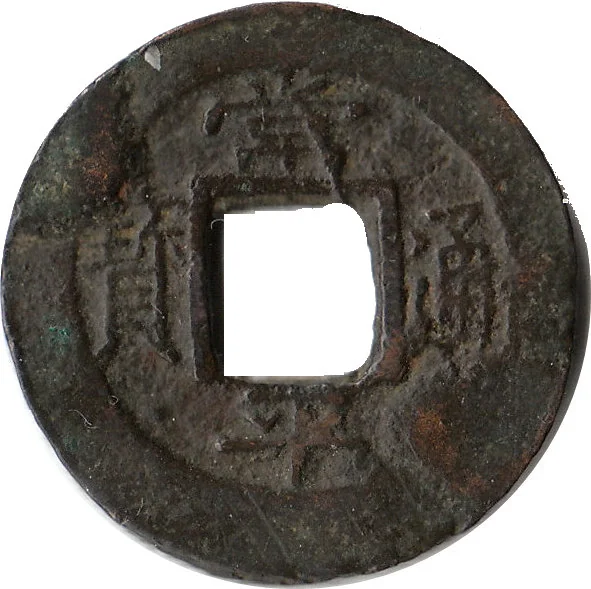
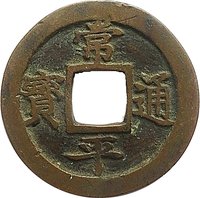
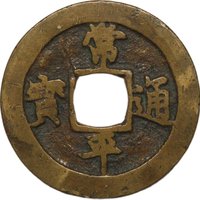
常平通寶 (Sang pyong Tong bo) - Yi Dynasty Korean currency.
Inscription:
常
寶 通
平
寶 通
平
Scripts: Chinese (traditional, regular script)
Reverse
Description:
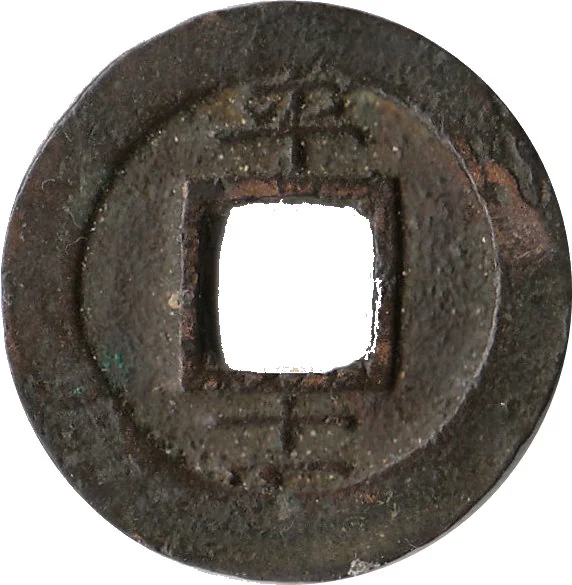
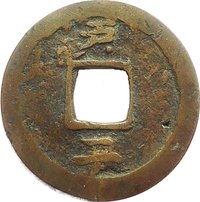
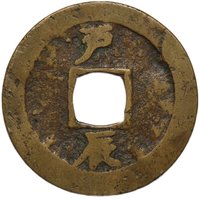
Mint mark above, serial below. Denomination reads right to left: *平 (Pyŏng) for Pyong'an Provincial Office.
Inscription:
平
十
一
十
一
Scripts: Chinese (traditional, regular script)
Edge
Mints
| Name | Mark |
|---|---|
| P'yongan Provincial Office | 平 |
Mintings
| Year | Mint Mark | Mintage | Quality | Collection |
|---|---|---|---|---|
| 1727 | 平 | — |
Historical background
In 1727, the currency situation in Joseon was one of profound instability and transition, caught between the legacy of a failed monetary experiment and the pressing need for a functional medium of exchange. The root cause was the disastrous depreciation of the sangpyeong tongbo (常平通寶) brass coins first minted in 1678. Initially successful, rampant over-minting to cover state deficits, coupled with widespread private counterfeiting, led to severe inflation. By the early 18th century, the value of the coin had collapsed, causing public distrust and a retreat to a barter economy, particularly using the pye (bolt of cloth) as a primary unit of exchange, which severely hampered commerce and state finance.
King Yeongjo, who ascended the throne in 1724, recognized this monetary crisis as a fundamental threat to dynastic stability. His early reign, including the year 1727, was therefore focused on laying the groundwork for a comprehensive reform. This period involved intense policy debates between factions advocating for different solutions: some promoted a return to a cloth-based economy, while others, including the king himself, understood that a standardized and trustworthy coinage was essential for a centralized state. The immediate situation was one of cautious assessment and preparation rather than dramatic action, as Yeongjo sought to consolidate his power after political purges like the one in 1727 itself.
Consequently, the currency background of 1727 is best understood as the calm before a decisive reform. The circulation was a chaotic mix of devalued official coins, counterfeit coins, and commodity money, causing economic hardship and administrative inefficiency. This very chaos created the imperative for Yeongjo's future policy, which would culminate in the historic "Uniform Coinage Law" of 1731. That reform standardized minting, strictly controlled the copper and tin alloy, and aggressively suppressed counterfeiting, ultimately restoring confidence in the sangpyeong tongbo and establishing a stable monetary system that would last for nearly two centuries.
King Yeongjo, who ascended the throne in 1724, recognized this monetary crisis as a fundamental threat to dynastic stability. His early reign, including the year 1727, was therefore focused on laying the groundwork for a comprehensive reform. This period involved intense policy debates between factions advocating for different solutions: some promoted a return to a cloth-based economy, while others, including the king himself, understood that a standardized and trustworthy coinage was essential for a centralized state. The immediate situation was one of cautious assessment and preparation rather than dramatic action, as Yeongjo sought to consolidate his power after political purges like the one in 1727 itself.
Consequently, the currency background of 1727 is best understood as the calm before a decisive reform. The circulation was a chaotic mix of devalued official coins, counterfeit coins, and commodity money, causing economic hardship and administrative inefficiency. This very chaos created the imperative for Yeongjo's future policy, which would culminate in the historic "Uniform Coinage Law" of 1731. That reform standardized minting, strictly controlled the copper and tin alloy, and aggressively suppressed counterfeiting, ultimately restoring confidence in the sangpyeong tongbo and establishing a stable monetary system that would last for nearly two centuries.
💎 Very Rare