Logo Title
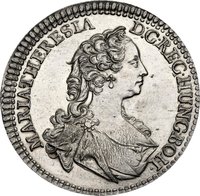
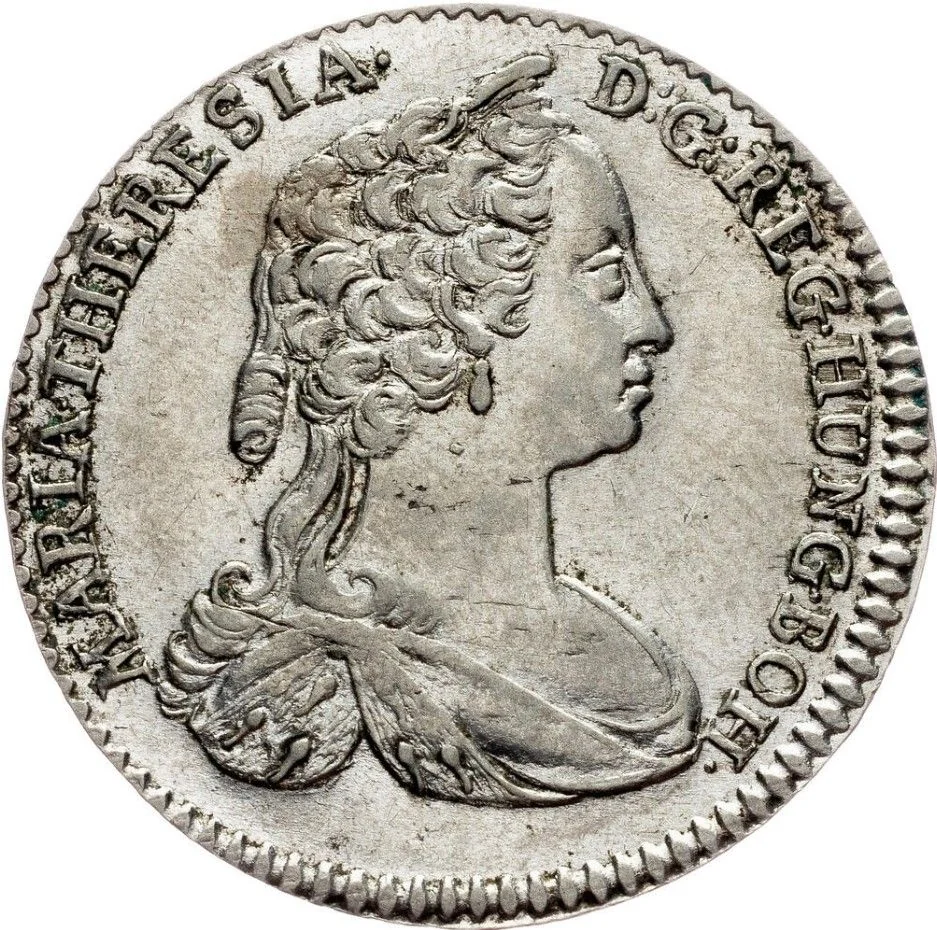
obverse
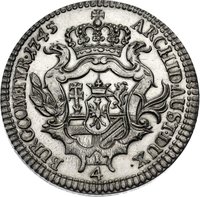
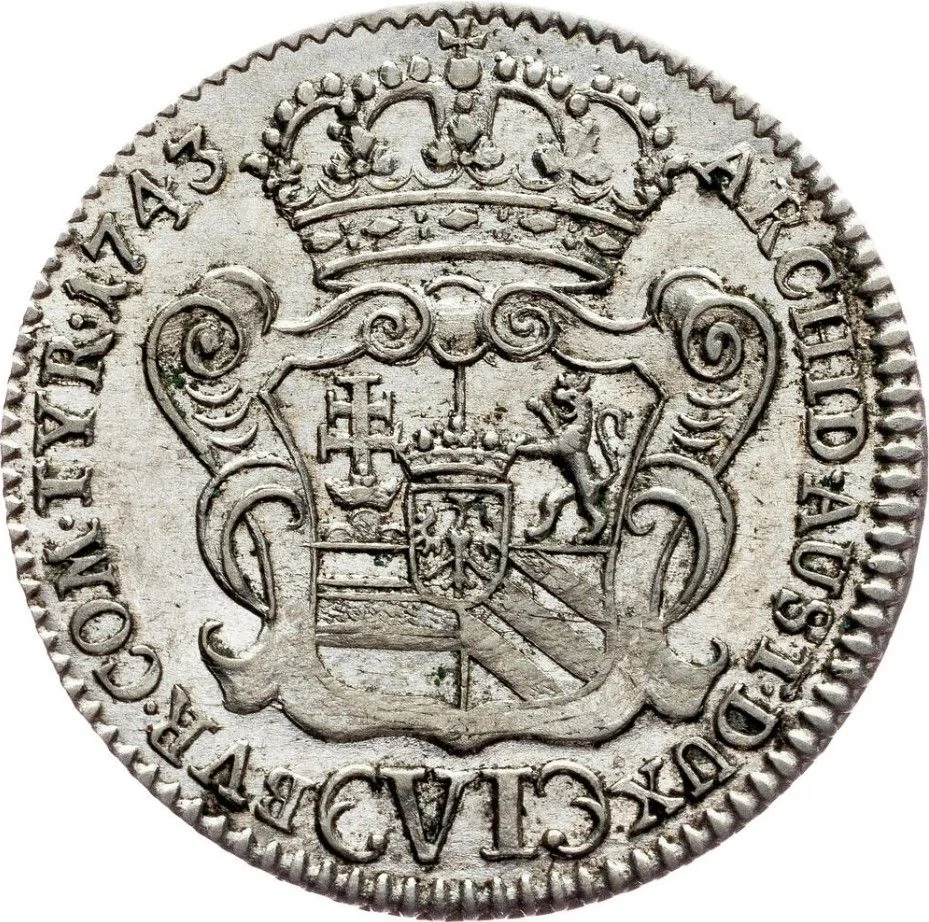
reverse
Numismatika Pešek
Austria
Context
Year: 1743
Country: Austria Country flag
Currency:
Demonetized: Yes
Material
Diameter: 25 mm
Weight: 3.1 g
Shape: Round
Composition: Billon (43.7% Silver)
References
KM: #Click to copy to clipboard1704
Numista: #77780

Obverse

Description:
Bust of Maria Theresia facing right, with a surrounding legend.
Inscription:
MARIA THERESIA D G REG HUNG BOH
Script: Latin

Reverse

Description:
Fourfold arms of Hungary, Bohemia, Austria, and Burgundy with a central Tyrol shield, in a baroque frame. Value in roman numerals below.
Inscription:
ARCHID AUST DUX BVR COM TYR 1743

(VI)
Script: Latin

Edge

Mints

NameMark
Hall

Mintings

YearMint MarkMintageQualityCollection
1743

Historical background

In 1743, the currency situation in the County of Tyrol was complex and strained, deeply influenced by its political position within the Habsburg Monarchy. Tyrol, while an integral part of the Austrian hereditary lands, enjoyed unique privileges and fiscal autonomy, including the right to mint its own coinage at the Hall mint. However, the financial demands of the ongoing War of the Austrian Succession (1740-1748) placed immense pressure on the imperial treasury. To fund the war, the Vienna court frequently resorted to currency debasement, reducing the precious metal content in coins to create more money from the same silver reserves, a practice that inevitably extended to Tyrolean coinage.

This debasement led to significant economic instability within the county. The value of the circulating Tyrolean kreuzer and guilder fluctuated and eroded, causing inflation and a loss of public confidence. Merchants and the population faced uncertainty, as the real value of money separated from its face value. Furthermore, Tyrol's important transit trade across the Alpine passes suffered, as foreign merchants became wary of accepting devalued currency. This created a dual problem: a domestic crisis of rising prices and a threat to the vital commercial sector of the economy.

Local Tyrolean estates (the Landtag) vehemently protested these imperial monetary policies, arguing they violated the county's traditional rights and harmed its economic well-being. Their complaints, however, had limited effect against the overwhelming military and financial necessities of the central state. Consequently, in 1743, Tyrol was grappling with a deteriorating currency, caught between its historic autonomy and the centralizing fiscal demands of a monarchy at war, which prioritized imperial survival over regional monetary stability.
Legendary