

1 thaler – Austrian Empire
Add to wishlist
Austria
Context
Years: 1746–1752
Country: Austria
Issuer: Austrian Empire
Ruler: Maria Theresa
Currency:
(1520—1754)
Demonetized: Yes
Material
References
KM: #
Numista: #77653
Value
Bullion value: $63.89
Obverse
Description:
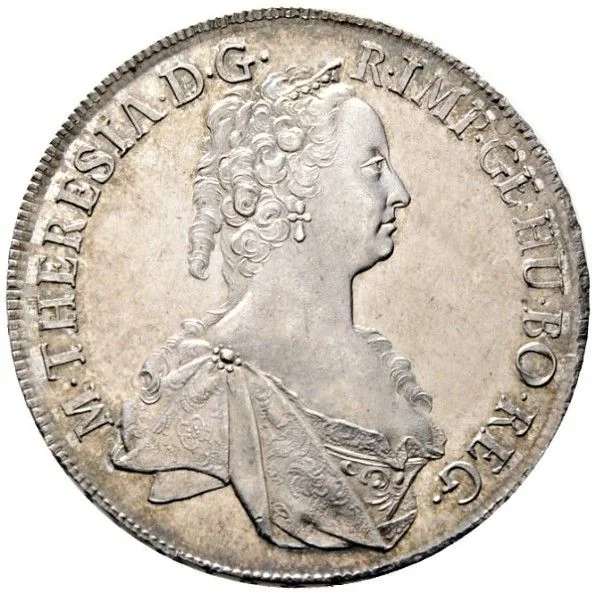
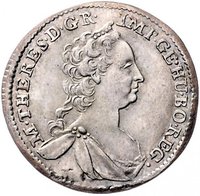
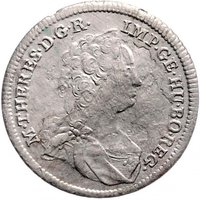
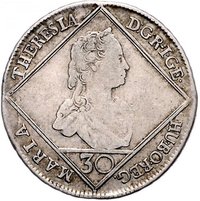
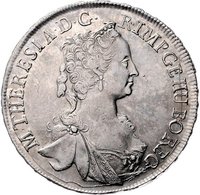
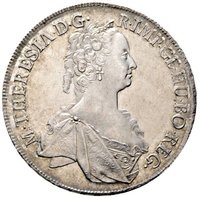
Portrait of Maria Theresia facing right, bust touching rim. Legend begins at 7 o'clock.
Inscription:
M THERESIA D G // R IMP GE HU BO REG
Script: Latin
Reverse
Description:
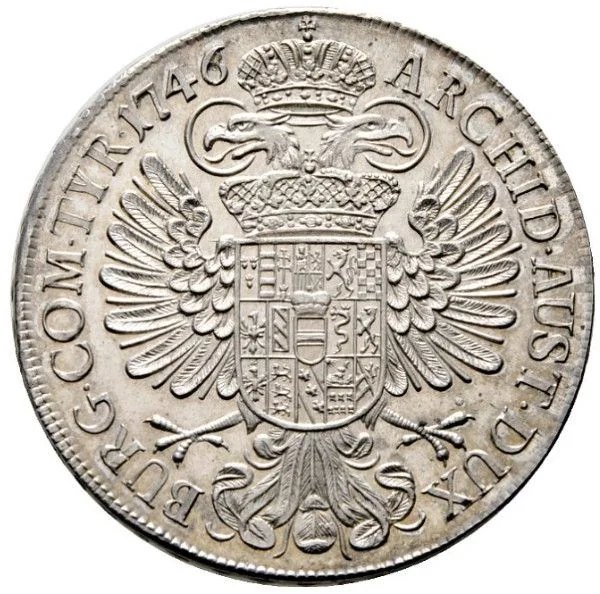
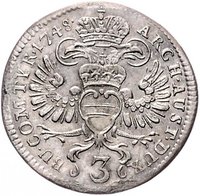
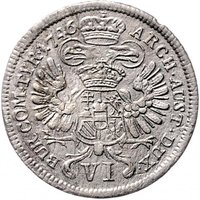
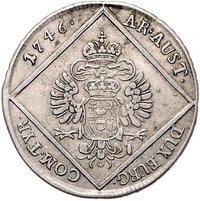
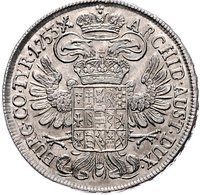
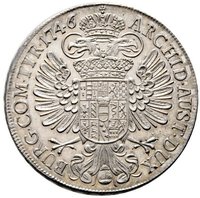
Double-headed imperial eagle with composite arms, centered on an Austrian shield. Legend begins at 1 o'clock.
Inscription:
ARCHID AUST DUX BURG COM TYR 1746
Script: Latin
Edge
Mints
| Name | Mark |
|---|---|
| Münze Österreich | — |
Mintings
| Year | Mint Mark | Mintage | Quality | Collection |
|---|---|---|---|---|
| 1746 | — | — | ||
| 1747 | — | — | ||
| 1748 | — | — | ||
| 1749 | — | — | ||
| 1750 | — | — | ||
| 1751 | — | — | ||
| 1752 | — | — |
Historical background
In 1746, the currency situation within the Habsburg Monarchy, often referred to as the Austrian Empire, was characterized by profound instability and complexity, a direct legacy of the expensive War of the Austrian Succession (1740-1748). The immense cost of financing the war against a coalition of European powers had forced state authorities, under Empress Maria Theresa, to engage in severe monetary debasement. The primary silver coin, the Conventionsthaler, and its smaller units saw their precious metal content systematically reduced to create more coins from the same amount of silver, effectively funding the war through inflation and eroding public trust in the currency.
This practice created a chaotic monetary landscape where the value of coins was not fixed by their metal content but by government decree, leading to a proliferation of different types of coins in circulation with varying real values. Furthermore, the empire was not a unified economic zone; alongside these debased imperial coins, various regional currencies and tokens issued by estates and cities also circulated, complicating trade and taxation. The result was a system riddled with confusion, where exchange rates fluctuated wildly and counterfeiting was rampant, severely hampering economic activity and state finances.
Recognizing the crisis, 1746 fell within a period of urgent but still preparatory reform. While the major monetary reform that would introduce the stable Conventionsthaler standard across the empire was still a year away (decreed in 1747 and implemented from 1750), the year was likely one of assessment and planning within the court in Vienna. Therefore, the situation in 1746 represents the peak of wartime fiscal desperation, setting the stage for the comprehensive, if only partially successful, monetary restructuring that Maria Theresa's administration would soon undertake to restore solvency and economic order.
This practice created a chaotic monetary landscape where the value of coins was not fixed by their metal content but by government decree, leading to a proliferation of different types of coins in circulation with varying real values. Furthermore, the empire was not a unified economic zone; alongside these debased imperial coins, various regional currencies and tokens issued by estates and cities also circulated, complicating trade and taxation. The result was a system riddled with confusion, where exchange rates fluctuated wildly and counterfeiting was rampant, severely hampering economic activity and state finances.
Recognizing the crisis, 1746 fell within a period of urgent but still preparatory reform. While the major monetary reform that would introduce the stable Conventionsthaler standard across the empire was still a year away (decreed in 1747 and implemented from 1750), the year was likely one of assessment and planning within the court in Vienna. Therefore, the situation in 1746 represents the peak of wartime fiscal desperation, setting the stage for the comprehensive, if only partially successful, monetary restructuring that Maria Theresa's administration would soon undertake to restore solvency and economic order.

✨ Legendary